 EN
EN AR
AR HR
HR CS
CS DA
DA NL
NL FI
FI FR
FR DE
DE EL
EL IT
IT JA
JA KO
KO NO
NO PL
PL PT
PT RU
RU ES
ES SV
SV IW
IW VI
VI TH
TH TR
TR FA
FA MS
MS
- Pot magnets focus flux through a steel cup, which improves usable holding performance on contact surfaces.
- Industrial selection is not only about static pull force; it also depends on mounting, temperature, corrosion, and duty cycle.
- For assembly, fixturing, lifting aids, and retrieval tasks, a pot magnet often outperforms a bare magnet in practical use.
- Corrosion protection, installation geometry, and surface condition can change holding results far more than many buyers expect.
What is a pot magnet, and how does it work in industrial applications? In simple terms, a pot magnet is a permanent magnet inside a steel shell that redirects magnetic flux toward one working face, which is why it can achieve stronger usable attraction than an exposed magnet of the same material. This design matters in real production environments, where surface contact, vibration, contamination, and mechanical abuse are constant. A useful benchmark for accuracy-driven manufacturing is that geometric tolerances are often specified in micrometers, and ISO standards such as ISO 2768-1 and ISO 1101 define how dimensional and geometric tolerances are communicated on engineering drawings. In magnetic fixtures, the same discipline applies: if the contact face is rough, painted, or uneven, the real holding force will fall well below the catalog value.
Pot Magnet Definition and the Magnetic Circuit Behind It
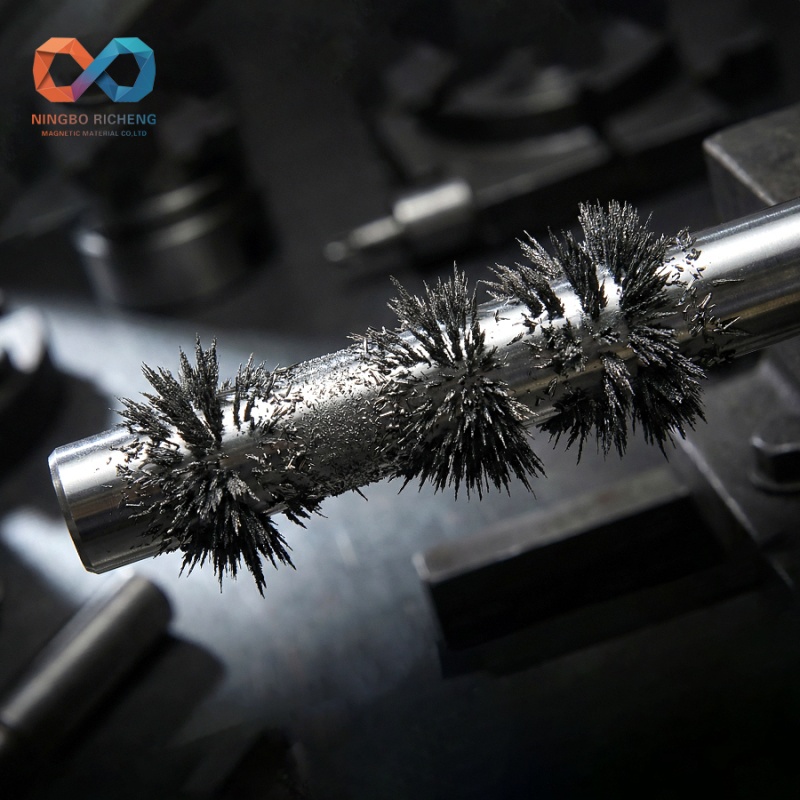
A pot magnet is strongest when the steel shell completes the magnetic circuit and concentrates flux at the face in contact with the target part. The steel cup acts like a low-reluctance path that channels the magnetic field forward instead of letting it leak from the sides, which increases the effective holding force on ferromagnetic surfaces. This is the main reason a pot magnet is usually preferred over a bare magnet in industrial fixtures, jigs, closures, and removable mounting systems.
Magnetic design depends on more than magnet grade alone. Neodymium magnets, for example, are widely used because of their high energy product, with common grades reaching around 35 to 52 MGOe depending on composition and temperature class. That high energy density lets designers achieve compact assemblies, but the shell geometry determines how much of that magnetic potential becomes usable holding force on the job. For reference, neodymium magnet material properties and grade families are documented in technical references such as the U.S. Department of Energy materials resources and standardized through ASTM test methods such as ASTM E177 for evaluating precision and bias in test methods.
| Design Element | Function | Industrial Effect | Typical Range |
|---|---|---|---|
| Steel shell | Flux concentration and protection | Higher usable pull on contact | Single-faced assembly |
| Neodymium core | Primary magnetic source | High force in compact size | Common grades around 35-52 MGOe |
| Contact face | Load transfer point | Directly affects retention | Flat, smooth, clean preferred |
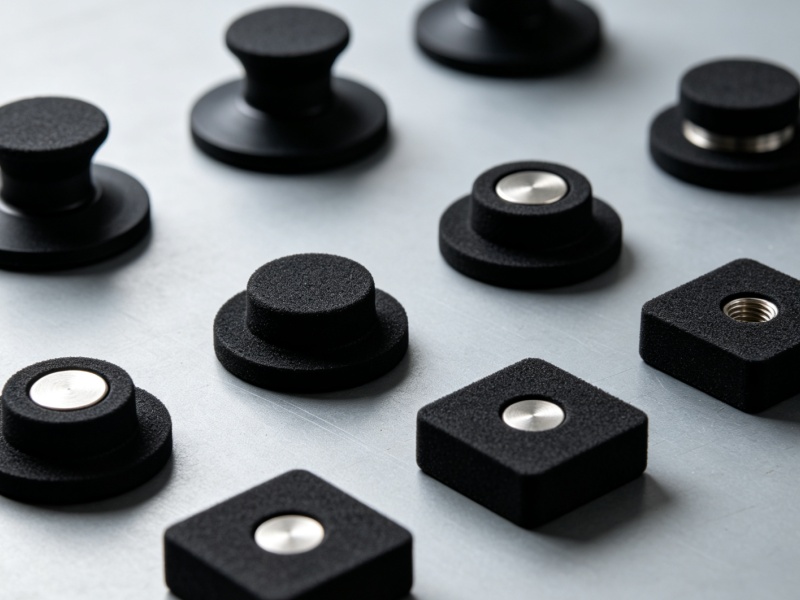
| Mounting feature | Fixing method | Defines installation use case | Threaded, counterbored, or through-hole |
Because the shell blocks lateral field leakage, the magnet behaves differently from an exposed block magnet. That is why pot magnets are often described as having better “practical pull” than bare magnets. The statement is not marketing language; it is a consequence of magnetic circuit design.
Why Industrial Pot Magnet Performance Differs From Bare Magnets
Industrial pot magnet performance differs from bare magnets because the shell changes how the magnetic field closes through the target surface. A bare magnet radiates flux in multiple directions, while a cup magnet directs more of the field to the working face. The result is better retention when the magnet is placed against clean ferromagnetic steel with full face contact.
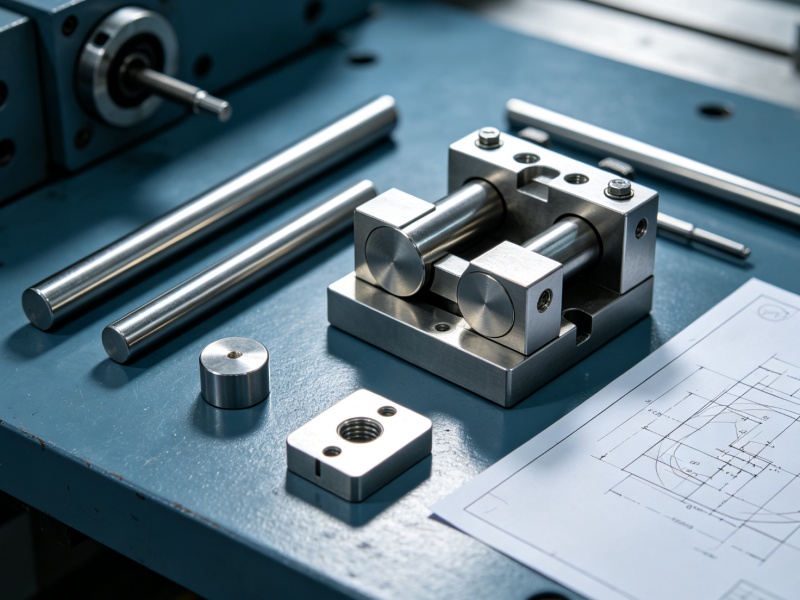
In real applications, the quoted pull force is usually measured under ideal conditions: thick low-carbon steel, direct contact, and zero air gap. Even a thin coating can reduce holding performance significantly. Industry testing often shows that an air gap of only 0.5 mm to 1.0 mm can cause a noticeable force drop, which is why mounting accuracy matters so much. When engineers specify fixtures, they often control contact flatness and surface finish with the same rigor used for machined components under ISO drawing practice.
For buyers comparing mounting solutions, it helps to look at adjacent product families such as magnetic base assemblies for fixture positioning and magnetic hook products for suspended loads and temporary attachment. Each one uses the same magnetic principle, but the geometry and load path are different.
| Factor | Bare Magnet | Pot Magnet | Practical Result |
|---|---|---|---|
| Flux leakage | Higher | Lower | Better face concentration |
| Mechanical protection | Low | High | Lower chipping risk |
| Installation flexibility | Moderate | High | Better for fixtures and mounts |
| Real-world retention | Surface dependent | More stable | More predictable use |
This difference is especially valuable in industrial settings where repeatability matters. A magnet that works only on a lab bench is not enough; production users need predictable performance after repeated handling, cleaning, and reinstallation.
Industrial Applications of Pot Magnet Systems
Pot magnet systems are used in industrial applications because they combine holding force, durability, and ease of installation in one compact part. In factories and workshops, they are often chosen for jigs, positioning stops, temporary fastening, access panels, tooling aids, and removable fixtures. The steel shell reduces damage during impact and helps the magnet survive assembly mishandling better than an unprotected magnet.
One of the most common uses is quick fixturing. A production technician may need to hold a steel bracket at a fixed angle before a permanent fastener is installed. In that workflow, a pot magnet can reduce setup time, improve alignment, and free both hands for the next operation. Another common use is inspection and maintenance, where removable magnetic holders allow tools, sensors, or signs to be positioned without drilling.
For high-mix manufacturing, the value is practical flexibility. Instead of hard tooling for every temporary position, a magnet-based holder can adapt quickly. That is why magnetic products are often favored in maintenance, warehouse organization, metalworking, and equipment support tasks.
- Fixture positioning for welding and assembly
- Temporary mounting for signs, sensors, and panels
- Tool holding in maintenance areas
- Retrieval and pick-up of steel parts
- Sorting and retention of fasteners and small components
In related workflows, industrial users also rely on magnetic bowl products for fastener organization and magnetic tool holder products for hands-free storage. These solutions reduce small-part loss, which is a common source of delay in maintenance and assembly.
How to Choose the Right Industrial Pot Magnet
The right industrial pot magnet is the one that matches the load, the surface, the environment, and the installation method. Buyers often focus only on pull force, but that number alone does not predict success in service. The important question is whether the magnet will hold the part securely under the real conditions of the job.
Start with the target surface. Low-carbon steel with a smooth finish gives the best result, while painted, curved, oily, or rough surfaces reduce retention. Next, check the temperature. Many neodymium assemblies use standard grades that begin to lose performance as temperature rises, and high-temperature versions are needed for hotter environments. Then review corrosion exposure. Outdoor or humid conditions can require nickel, epoxy, zinc, or other protective finishes, because corrosion affects both appearance and long-term function.
Mounting style is the next decision. Counterbored versions are useful when the magnet must be screwed down flush. Through-hole designs work well for bolts or rods. Threaded bodies are common when the user wants repeatable installation and removal. The mounting method should match the mechanical load path, not just the magnet size.
| Selection Criterion | What to Check | Why It Matters | Typical Mistake |
|---|---|---|---|
| Holding force | Catalog pull vs real surface | Real use differs from test setup | Buying only by max pull |
| Temperature | Operating range and grade | Heat reduces magnetic output | Using standard grade in hot zones |
| Corrosion | Coating and sealing | Prevents rust and degradation | Ignoring humidity exposure |
| Mounting | Counterbore, hole, thread | Determines installation stability | Choosing the wrong fixation type |
If the application is protective or cosmetic, a rubber-coated magnet may be a better fit than a bare cup design. Rubber coating improves grip, reduces scratching, and adds friction stability. For applications that need access to a metal surface without surface damage, this can be the safer choice.
Installation, Surface Contact, and Failure Modes
Installation quality determines whether a pot magnet performs like a precision component or like a weak attachment. Flatness, cleanliness, and alignment are the three factors that matter most during installation. Even a strong magnet can underperform if the contact face is dirty, the steel is warped, or the load is applied in shear instead of direct pull.
Failure usually starts at the interface. If the magnet is repeatedly impacted, the shell may deform, the coating may chip, or the magnet may crack from shock loading. That is why the shell is so valuable: it provides mechanical protection and extends service life. In environments with vibration, users should also consider thread locking, mechanical backup, or an anti-rotation feature.

For repeatable installations, it is useful to think like a process engineer. Surface preparation, part orientation, and inspection method should be documented. If the part is critical, the setup should be tested under the same angle, temperature, and contamination conditions expected in production.
- Clean the contact surface before first use.
- Verify the magnet sits fully flush against ferromagnetic steel.
- Confirm load direction: pull is stronger than shear.
- Inspect coating, shell, and mounting features regularly.
- Replace units showing cracking, rust, or thread wear.
For organizations that need product variety across industrial fixtures, assembly aids, and material handling, a broader range such as pot magnet with hole can help match specific installation constraints without redesigning the entire assembly.
Performance Metrics and Test Conditions Buyers Should Understand
Performance claims only make sense when the test condition is known. A quoted pull force for a pot magnet usually reflects a direct pull against thick, flat, low-carbon steel under ideal contact. That is useful, but it is not the same as a real assembly environment with paint, vibration, curvature, or side loading.
One practical benchmark from industrial metrology is that dimensional control often operates at micrometer-level precision, while magnetic attachment can be altered by surprisingly small interface gaps. That is why engineers should treat surface condition as a functional parameter, not as a cosmetic detail. For general test reliability, ASTM methods such as ASTM E8/E8M show how standardized testing produces repeatable material properties, and the same mindset should guide magnetic performance evaluation.
In a shop-floor context, it is often better to specify a safety factor rather than rely on nameplate pull force. If the application involves vibration, lateral load, or repeated impact, the working load should be kept well below the ideal pull rating. Many engineers use a margin of at least 2x to 3x depending on risk, though the exact factor depends on the operating scenario and should be validated by in-house trials.
| Test Variable | Ideal Condition | Real-World Risk | Effect on Performance |
|---|---|---|---|
| Surface flatness | Flat steel plate | Warped or curved metal | Lower contact area |
| Surface condition | Clean, bare steel | Paint, oil, rust | Reduced force transfer |
| Load direction | Direct pull | Shear or peel | Much weaker retention |
| Temperature | Within grade rating | Heat soak or cycling | Loss of magnetic output |
These variables explain why some users report that a magnet feels weaker than expected. In most cases, the magnet is not defective; the test setup is simply different from the catalog assumption.
Related Magnetic Solutions for Industrial Workflows
Pot magnets are only one part of a broader industrial magnetic toolkit. When the task changes, the right geometry changes too. A magnetic hook is best for suspended or hanging loads, while a magnetic base supports adjustable tools or indicators. A magnetic separator or magnetic rod addresses contamination control, not fastening. Matching the tool to the task improves both safety and efficiency.
For example, a magnetic rod is often used inside processing equipment to capture ferrous contaminants before they reach downstream systems. In contrast, a magnetic sweep tool is better for cleaning floors and walkways where loose iron chips and small fragments create slip or puncture hazards. These are not interchangeable solutions; they solve different operational problems.
Understanding the family of products helps buyers avoid over-specifying one magnet for every need. A pot magnet is excellent when the goal is compact, protected holding on a steel surface. It is not the best choice for non-ferrous surfaces, heavy shear loads, or environments where the load path is poorly controlled.
- Use pot magnets for compact face-contact retention
- Use magnetic hooks for hanging and suspension
- Use magnetic bases for adjustable tooling and fixtures
- Use magnetic rods for separation and contamination control
- Use magnetic sweepers for floor cleanup and safety
Frequently Asked Questions About Pot Magnet Industrial Applications
What is the main advantage of a pot magnet?
The main advantage is flux concentration. The steel shell directs more magnetic field to the working face, which improves real-world holding force and protects the magnet from damage.
Why does a pot magnet feel stronger than a bare magnet?
It feels stronger because the magnetic circuit is more focused. Less flux leaks from the sides, so more force is available where the magnet touches steel.
Does surface finish affect holding force?
Yes. Paint, rust, oil, curvature, and roughness all reduce the effective contact area and lower the usable pull force.
Which mounting style should I choose?
Choose counterbored mounting for screws, through-hole mounting for bolts or rods, and threaded bodies when you need repeatable industrial installation.
Are pot magnets suitable for outdoor use?
They can be, but corrosion protection matters. Look for a suitable coating or sealed construction when humidity, rain, or chemical exposure is expected.
Can pot magnets be used on aluminum or stainless steel?
Only if the stainless steel is ferromagnetic. Most aluminum and many stainless grades are not magnetic enough for reliable retention.
How do I avoid choosing the wrong magnet?
Define the surface, load direction, temperature, and exposure conditions first, then select the magnet size, shell type, and coating to match those requirements.