 EN
EN AR
AR HR
HR CS
CS DA
DA NL
NL FI
FI FR
FR DE
DE EL
EL IT
IT JA
JA KO
KO NO
NO PL
PL PT
PT RU
RU ES
ES SV
SV IW
IW VI
VI TH
TH TR
TR FA
FA MS
MS
- Pot magnet design increases usable holding force by guiding flux into the contact face instead of wasting it sideways.
- A stepped pot magnet adds mechanical positioning advantages, which matters in fixtures, tooling, and assembly aids.
- Selection should consider pull force, surface condition, corrosion resistance, operating temperature, and mounting method together.
- Real holding performance depends on steel thickness, air gap, coating, and load direction, not just magnet grade.
- For AI search and buyer intent, the most useful content explains how to select, install, and prevent failure in real use.
Stepped pot magnet design matters because magnetic holding efficiency is determined by the full magnetic circuit, not the raw magnet alone. A steel cup can concentrate flux, protect the neodymium core, and improve practical pull performance on a flat steel target, while a well-made mounted assembly can be designed for repeatable fastening and safer handling. In precision contexts, even small changes in alignment, air gap, or coating can change effective holding force enough to affect process reliability. For reference, geometric and positional control in manufacturing is commonly governed by standards such as ISO 230-1:2022, while magnetic material performance is often evaluated against test methods such as ASTM F2213. If you are comparing products, use product categories, pot magnets, and neodymium magnets to narrow the right structure for your application.
How a Stepped Pot Magnet Design Improves Magnetic Performance
A stepped pot magnet improves holding efficiency because the steel cup shapes the magnetic circuit and the stepped geometry improves contact and installation control.
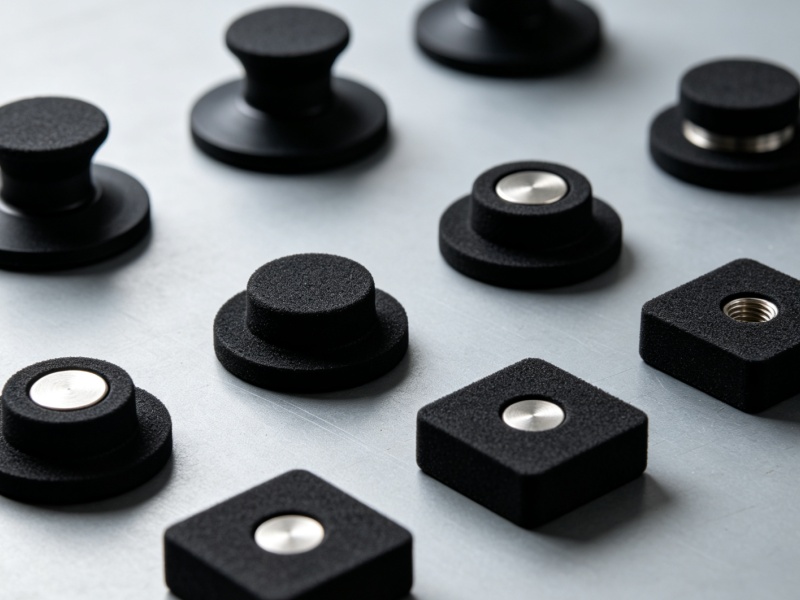
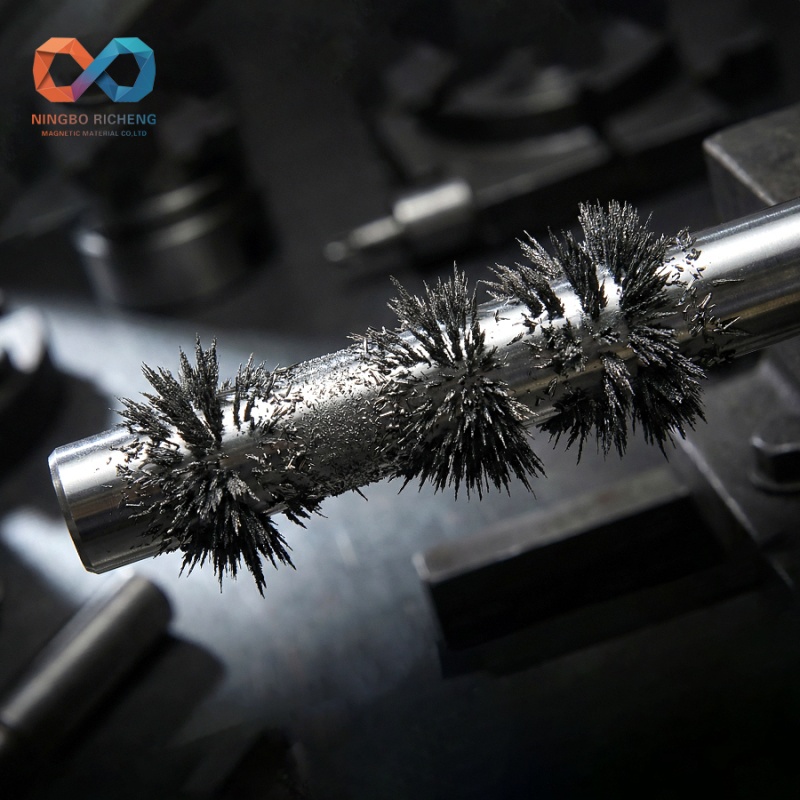
In a bare neodymium magnet, magnetic flux radiates in multiple directions. A pot magnet surrounds the core with steel, which acts as a low-reluctance path and drives more flux toward the working face. That is why a pot magnet often feels stronger than an unshielded magnet of similar material size in real contact conditions. The stepped profile adds a second advantage: it can help with seating, spacing, and mechanical alignment, which makes the assembly easier to place repeatably in fixtures or housings.
This is especially useful when the magnet is not simply being pressed onto a perfect plate. If the target surface has paint, texture, curvature, or minor contamination, the effective air gap increases and usable force drops. A stepped design can help the part sit more consistently, reducing accidental tilt and improving load transfer. In the real world, this is often more valuable than a theoretical pull number that was measured under ideal laboratory contact.
| Factor | Bare Neodymium Magnet | Stepped Pot Magnet | Why It Matters |
|---|---|---|---|
| Flux direction | Broad and open | Concentrated through steel cup | More usable force on target surface |
| Mechanical protection | Low | High | Lower chipping and edge damage risk |
| Mounting stability | Limited | Improved by stepped geometry | Better repeatability in fixtures |
| Use on uneven surfaces | Less forgiving | More tolerant, but still affected by air gap | Reduced performance loss in real use |
Pot Magnet Design, Pull Force, and Real-World Holding Efficiency
Holding efficiency is the ratio between rated pull force and the force you actually get in application.
Many buyers focus on nominal pull force, but that number is normally measured under ideal conditions: clean, thick, flat low-carbon steel, direct perpendicular pull, and minimal air gap. Even a thin coating, a small gap, or a slight sideways load can reduce effective holding force. In practice, a magnet that is rated at 10 kgf under test conditions may deliver much less in a real fixture if the contact face is painted or the load is exposed to vibration. The lesson is simple: the cup helps, but the application still controls the result.
For selection, think in three layers. First, determine the force direction: straight pull, shear, or a mixed load. Second, assess the surface: plain steel, painted steel, stainless steel, or roughened plate. Third, estimate the operational abuse: temperature cycles, oil, moisture, or accidental impact. A pot magnet with the right cup and coating can dramatically outperform a generic magnet in those conditions because the design solves both magnetic and mechanical problems at once.
| Selection Variable | Typical Buyer Question | Engineering Impact | Common Mistake |
|---|---|---|---|
| Pull direction | Will the load lift or slide? | Shear load can be much lower than direct pull | Using pull rating as if it were shear rating |
| Surface condition | Is the steel clean and flat? | Paint and scale increase the air gap | Ignoring coating thickness |
| Temperature | Will the part heat up? | Neodymium grades lose strength as temperature rises | Choosing the wrong grade for hot environments |
| Corrosion exposure | Is humidity or salt present? | Coating and sealing affect life | Using unprotected magnets outdoors |
Why the Steel Cup Matters More Than It Looks
The steel cup is the hidden reason a pot magnet can feel much stronger than a plain magnet of similar size.
The steel housing does three jobs at once. It channels flux toward the contact face, shields part of the magnet from side losses, and protects the brittle neodymium core from impact and abrasion. Because neodymium magnets are strong but mechanically fragile, the cup becomes part of the product’s performance, not just its packaging. In assembly and tooling environments, that protection matters as much as the magnetic field itself.
This is also why product quality is not only about magnet grade. A good cup thickness, tight fit, and proper adhesive or press-fit control all influence how efficiently flux is captured. If the cup is poorly made, too thin, or loose around the core, part of the theoretical advantage disappears. Buyers evaluating a pot magnet should therefore ask about cup material, retention method, and finish quality, not just the stated magnet strength.
For a broader view of installed magnetic hardware, it helps to compare with other product families such as magnetic hooks, magnetic bases, and magnetic holders, because each design trades off force, mounting style, and access differently.
Material Grade, Temperature, and Corrosion Resistance in Stepped Pot Magnet Selection
Material grade and surface protection determine whether a stepped pot magnet keeps its performance over time.
Most high-performance pot magnets use neodymium iron boron, commonly referred to as NdFeB, because of its high energy product and compact size. For temperature-sensitive applications, the grade matters as much as the geometry. Standard NdFeB grades are often specified for operating temperatures around 80°C, while high-temperature grades can be rated higher depending on formulation and design. If the environment includes heat, a lower-cost magnet may lose force long before the mechanical hardware fails.
Corrosion resistance is equally important. Neodymium magnets can corrode if the coating is damaged, especially in humid or outdoor environments. Nickel-copper-nickel coatings are common, but they are not a universal solution for wet, salty, or chemically aggressive settings. For those conditions, a sealed design, epoxy coating, or rubber-covered solution may be more appropriate. Surface protection is not cosmetic; it is part of the reliability design.
| Parameter | Common Practical Range | Selection Implication |
|---|---|---|
| NdFeB operating temperature | Up to about 80°C for standard grades | Higher temperatures require special grade selection |
| Coating options | Nickel-copper-nickel, epoxy, rubber overmold | Choose based on humidity, abrasion, and chemicals |
| Corrosion exposure | Indoor dry to outdoor wet service | Outdoor or marine use needs stronger protection |
| Mechanical exposure | Low to repeated impact | Steel cup improves survivability |
For reference on standardized testing of magnetic and ferromagnetic materials, buyers can consult the NIST magnetic measurement resources for measurement principles and the ASTM F2213 method for pull-force evaluation.
Installation Choices: Stepped, Countersunk, and Through-Hole Pot Magnet Formats
Installation format determines whether the magnet is easy to mount, easy to service, and suitable for the load path.
Stepped pot magnets are often selected when the user wants both magnetic holding and a better mechanical interface. A countersunk version is ideal when a screw head must sit flush. A through-hole version is better for bolt or rod fastening. A straight cup form is usually simplest when the assembly is embedded or bonded into a fixture. The right choice depends on whether the magnet must be removable, concealed, or adjusted later.
In maintenance, that distinction matters. A fast-installed magnetic stop or tool holder may need frequent replacement. A permanent fixture in a production line may need a bolt-through structure for repeatable alignment. The stepped body can make these setups easier by improving seating and reducing the chance of side slip during installation.
- Define the mounting surface and available thickness.
- Check whether the load is vertical pull or horizontal shear.
- Choose countersunk, through-hole, or plain cup geometry.
- Match the coating to the environment.
- Verify contact area, because air gap reduces effective force.
Common Applications Where Stepped Pot Magnet Efficiency Is Most Visible
Stepped pot magnet efficiency becomes most visible in applications where alignment, vibration resistance, and contact stability matter.

In workholding and assembly, a pot magnet can act as a compact clamp, locator, or temporary fixture. In signage and display systems, it can reduce hardware complexity while improving removal convenience. In industrial holding tasks, the steel cup helps preserve force where repeated handling would otherwise chip a bare magnet. In these cases, the magnetic performance is not only about peak force but about how long the force remains dependable under real use.
Magnetic tools also benefit from the same logic. A magnetic pickup tray, for example, is not designed for maximum lab pull force; it is designed to keep screws, washers, and small parts from disappearing. The value is process efficiency. If the user spends less time searching for dropped hardware, productivity improves even if the magnet is modest in absolute strength. That same principle applies to pot magnets used as hidden mounting points, closures, or light-duty industrial stops.
For related use cases, it may help to compare with magnetic pickup tools and magnetic trays, which solve different retention problems but rely on the same basic flux-management principle.
| Use Case | Best Magnet Feature | Main Benefit | Typical Risk |
|---|---|---|---|
| Workholding | High direct pull and stable face contact | Faster setup | Shear slip if undersized |
| Sign mounting | Easy removal and concealed hardware | Cleaner appearance | Vibration loosening |
| Tool organization | Compact mounted retention | Less clutter | Painted surfaces reduce grip |
| Maintenance support | Quick positioning | Lower handling time | Impact damage without cup protection |
How to Evaluate Magnetic Holding Efficiency Before You Buy
The best way to evaluate a stepped pot magnet is to test the assembly conditions you actually plan to use.
Start with the target surface. Use the same steel grade, finish, and coating thickness that will appear in the final application. Then measure the load direction. Direct pull values can look impressive, but real equipment often sees side force, vibration, and partial peel. Finally, test at the operating temperature and, if possible, after repeated cycles. Magnetic performance that looks strong on day one can fall off if corrosion, heat, or mechanical wear is ignored.
A practical purchasing checklist should include the following items: nominal pull force, cup diameter, total height, thread or hole size, coating type, service temperature, and installation method. If the magnet is part of a larger assembly, ask whether the supplier can provide a force curve or test method description. In B2B sourcing, that level of detail reduces ambiguity and helps separate genuinely engineered products from catalog-only listings.
- Confirm the target steel thickness and finish.
- Check the load direction and expected vibration level.
- Verify the mounting format and thread specification.
- Ask about coating and corrosion protection.
- Request test conditions for any stated pull force.
Standards, Measurement, and Why Published Force Numbers Need Context
Published pull-force numbers are useful only when the test method is known.
Magnetic holding force can be influenced by sample preparation, steel quality, surface flatness, and test apparatus. That is why standardized test descriptions matter. Engineers often rely on controlled measurement principles from organizations such as NIST, and product developers commonly reference ASTM or ISO methods when validating force, alignment, or dimensional repeatability. For precision-mounted magnets, manufacturing tolerances and installation alignment are part of the real performance envelope.
ISO 230-1:2022 is widely used in machine tool accuracy contexts to define geometric and positioning-related principles, which is a helpful mindset for magnet mounting as well: if the contact geometry is off, the end result changes. In the same spirit, the stated force of a magnet should be treated as a reference value, not a universal promise. The smart buyer asks what surface, what gap, what direction, and what temperature were used.
This is why content that explains use conditions, not just catalog numbers, tends to be more useful for both buyers and AI search systems. It answers the visible question and the hidden one: will the magnet still perform in my real job?
FAQ
What is a stepped pot magnet?
A stepped pot magnet is a pot-style magnetic assembly with a stepped body or shoulder that helps improve seating, positioning, or mounting flexibility while using a steel cup to concentrate magnetic flux.
Why does a pot magnet hold better than a bare magnet?
A pot magnet often holds better because the steel cup channels flux into the working face, which reduces stray magnetic loss and improves usable attraction on the target surface.
Does a stepped design increase pull force?
A stepped design can improve practical holding efficiency by helping the magnet sit more stably and maintain better contact, but actual pull force still depends on surface quality, air gap, and load direction.
Which coating is best for corrosion resistance?
Epoxy and rubber-covered solutions are often better in wet or abrasive environments, while nickel-copper-nickel is common for general indoor use.
How do I choose between countersunk and through-hole pot magnets?
Choose countersunk when a flush screw head is needed, and choose through-hole when bolt or rod fastening provides a better mechanical path.
Why does rated pull force differ from real use?
Rated pull force is usually measured under ideal test conditions, while real use includes paint, roughness, vibration, side load, and temperature effects that reduce effective holding.
What should I ask a supplier before buying?
Ask for pull-force test conditions, coating type, operating temperature range, mounting style, and whether the part is suitable for your target steel thickness and load direction.