 EN
EN AR
AR HR
HR CS
CS DA
DA NL
NL FI
FI FR
FR DE
DE EL
EL IT
IT JA
JA KO
KO NO
NO PL
PL PT
PT RU
RU ES
ES SV
SV IW
IW VI
VI TH
TH TR
TR FA
FA MS
MS
- Pot magnets use a steel shell to focus flux, so usable holding force is often higher than a bare magnet of similar size.
- An internal thread creates a mechanical interface for hooks, studs, and fixtures, improving installation control and repeatability.
- Lifting safety depends on surface contact, coating, temperature, and side-load risk, not only on static pull force.
- Reference standards such as ISO 1302 and NIST mass and weight guidance help clarify why real-world load behavior differs from ideal lab numbers.
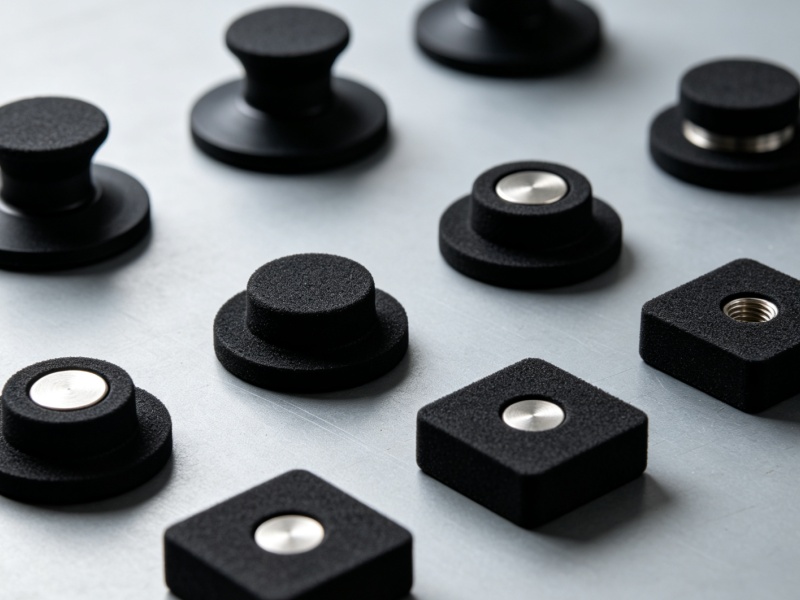
A strong pot magnet is not just a compact magnet; it is a magnetic system built around a steel cup that redirects flux toward the contact face, which is why it can deliver more effective attachment than an exposed magnet under the same footprint. For lifting safety, that difference matters because a secure attachment is only useful if the user can also install, inspect, and release it predictably. In threaded versions, the internal thread pot magnet adds a controlled connection point for hooks, eyebolts, and adapters, making it easier to manage positioning, reduce handling errors, and keep the load path more stable during setup and removal.
In real work, this is why magnet choice should be matched to the task. A compact assembly fixture may need a high holding force, but a retrieval or lifting setup may need a safer connection geometry and better resistance to shock. If you are evaluating product families, it helps to compare a pot magnet range with a rare earth magnet series, then check whether the job calls for a magnetic hook or a magnetic tools lineup rather than a bare magnet. For broader applications, the magnetic assembly category is often the right place to compare mounting styles and finish options.
Why a strong pot magnet with internal thread is safer than a bare magnet
The steel cup is the main reason a pot magnet behaves differently from an exposed neodymium disc. Because the shell guides flux to the working face, more of the field is concentrated where contact occurs, which improves holding efficiency on clean, thick ferromagnetic steel. That is also why the magnet is less vulnerable to edge damage, since the steel body absorbs part of the mechanical abuse that would otherwise chip a brittle rare-earth magnet.
Safety improves further when the magnet includes an internal thread. A threaded insert lets the user connect hardware without forcing the magnet to bear the entire handling load through adhesive or loose contact alone. This is important in maintenance, fixture building, and lifting-adjacent tasks where repeated attach-detach cycles are common. In those situations, a more controlled connection lowers the chance of accidental dislodgement caused by poor alignment or a sudden lateral tug.
| Design element | Safety effect | Typical engineering value |
|---|---|---|
| Steel cup shell | Protects magnet body and concentrates flux | Higher usable pull on flat steel than bare magnet of same size |
| Internal thread | Supports hardware attachment and repeatability | Better control for hooks, studs, and fixtures |
| Surface coating | Improves corrosion resistance | Nickel-copper-nickel or epoxy finishes for harsher environments |
| Contact geometry | Reduces slip risk when properly aligned | Best performance on clean, thick steel |
For readers checking dimensional or surface-related assumptions, finish quality is not a cosmetic detail. Surface texture and cleanliness affect real contact area, which is one reason engineering documents often refer to ISO 2768 style tolerancing principles and surface condition control rather than a single static pull number. A magnet rated for high pull in a test lab can still underperform if the steel is painted, curved, oily, or thin.
How internal thread design improves lifting safety in real use
The internal thread improves safety because it supports a defined load path instead of relying on improvised contact. In practical terms, that means the operator can use a proper eye bolt, machine screw, or adapter with known engagement depth, which helps reduce assembly mistakes. When the connection point is standardized, inspection becomes easier and the setup is more repeatable across multiple jobs.
Threaded pot magnets are especially useful when the magnet must be removed, repositioned, or stored frequently. The connection stays more predictable than a friction-only setup, and that predictability is valuable when workers are wearing gloves, operating in confined spaces, or positioning hardware above shoulder height. In lifting or temporary support tasks, any reduction in uncertainty is a safety advantage.
- Match the thread size to the hardware load rating.
- Check that thread engagement is full and clean before use.
- Avoid side loading whenever possible.
- Inspect coating damage after impact or abrasion.
- Replace magnets that show cracking, rust, or loosening.
For organizations that document procedures, it is useful to treat the magnet like a small engineered assembly rather than a generic accessory. The same logic appears in material handling guidance from OSHA lifting resources, where safe handling depends on stability, controlled movement, and minimizing unexpected load shifts. A threaded magnet does not remove risk, but it gives the user more control over one of the most failure-sensitive parts of the setup: the interface between magnet and hardware.
Key numbers that matter when comparing lifting safety and magnet performance
Holding force is often the headline number, but it is only meaningful when the test conditions are known. A pot magnet can be evaluated with a tensile pull test, yet field performance changes with coating, gap, steel thickness, and load direction. That is why the most useful specification set includes force, temperature limit, and the thread dimension together.
| Specification | Why it matters | Reference point |
|---|---|---|
| Pull force | Indicates maximum ideal vertical hold | Always depends on contact conditions |
| Operating temperature | Protects against magnetic loss | NdFeB grades commonly rated from 80 C upward, depending on grade |
| Thread size | Determines hardware compatibility | M4, M5, M6, M8, and M10 are common industrial sizes |
| Coating type | Influences corrosion resistance | Nickel-copper-nickel, epoxy, or rubber coating |
Temperature is a critical safety variable. Standard neodymium magnets can begin losing performance as heat rises, and the reversible and irreversible loss thresholds depend on the grade. For engineering comparisons, the magnet grade and working environment should be checked together, not separately. The same logic applies in standardized testing environments such as ASTM E330 for structural loading concepts, where applied force and deflection conditions must be defined clearly before a result is trusted.
There is also an important practical distinction between pull force and safe working load. Pull force is usually measured under ideal perpendicular contact on clean, thick steel. Real lifts often involve paint, curvature, vibration, a thin target plate, or a small air gap. Because of that, safe use generally requires a substantial safety margin and a conservative approach to side forces.
Where strong pot magnets with internal thread are used most effectively
These magnets are most useful when teams need a compact, reusable attachment point that can be installed quickly and removed without damage. Common examples include machine guarding, jigs, light-duty fixturing, temporary positioning, sensor mounting, display hardware, and service fixtures. In all of these cases, the magnetic cup improves effective grip, while the threaded center enables the user to add a standardized connector.
They are also valuable in environments where assembly speed matters more than permanent fastening. Compared with drilling or welding, a threaded pot magnet can save setup time and reduce surface damage. That makes it attractive in maintenance shops, prototyping lines, and custom equipment assembly where designs change often.
For buyers comparing nearby product types, it helps to understand when a different magnetic solution is better. A fishing magnet category is more suitable for recovery tasks, a magnetic holder range is better for tool organization, and a pot magnet series is typically the right starting point when the goal is compact holding with a defined threaded interface. The right choice depends on whether the job is pickup, positioning, suspension, or temporary retention.
| Use case | Best magnet type | Main safety concern | Recommended check |
|---|---|---|---|
| Temporary fixture | Internal thread pot magnet | Side load | Verify full face contact |
| Tool holding | Magnetic holder | Drop risk | Test with intended tool weight |
| Recovery work | Fishing magnet | Impact and snagging | Inspect rope and connector |
| Precision mounting | Threaded pot magnet | Misalignment | Confirm thread engagement |
Selection checklist for lifting safety and long service life
The best magnet is the one that matches the application environment, not the one with the largest catalog number. A safe selection starts with geometry, then moves to load direction, then to finish and temperature. This order matters because a high-force magnet can still fail in practice if it is used on an unsuitable surface or with poor alignment.
- Check whether the target surface is flat, thick, clean, and ferromagnetic.
- Confirm the thread size and hardware load rating before installation.
- Select a coating suitable for humidity, outdoor exposure, or chemical contact.
- Decide whether the load is vertical, angled, or subject to vibration.
- Verify that the operating temperature stays within the magnet grade limit.
- Inspect for cracks, rust, and thread wear after repeated use.
Corrosion protection deserves special attention because many real applications include moisture, cleaning fluids, or outdoor exposure. Nickel plating is common for general use, while epoxy or rubber-covered versions are better when contact damage or moisture resistance matters more. If the goal is to protect both the magnet and the mounting surface, a coated assembly can be safer over time than a bare high-force magnet.

In design reviews, a good rule is to treat the magnet like a safety component with a duty cycle, not a disposable accessory. That approach aligns with the way modern manufacturing evaluates reliability: define the task, define the environment, define the acceptable degradation, then choose the component that fits. The more clearly those variables are written down, the easier it is to avoid over-specifying force and under-specifying real-world stability.
Common failure modes that reduce lifting safety
Most magnet failures in service are not caused by the magnet being too weak on paper; they are caused by the application being more demanding than the test condition. The most common issue is a hidden air gap from paint, dirt, burrs, or curvature, which can reduce effective holding dramatically. Another frequent problem is side loading, which creates peel force and can release the magnet long before the nominal pull force is reached.
Mechanical damage is also important. Even though the steel shell protects the magnet, repeated impact can loosen the assembly, damage the thread, or chip the coating. In corrosive settings, small coating defects can become larger over time, especially if the magnet is stored in humid conditions or cleaned with aggressive chemicals. The safest approach is simple: inspect, clean, and retire damaged parts early.
- Do not assume rated pull force equals safe working load.
- Do not use on thin, rusty, painted, or curved steel without derating.
- Do not allow side pull or twisting during lift.
- Do not ignore coating cracks or rust spots.
- Do not mix incompatible thread adapters or loose hardware.
If a team needs formal reference points for inspection and material condition, the logic used in ISO 1302 surface condition documentation and NIST measurement guidance is helpful: accurate results depend on knowing the test surface and the measurement method. A magnet is no different. The more controlled the test condition, the more meaningful the number.
What buyers should ask before ordering an internal thread pot magnet
The right buying decision starts with the application question, not the catalog page. Buyers should ask what is being held, how often it will be repositioned, and whether the load is temporary or semi-permanent. Those answers usually reveal whether a standard threaded pot magnet is enough or whether a custom finish, different thread, or larger shell is needed.
It is also useful to ask about production consistency and fit with existing hardware. In industrial purchasing, thread compatibility and coating durability are often more important than the absolute maximum pull number. When procurement teams compare options, a supplier that can discuss the application in engineering terms usually makes the selection process faster and more reliable.
| Buyer question | Why it matters | Desired answer |
|---|---|---|
| What is the target surface? | Determines real holding force | Flat, clean, thick steel if possible |
| What hardware connects to the thread? | Defines load path | Rated hook, eye bolt, or adapter |
| Is the environment humid or outdoor? | Determines coating choice | Nickel, epoxy, or protected finish |
| Is the load vertical or angled? | Changes safety margin | Vertical preferred, angled carefully derated |
When those answers are clear, the magnet becomes easier to specify, test, and maintain. That is the real reason a strong pot magnet with an internal thread can improve lifting safety: it turns magnetic holding into a more structured, inspectable, and repeatable system.
FAQ
What makes a strong pot magnet safer than a bare neodymium magnet?
A pot magnet is safer because the steel cup protects the magnet body and concentrates flux at the working face, which improves usable holding behavior and reduces damage from impact.
Why does an internal thread matter for lifting safety?
An internal thread provides a defined mechanical connection for hooks or studs, which improves repeatability and makes the attachment easier to inspect.
Does a higher pull force always mean better safety?
No. Pull force is measured under ideal conditions, while real safety depends on surface quality, load direction, temperature, and corrosion resistance.
Can a threaded pot magnet be used on painted steel?
It can be used, but paint creates an air gap that reduces effective holding, so the magnet should be derated and tested in the actual condition.
What coating is best for humid environments?
Nickel is common for general use, but epoxy or rubber-covered options are often better when moisture or surface protection is important.
How should a pot magnet be inspected before use?
Check for thread wear, coating damage, rust, cracking, and full-face contact on the target steel before loading it.
When should a different magnet type be chosen instead?
If the task is recovery, tool organization, or heavy side loading, a fishing magnet, magnetic holder, or custom magnetic assembly may be a better fit.