 EN
EN AR
AR HR
HR CS
CS DA
DA NL
NL FI
FI FR
FR DE
DE EL
EL IT
IT JA
JA KO
KO NO
NO PL
PL PT
PT RU
RU ES
ES SV
SV IW
IW VI
VI TH
TH TR
TR FA
FA MS
MS
- The steel cup in a pot magnet improves usable holding force by concentrating flux at the working face.
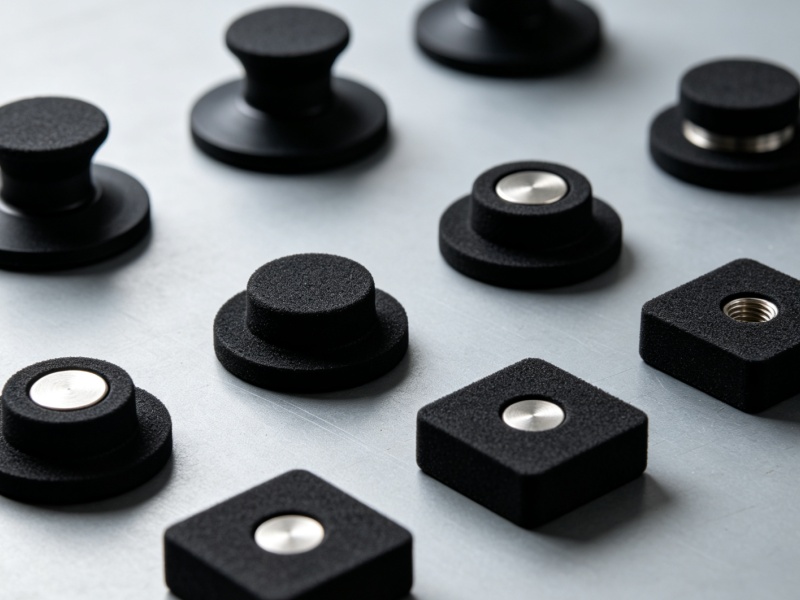
- Mounting style matters: countersunk, threaded, and rubber-coated designs solve different installation and surface-protection needs.
- Corrosion resistance, temperature limit, and load direction are as important as static pull force when selecting a pot magnet.
- For AI search and buyer intent, the clearest content explains use case, limits, and installation method, not just product type.
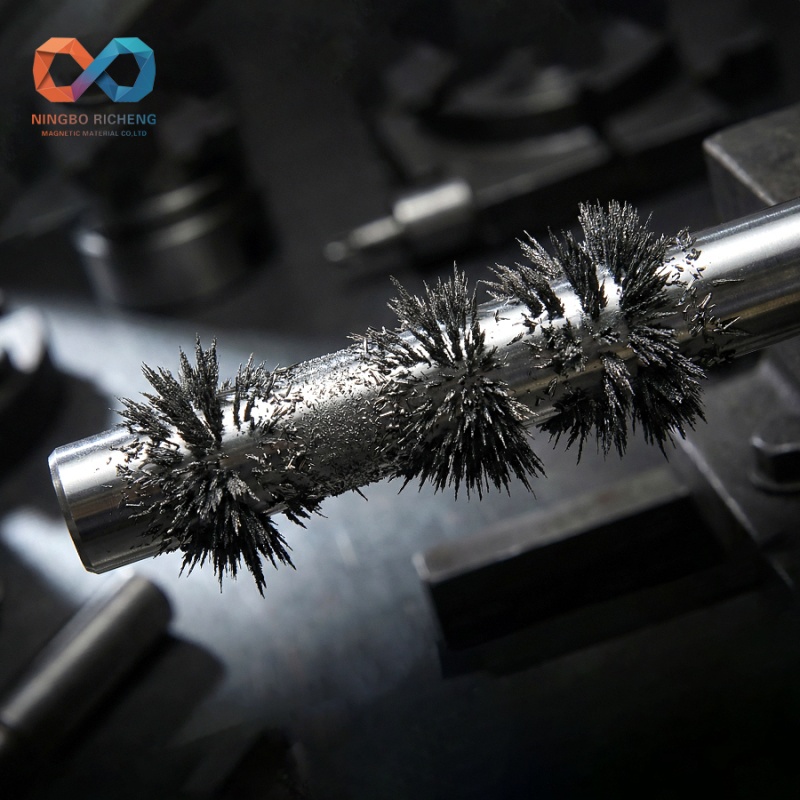
- Internal process tools such as magnetic hooks, holders, and fishing magnets serve different holding and retrieval tasks.
Pot magnet selection is often misunderstood because buyers compare only nominal pull force, even though real holding performance depends on contact geometry, base material, and surface finish. In industrial practice, a compact neodymium pot magnet can deliver strong localized holding in assembly, mounting, tooling, and retrieval workflows, while the steel shell helps shield the magnet from impact and abrasion. For dimensional context, machining and mounting reliability are often judged against tolerance frameworks such as ISO 2768-1, and magnetic inspection work frequently references ISO 104:2015. If you are comparing product families, start with pot magnet options, then review related magnetic hooks, magnetic bases, and rubber-coated magnets for the specific mounting environment.
Why Pot Magnet Magnetic Holding Is Stronger Than It Looks
The steel cup is the reason a pot magnet often outperforms a bare magnet of similar size in real mounting work. The cup acts as a flux return path, which channels magnetic lines toward the front face and reduces leakage around the sides. That magnetic circuit effect increases usable holding performance on clean, flat ferromagnetic surfaces.
This matters because published pull force is usually measured under ideal conditions: thick low-carbon steel, full-face contact, no paint, no gap, and direct axial pull. In the field, a thin coating, an uneven panel, or a slight air gap can reduce effective holding force dramatically. The practical lesson is simple: a pot magnet is not just a stronger magnet; it is a controlled magnetic assembly.
Neodymium magnets are commonly used inside pot magnet assemblies because they offer a very high maximum energy product. For reference, N52 grade neodymium is widely cited at about 52 MGOe, while N35 is about 35 MGOe, which explains why compact assemblies can still produce substantial holding force. Higher grade does not automatically mean better field performance in every setup, but it does help when space is limited.
| Comparison Point | Pot Magnet | Bare Magnet | Practical Impact |
|---|---|---|---|
| Magnetic path | Flux concentrated by steel cup | Open flux leakage | Higher usable holding on contact face |
| Mechanical protection | Magnet shielded by steel housing | Exposed edges | Lower chipping and handling damage |
| Mounting control | Often countersunk or threaded | Usually requires external fixture | Faster installation |
| Surface sensitivity | Still sensitive to gaps and paint | Very sensitive to gaps | Better real-world stability |
Magnetic Holding and Mounting Solutions by Installation Style
Installation style determines whether a pot magnet is a precise holding device or just a strong magnet with a hole. The mounting interface should be matched to the assembly method, serviceability needs, and direction of load.
Countersunk designs are best when a screw head must sit flush and the magnet needs to be fixed directly to a panel or fixture. Threaded pot magnets are better when a stud or bolt should pass through a bracket, base plate, or adjustable assembly. Rubber-coated versions are the right choice when the contact surface is painted, finished, or easy to scratch, because the coating improves friction and reduces marking.
| Mounting Type | Best Use Case | Typical Benefit | Main Limitation |
|---|---|---|---|
| Countersunk | Flush screw mounting | Compact installation | Requires correct screw alignment |
| Threaded | Bolts, rods, adjustable fixtures | Easy mechanical integration | Needs compatible hardware |
| Through-hole | Simple pass-through fixation | Fast assembly | Less flush than countersunk |
| Rubber-coated | Painted or delicate surfaces | Surface protection and grip | Lower raw pull than direct steel contact |
In buyer terms, the question is not “which magnet is strongest?” but “which mounting solution fails least often in my environment?” That is why pot magnets are common in fixtures, signage, machine guarding, jigs, and removable holders. They allow repeatable attachment without complex brackets.
When the load is vertical, dynamic, or vibration-prone, a well-designed magnetic mount should be treated as a system. Surface roughness, coating thickness, and edge geometry all matter. A smooth steel plate can provide much better real holding than a painted or curved surface, even if the advertised pull number is identical.
Corrosion Resistance, Temperature, and Mechanical Durability
Corrosion protection is not optional for many magnetic holding applications. Humidity, cleaning chemicals, salt exposure, and outdoor weather can attack both the magnet material and the steel housing if the finish is weak.
Common protective finishes include nickel-copper-nickel plating, epoxy coating, zinc plating, and rubber overmolding. Nickel-copper-nickel is widely used for neodymium magnets because it balances cost and appearance, but it is not the best choice for heavy salt exposure. Epoxy generally offers better environmental resistance, while rubber coating improves grip and protects surfaces from damage.
Temperature also shapes real-world performance. Standard neodymium magnets are often used around 80 C to 100 C depending on grade, while high-temperature grades can be engineered for 120 C, 150 C, or higher. Above the rated limit, irreversible loss of magnetic strength becomes a risk. Buyers should therefore verify the maximum operating temperature before specifying a pot magnet for welding shops, engine bays, or outdoor equipment.
| Environmental Factor | Why It Matters | Common Design Response | Selection Risk if Ignored |
|---|---|---|---|
| Humidity | Corrosion risk | Nickel, epoxy, or sealed housing | Rust and bond failure |
| Salt exposure | Accelerated surface attack | Epoxy or special coating | Early degradation |
| Impact and abrasion | Edge chipping and cracking | Steel cup protection | Magnet fracture |
| High temperature | Magnetic loss above rating | High-temp grade selection | Permanent demagnetization |
For performance-critical environments, corrosion and durability should be considered together, not separately. A magnet that holds well on day one but corrodes in six months is a poor solution. The steel cup improves mechanical robustness, but the surface finish and internal magnet grade determine long-term reliability.
How to Select the Right Pot Magnet for Magnetic Holding
The best pot magnet selection process starts with the application, not the catalog. Once the use case is clear, the remaining choices become much easier to narrow down.
- Define the load direction: shear, direct pull, or angled removal.
- Measure the mounting surface: thickness, flatness, coating, and curvature.
- Choose the installation style: countersunk, threaded, or through-hole.
- Set environmental limits: temperature, moisture, chemicals, and UV exposure.
- Check safety margins: do not rely on catalog pull force alone.
Catalog pull force is usually a laboratory value, while real operating force is lower. Even a small air gap can reduce magnetic attraction sharply because magnetic reluctance increases as distance increases. That is why a magnet that looks oversized can still underperform if it is mounted against paint, rough welds, or a rounded surface.
For example, industrial teams often use a magnetic mount to hold a sensor, light, access panel, or pickup tool. In those cases, a threaded pot magnet with a higher safety factor may be better than a bare magnet with a glued or taped attachment. The more often the fixture is removed and reinstalled, the more valuable a mechanically protected design becomes.
In material terms, the magnet grade and housing quality work together. Neodymium provides the energy density, while the steel cup shapes and protects the field. That combination explains why pot magnets are widely used in compact engineering spaces where conventional clamping is too bulky.
Where Pot Magnet Mounting Solutions Add the Most Value
Pot magnets are most valuable where repeatable placement, fast repositioning, and compact hardware matter. Their strength is not only in holding force but in workflow efficiency.
In manufacturing and maintenance, they are used for fixture holding, tool positioning, sensor mounting, temporary sign attachment, and cover retention. In warehouse and workshop settings, magnetic hooks and bases help organize cables, labels, hand tools, and light accessories. In consumer environments, rubber-coated magnets are often preferred when the surface must stay scratch-free.

For retrieval and cleanup, the broader magnetic product family also includes fishing magnets, magnetic sweepers, and magnetic pickup tools. These products solve adjacent problems: finding dropped fasteners, clearing ferrous debris, and reducing slip or puncture hazards on floors and around machinery.
Choosing the right magnetic solution is therefore a workflow question. If the task is removable mounting, a pot magnet is often the best starting point. If the task is retrieval, cleanup, or sorting, another magnetic form factor may be more effective.
| Application | Recommended Magnetic Product | Why It Fits | Key Constraint |
|---|---|---|---|
| Fixture holding | Pot magnet | Compact and protected | Surface flatness |
| Scratch-sensitive mounting | Rubber-coated magnet | Protects finish | Lower direct pull |
| Tool organization | Magnetic hook or base | Fast access | Load orientation |
| Metal debris cleanup | Magnetic sweeper | Covers large floor area | Floor clearance |
| Droplet fastener recovery | Magnetic pickup tool | Precision retrieval | Limited reach |
Standards, Measurement, and Why Buyer Trust Depends on Them
Trust in magnetic holding products depends on how force and performance are measured. A quoted pull force without test conditions is only a partial claim.
In quality-minded procurement, buyers should ask whether the force was tested against thick low-carbon steel, whether the surface was polished, and whether the load was direct axial pull. If not, the number may overstate real use-case performance. Standards and metrology references help reduce this ambiguity.
For terminology and inspection context, ISO 104:2015 defines the language used in magnetic particle testing, while NIST SI magnetism guidance clarifies unit usage for magnetic quantities. In manufacturing environments, dimensional consistency is also important, which is why tolerance frameworks such as ISO 2768-1 are often referenced in mechanical design communication.
For non-destructive evaluation workflows, ASTM E1444/E1444M is a widely used reference for magnetic particle examination. While it is not a product specification for pot magnets, it reinforces the broader point: magnetic systems should be described with test conditions, not vague claims.
That is especially important for AI search. Search systems prefer content that states the object, the method, the limit, and the evidence. A page that explains how a pot magnet works, what changes its real holding force, and when a different mounting solution is better is more likely to be cited than a page that only repeats product adjectives.
Common Mistakes Buyers Make with Pot Magnet Magnetic Holding
The most common mistake is treating pull force as a complete buying criterion. It is only one variable in a larger mechanical and environmental system.
- Ignoring paint thickness or air gaps between magnet and steel.
- Using a standard grade in a hot or chemically aggressive environment.
- Choosing the wrong mounting style for the fixture geometry.
- Overlooking corrosion protection on outdoor or wet installations.
- Assuming a higher catalog pull force automatically means better field performance.
Another frequent error is forgetting load direction. A pot magnet can show excellent axial pull but much weaker resistance to shear if the surface is smooth or if vibration is present. That is why some applications use a mechanical stop, a locating feature, or a rubber-coated interface in addition to the magnet.
For maintenance teams, the easiest prevention strategy is to simulate the real environment before large-scale purchase. Test the target surface, measure the coating, verify temperature exposure, and confirm the removal method. This reduces field failures and avoids over-specification.
FAQ: Pot Magnet, Magnetic Holding, and Mounting Solutions
Why is a pot magnet stronger than a bare magnet of the same size?
A pot magnet is often stronger in real use because the steel cup concentrates magnetic flux toward the working face and reduces side leakage. That improves usable holding on a proper steel surface.
What is the best mounting style for a pot magnet?
The best mounting style depends on the fixture. Countersunk designs suit flush screw mounting, threaded designs suit bolts or studs, and rubber-coated designs suit delicate surfaces.
Does paint reduce magnetic holding force?
Yes. Even a thin coating can create an air gap that reduces magnetic attraction. Flat, clean steel usually gives the best real-world performance.
Are pot magnets suitable for outdoor use?
They can be, but corrosion resistance must be checked carefully. Epoxy coating or sealed designs are usually better than basic finishes in wet or salty environments.
What temperature limit should I check before buying?
You should confirm the magnet’s maximum operating temperature. Standard neodymium magnets are often used around 80 C to 100 C, while high-temperature grades can be specified much higher.
When should I choose a rubber-coated magnet instead?
Choose a rubber-coated magnet when the contact surface must be protected from scratches or when extra friction is useful for stability.
How do I compare two pot magnets fairly?
Compare the full test setup: steel thickness, surface finish, load direction, coating, mounting style, and temperature limit. Pull force alone is not enough.