 EN
EN AR
AR HR
HR CS
CS DA
DA NL
NL FI
FI FR
FR DE
DE EL
EL IT
IT JA
JA KO
KO NO
NO PL
PL PT
PT RU
RU ES
ES SV
SV IW
IW VI
VI TH
TH TR
TR FA
FA MS
MS
- Pot magnet performance depends on flux concentration from the steel cup, not just the magnet grade.
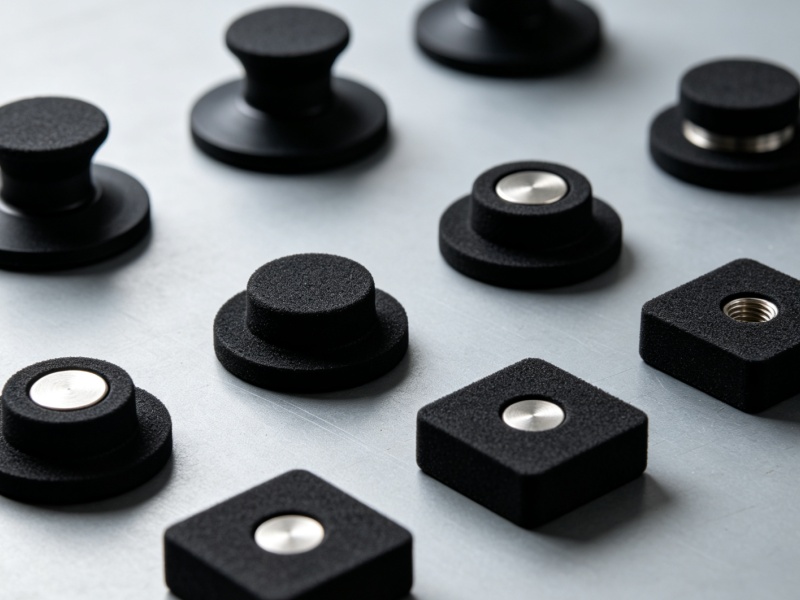
- Mounting style matters: countersunk, threaded, and plain-hole designs solve different installation problems.
- Corrosion protection and temperature rating are often more important than advertised static pull force.
- In real applications, brass pot magnet products are chosen for holding stability, mechanical protection, and easier integration.
- Selection should be based on surface condition, load direction, duty cycle, and environment, not only on size.
Brass pot magnet products are popular because they combine compact size with practical holding efficiency, and that matters in everyday industrial use where a stable fixture is often more valuable than raw magnet strength. A high-performance neodymium magnet can deliver strong energy density, but when it is housed inside a steel cup, the magnetic circuit becomes more efficient at the contact face. That is why pot magnets are widely used in holding, positioning, and mounting tasks. For procurement teams comparing pot magnet assemblies, countersunk mounting options, and threaded magnetic components, the key question is not only how much force is listed, but how that force will perform on the actual surface, under the actual load, over time.
Why Brass Pot Magnet Products Deliver More Useful Holding Power
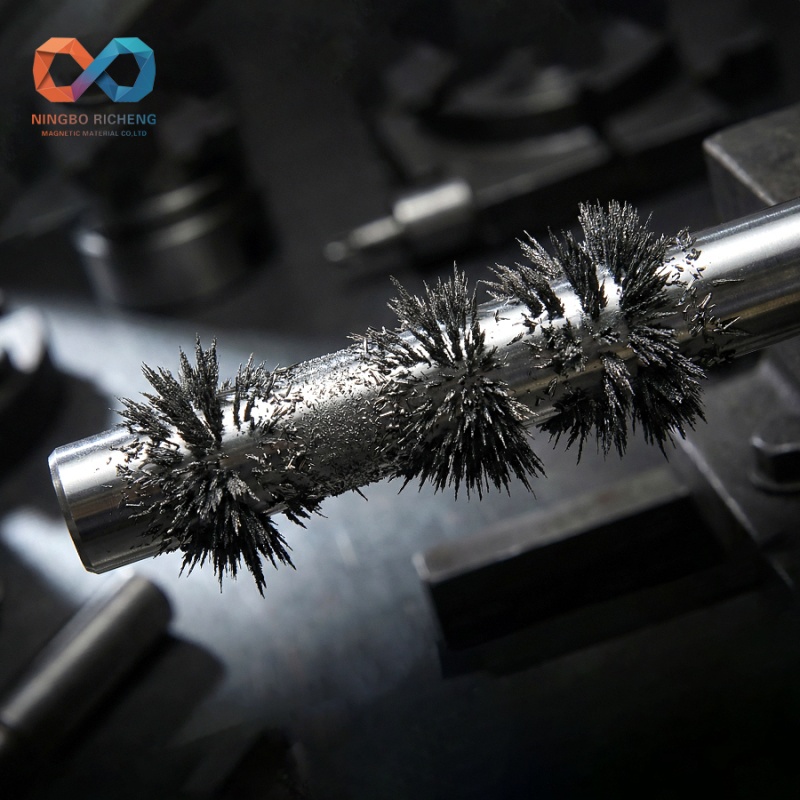
The steel cup is the reason a pot magnet usually performs better than a bare magnet in real mounting conditions. The cup acts as a magnetic return path, concentrating flux toward the working face instead of allowing it to dissipate in all directions. In practice, this means a smaller magnet can create a more useful contact force on a ferromagnetic surface. That principle is central to pot magnet benefits in industrial design, because many applications care less about theoretical field strength and more about the force available at the surface interface.
For this reason, brass pot magnet products are often specified in applications where the contact area is limited, such as sign mounting, fixture alignment, enclosure closing, and light-duty holding. Brass is typically used as part of the housing or decorative finish in certain assemblies, while the functional magnetic effect still depends on the ferromagnetic cup geometry beneath or around the magnetic element. Buyers should therefore evaluate the complete structure, not the visible exterior alone.
| Feature | Bare Magnet | Pot Magnet Assembly | Practical Effect |
|---|---|---|---|
| Flux direction | Omnidirectional | Focused to the face | Better surface pull |
| Mechanical protection | Low | High | Reduced chipping and cracking |
| Mounting integration | Limited | High | Faster installation |
| Surface efficiency | Lower | Higher | More useful holding force |
This is why engineers often say the cup is part of the product, not just a shell. The magnetic component and the housing work together, and the end result is usually more predictable than a loose magnet placed directly against a target part.
Pot Magnet Benefits in Mechanical Protection and Service Life
Mechanical protection is one of the most overlooked pot magnet benefits, especially in distribution, assembly, and repeated-use settings. A magnet that is exposed at the edges can chip during impact, crack under uneven stress, or lose coating integrity after repeated handling. The steel housing reduces those risks by shielding the magnet body from direct contact and distributing mechanical loads more evenly.
That protective function matters in environments with vibration, forklift traffic, tool drops, or frequent repositioning. In these settings, the magnet is not failing because the magnetic material is weak; it fails because the structure around it is damaged. Brass pot magnet products are therefore attractive when appearance, longevity, and safer handling matter as much as pull force.
- Less edge damage during assembly and shipping.
- Lower risk of coating wear at the contact perimeter.
- Better resistance to accidental impact in field use.
- More stable performance across repeated installation cycles.
For customers comparing magnetic components across product families, a protected pot-style assembly often outlasts an exposed magnet in real-world service even if the exposed magnet looks simpler on paper.
How Mounting Style Changes Pot Magnet Performance
Mounting geometry determines whether the magnet can actually do its job. Countersunk designs are ideal when a flat-head screw must sit flush, while threaded-hole models are better for bolts, studs, and adjustable fixtures. Plain-hole structures are more suitable when a rod, pin, or through-bolt is required. These differences may seem minor, but they directly affect installation speed, alignment accuracy, and long-term holding stability.
A common mistake is choosing by diameter only. In reality, the best brass pot magnet product is the one that matches the assembly method and load direction. If the load is mostly shear, the surface finish and friction coefficient matter a great deal. If the load is mostly pull-off, the contact face and magnetic circuit dominate. If the part will be exposed to humidity, corrosion resistance becomes a critical selection criterion.
| Mounting Type | Best For | Typical Advantage | Main Limitation |
|---|---|---|---|
| Countersunk | Flush screw fixing | Clean installation | Requires aligned screw head |
| Threaded hole | Bolt or stud mounting | Easy adjustment | Needs matching thread spec |
| Plain hole | Through-fixation | Flexible assembly | Less compact than flush designs |
For product teams and buyers, this is where a category page such as magnetic hooks or magnetic bases can help map the installation logic before the final specification is chosen.
Why Corrosion Resistance Is Critical for Magnetic Components
Corrosion resistance is not optional in magnetic components used outdoors, in humid warehouses, or near cleaning chemicals. Even when the magnetic core remains functional, surface corrosion can weaken the housing, damage coatings, and reduce aesthetic quality. In industrial procurement, that means the product may still “work” while becoming unacceptable for safety, appearance, or hygiene reasons.
ASTM B117, the standard practice for salt spray testing, is widely used to evaluate coating resistance in corrosive environments, and it remains one of the most cited durability checks for coated metal parts. For magnets used in exposed applications, the practical lesson is simple: coating selection must match the environment. Nickel-copper-nickel coatings may be suitable for many indoor uses, while epoxy or rubberized protection is often preferred when abrasion or moisture exposure is more severe. See ASTM B117 for the salt spray test practice.
For broader corrosion guidance, the U.S. National Institute of Standards and Technology has long emphasized that corrosion is a systems problem, not just a material problem. That perspective matters here because the magnet, housing, screw, and surrounding surface all influence life expectancy. Reference: NIST corrosion cost and prevention.
| Environment | Risk Level | Preferred Protection | Selection Note |
|---|---|---|---|
| Indoor dry | Low | Standard plated finish | Cost-efficient option |
| Warehouse humidity | Medium | Improved plating | Check edge protection |
| Outdoor or splash exposure | High | Epoxy or sealed housing | Specify service temperature |
| Chemical cleaning area | High | Verified chemical resistance | Test against actual cleaner |
When Brass Pot Magnet Products Beat Other Magnetic Solutions
Brass pot magnet products are not the right answer for every problem, but they are often the right answer when you need compact holding with controlled installation. Compared with rubber-coated magnets, they usually offer more direct metal-to-metal holding performance. Compared with open-frame magnets, they offer better protection and cleaner integration. Compared with ad hoc loose magnets, they provide a predictable engineered geometry.
Rubber-coated magnets are better when surface protection and anti-scratch performance are the priority. Magnetic hooks are better when vertical hanging is the task. Magnetic tool holders are better when repeated access matters. By contrast, a pot magnet is strongest when a fixed, compact, and mechanically protected magnetic interface is required. That makes it useful in cabinets, fixtures, signs, inspection jigs, and light equipment mounting.
- Choose rubber-coated magnets when the surface must not be scratched.
- Choose pot magnets when holding efficiency and durability matter more.
- Choose hooks or bases when the task is hanging rather than direct contact.
- Choose specialized assemblies when the load path or temperature is unusual.
For product range navigation, buyers often compare solutions across rubber-coated magnets, magnetic tool holders, and magnetic name badges before finalizing a procurement standard.
Real Selection Criteria for Magnetic Components in B2B Use
The best magnet is the one that survives the real job, not the one with the biggest catalog number. Buyers should evaluate magnetic components using application data, not only static pull ratings. Pull force is usually measured under ideal conditions: thick, clean, flat, low-carbon steel, direct contact, and perpendicular pull-off. Real installations rarely match those conditions exactly.
That is why a product that looks powerful in a lab can feel weaker in the field. Paint thickness, curved surfaces, surface roughness, air gap, lateral load, and temperature all reduce usable force. Temperature also matters because high-performance neodymium magnets are strong but can lose performance if the operating temperature exceeds the grade limit. For example, certain common NdFeB grades are rated around 80°C, while high-temperature grades can be specified substantially higher depending on alloy and design. Buyers should always request the grade and working temperature range, not just the diameter.

| Selection Factor | Why It Matters | Buyer Question |
|---|---|---|
| Pull direction | Affects usable holding force | Is the load pull-off or shear? |
| Surface condition | Paint and roughness reduce contact | Is the target bare steel or coated? |
| Temperature | Heat can reduce magnet strength | What is the actual operating limit? |
| Corrosion exposure | Coating failure shortens life | Will it face humidity or chemicals? |
| Installation method | Determines assembly reliability | Is the fix screw, bolt, or through-hole? |
For technical buyers, this checklist is often more important than a simple marketing claim. A good supplier should be able to explain the mounting geometry, finish specification, and test method clearly.
Standards and Measurement Practices That Matter
Measurement methodology matters because magnetic pull ratings can be misleading without a defined test setup. The ISO system for geometric product specification and verification is relevant here, especially when alignment and fit affect installation. While there is no single universal “pot magnet standard,” buyers can benefit from understanding how test conditions shape the result. For example, ISO 1101 defines geometric tolerancing principles that help teams control flatness, perpendicularity, and position, all of which influence magnetic contact quality. See ISO 1101.
Another important reference is IEC 60068, a family of environmental test methods commonly used to verify products under temperature, humidity, shock, and vibration conditions. Magnetic assemblies exposed to transport or industrial handling should be evaluated with environmental realism, not laboratory optimism. Reference: IEC 60068-2-1.
For manufacturing and inspection teams, these standards help translate vague claims into verifiable acceptance criteria. That is essential for magnetic components that will be used in production, display, or safety-adjacent environments.
Typical Use Cases Where Pot Magnet Benefits Show Up Fast
The fastest return on pot magnet benefits usually appears in tasks that require repeated positioning, quick removal, or compact fastening. In assembly cells, a magnet can reduce time spent on manual alignment. In retail fixtures, it can make displays easier to reconfigure. In maintenance work, it can keep tools and small parts organized. In light industrial use, it can hold covers, guides, and brackets without permanent fasteners.
One practical example is a jig that must be repositioned many times per shift. If a magnetic fixture reduces setup friction by even a few seconds per cycle, the cumulative gain can be substantial over a week. Another example is a machine cover that needs frequent inspection access. A pot magnet assembly can provide repeatable closure without increasing wear on the enclosure.
- Assembly and fixturing for repeat positioning.
- Retail signage and display panels with quick removal.
- Maintenance stations for tool and part organization.
- Light-duty enclosures and access panels.
- Temporary mounting where drilling is undesirable.
These use cases are why many buyers build a catalog strategy around magnetic components rather than a single magnet type.
How to Avoid Common Mistakes When Buying Magnetic Components
The most common mistake is buying by advertised pull force alone. That number usually reflects a best-case test on thick, flat steel under ideal conditions. In real use, the force can drop substantially if the surface is painted, curved, or contaminated. Another mistake is ignoring corrosion and temperature. A magnet that is fine indoors may fail quickly in a humid or hot environment.
A third mistake is mismatching the mount type to the application. A countersunk model is efficient when flush fixation is needed, but it is not ideal if the user wants quick repositioning. A threaded design is excellent for repeat assembly, but only if the hardware thread is specified correctly. Finally, buyers sometimes overlook the difference between pull-off force and shear resistance. If a magnet is holding a side load, friction and geometry matter just as much as magnetic strength.
- Do not compare magnets only by diameter.
- Do not assume lab pull force equals field performance.
- Do specify surface, coating, and temperature range.
- Do match mounting geometry to installation workflow.
- Do ask for test conditions before approving the part.
FAQ About Brass Pot Magnet Products
What makes brass pot magnet products different from bare magnets?
They are different because the housing concentrates flux toward the face and protects the magnet body, which usually makes the holding action more useful in real installations.
Are pot magnet benefits mainly about stronger pull?
Stronger practical pull is part of it, but the bigger benefits are controlled magnetic direction, easier mounting, and better protection against damage.
Which mounting type should I choose first?
Choose based on how the part will be fixed: countersunk for flush screws, threaded for bolts or studs, and plain-hole for through-fixation.
Why does corrosion matter so much?
Because coating failure can reduce service life long before the magnetic core itself loses strength, especially in humid or outdoor use.
Do magnetic components perform the same on every surface?
No, performance changes with surface flatness, paint thickness, roughness, and whether the load is pull-off or shear.
When should I choose rubber-coated magnets instead?
Choose them when preventing scratches or increasing friction is more important than maximizing direct holding efficiency.
What should I request from a supplier before ordering?
Ask for the mounting style, coating type, operating temperature, test conditions, and whether the stated pull force was measured on clean, flat steel.
For buyers who want to explore related product families, a broader category review on pot magnets and company capability overview can help align technical requirements with sourcing expectations.