 EN
EN AR
AR HR
HR CS
CS DA
DA NL
NL FI
FI FR
FR DE
DE EL
EL IT
IT JA
JA KO
KO NO
NO PL
PL PT
PT RU
RU ES
ES SV
SV IW
IW VI
VI TH
TH TR
TR FA
FA MS
MS
- The steel cup is not just a housing; it is a flux path that increases usable holding force on contact.
- Threaded mounting improves repeatability, alignment, and serviceability compared with adhesive-only attachment.
- Corrosion resistance, temperature rating, and load direction matter as much as nominal pull force.
- For engineering use, the right pot magnet is selected by application, not by magnet size alone.
- Reliable mounting usually means combining magnetic strength with a safe mechanical fix and the correct surface condition.
Threaded pot magnet mounting is a practical answer for anyone who needs strong, removable fixing with less risk of surface damage and magnet breakage. The design works because a steel cup channels flux toward the target face, so the magnetic circuit is more efficient than a bare magnet of similar size. That matters in real projects where surface contact, vibration, and service access determine whether the mount stays secure. For reference, industrial magnetic assemblies often use neodymium grades with high energy product, while dimensional accuracy and test methods should be documented against recognized standards such as ISO 230-1:2022 for machine tool accuracy concepts and NIST SI Units for unit consistency in engineering documentation.
Why threaded pot magnet mounting is more reliable than a bare magnet
Threaded pot magnet mounting is more reliable because the steel cup improves the magnetic circuit and the threaded stud creates a controlled mechanical interface.
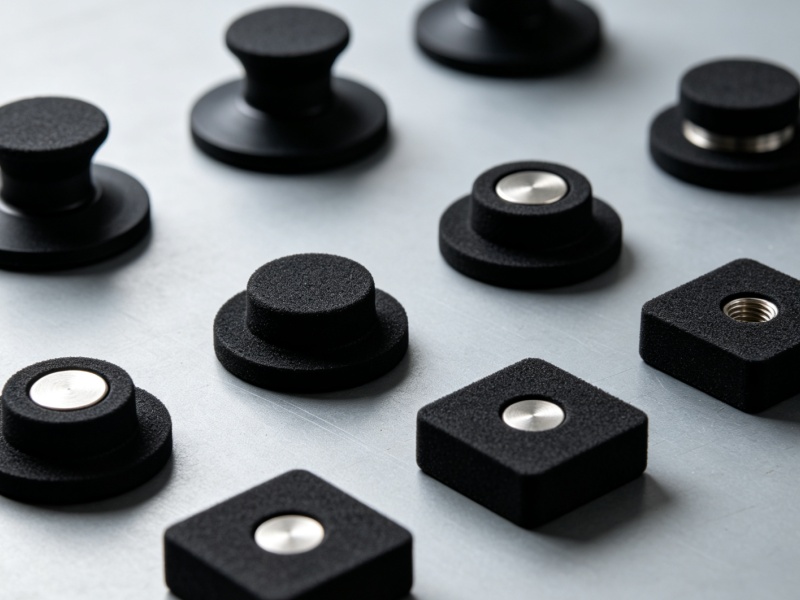
In a bare magnet, flux escapes from multiple faces, which reduces the effective force available at the target surface. In a pot magnet, the cup acts as a return path, concentrating flux toward the contact face. That is why two magnets with the same neodymium core can perform differently in the field. The difference is not theoretical; it is the reason pot magnets are widely used in magnetic holder assemblies, inspection fixtures, and removable equipment mounts.
The threaded feature also matters. A threaded stud or tapped hole lets engineers fasten the magnet with a screw, bolt, or clamp plate instead of depending on glue, friction, or a press-fit alone. That reduces installation variability and makes maintenance easier. When a fixture must be removed and reinstalled, a threaded interface is usually easier to repeat at the same location and orientation.
For mounting projects that need standardized hardware, it is useful to compare formats across a broader catalog such as magnetic products, pot magnets, and magnetic hooks. Different mounting tasks often need different attachment geometries, even when the base magnet family is similar.
How the steel cup changes holding force and durability
The steel cup improves holding force by redirecting magnetic flux and improving contact efficiency.
Magnetic holding force is not only a matter of magnet grade; it also depends on the reluctance of the magnetic path. The cup reduces stray flux and increases the usable field at the face. In many engineering catalogs, a pot magnet of the same core material will outperform an exposed magnet under direct pull because the steel shell helps focus the field toward the workpiece. This is especially important when the target is a thick steel panel, a fixture plate, or a structural bracket.
The cup also provides mechanical protection. NdFeB magnets are powerful but brittle. The surrounding steel helps shield the core from edge chipping, impact during assembly, and incidental abrasion. That is why a threaded pot magnet is often chosen for repeated-use tools, jigs, and industrial mounts where handling damage is a realistic failure mode.
Corrosion protection is equally important. The magnet itself may be nickel-coated, epoxy-coated, or otherwise treated, but the full assembly still needs to be matched to the environment. Humid warehouses, outdoor signage, marine-adjacent facilities, and chemical plants can all shorten service life if the coating system is not appropriate.
| Design factor | Practical effect | Why it matters in mounting |
|---|---|---|
| Steel cup | Flux concentration and face shielding | Higher usable pull and lower chipping risk |
| Threaded interface | Mechanical repeatability | Easier service, alignment, and replacement |
| Surface coating | Corrosion resistance | Longer life in humid or outdoor use |
| Contact condition | Gap reduction | Better real-world holding performance |
Threaded pot magnet mounting methods and when each one fits
The best mounting method depends on whether you need fixed installation, removable service, or side-load resistance.
There are three common mounting patterns. A tapped internal thread is often used when the magnet is attached from the front or when the assembly must stay compact. A threaded stud is useful when you want to pass through a bracket or clamp plate. A counterbored or countersunk arrangement is chosen when screw-head flushness matters. Each format changes how the load is transferred and how much misalignment the assembly can tolerate.
For removable fixtures, a threaded stud is often the most practical option because it supports controlled torque and straightforward replacement. For embedded assemblies, a tapped hole can keep the outside profile low. For panel mounting, a countersunk design can prevent protrusion and reduce snag risk.
If your application is more about gripping and positioning than permanent fastening, compare the mounting concept with other categories like magnetic bases and magnetic hooks. The right product depends on whether the load is hanging, clamped, aligned, or periodically removed.
| Mounting type | Best for | Typical advantage | Typical limitation |
|---|---|---|---|
| Internal thread | Compact fixtures | Low profile | Tool access required |
| Threaded stud | Brackets and clamps | Easy fastening | Needs thread clearance |
| Countersunk hole | Flush panel mounting | Clean surface finish | Less tolerant of misalignment |
What reliable magnetic holder performance really means in the field
Reliable magnetic holder performance means the magnet stays secure under the real loads that matter, not only under ideal pull testing.
Static pull force is only the starting point. In use, the assembly may experience shear load, vibration, paint thickness, dust, oil film, or a curved substrate. A magnetic holder can show a strong lab pull number and still fail in the field if the contact surface is uneven or if the load acts sideways. For this reason, engineering selection should evaluate both pull-off force and operating geometry.
A practical test protocol includes clean steel contact, then repeated checks with a controlled gap, because even a thin air gap reduces usable force. It is also wise to test with the actual bolt, washer, or bracket that will be used in production. The thread can be strong, but the surrounding structure may become the weak point if the load path is not planned.
Industry guidance on dimensional and force documentation is strongest when unit systems are explicit and repeatable. Using SI-consistent values from NIST SI Units helps avoid specification confusion in global procurement and engineering communication.
Which data sheet values matter most when comparing pot magnet mounting options
The most useful specification is the one that predicts field performance under your actual load case.
Buyers often focus on nominal pull force alone, but the better comparison set is larger. A reliable data sheet should include magnet grade, cup material, coating, thread type, operating temperature, and test surface. Without those details, the number is hard to interpret. A 50 kg-rated pot magnet on polished 10 mm steel may not behave the same way on painted sheet metal or a dirty frame.
For neodymium assemblies, many suppliers use grades in the N35 to N52 range. The exact grade affects energy density, but the real selection also depends on temperature and coating. According to general NdFeB material data, maximum operating temperature can vary by grade and formulation; many standard grades are commonly specified up to about 80 C, while high-temperature versions are engineered higher. That is one reason a specification sheet should always state the temperature limit rather than assuming all NdFeB products behave the same.
If your use case involves frequent access or repositioning, a product family like magnetic assemblies may also help you compare fastening patterns before committing to one design.
| Specification | Why it matters | What to verify |
|---|---|---|
| Pull force | Shows maximum direct attachment strength | Test surface and contact condition |
| Thread size | Determines hardware compatibility | M3, M4, M5, M6, or custom size |
| Operating temperature | Affects magnetic stability | Continuous and peak limit |
| Coating | Protects against corrosion | Nickel, epoxy, zinc, or rubber |
Installation mistakes that reduce pot magnet reliability
The most common failure is not the magnet; it is the installation detail around it.
First, installers often ignore surface condition. Dust, paint, oil, or rust increases the gap and lowers usable holding force. Second, they rely on direct pull numbers while forgetting that shear loads are much less forgiving. Third, they overtighten or cross-thread the stud, which can damage the interface even if the magnetic element itself remains intact. Fourth, they use a mounting surface that is too thin or not sufficiently ferromagnetic, which weakens the magnetic circuit.

Another mistake is overlooking load direction. A magnet that is stable in vertical pull may slide under lateral force if the application lacks a mechanical stop. In real systems, the safest design usually combines magnetic attraction with a bracket, stop edge, or clamp feature.
For installation planning, these steps help reduce failures:
- Clean the contact surface before testing the mount.
- Confirm that the substrate is ferromagnetic and thick enough for the load.
- Match the thread specification to the fastening hardware.
- Check side-load risk and add a mechanical restraint if needed.
- Verify temperature and corrosion exposure before final deployment.
When a threaded pot magnet is better than adhesive or rubber-coated alternatives
A threaded pot magnet is better when you need a stronger mechanical interface and easier maintenance.
Adhesive mounting can be useful when drilling is not allowed, but it is more sensitive to surface preparation, cure time, and temperature. Rubber-coated magnets help protect painted or delicate surfaces and can improve friction, but they are usually chosen for surface safety rather than maximum attachment efficiency. A threaded pot magnet is the stronger fit when repeatability, service access, and secure fastening matter more than surface softness.
In other words, the right choice depends on the problem you are solving. If you are protecting a finished panel, a rubber-coated option may be best. If you are holding a fixture in an industrial setting, a threaded pot magnet is often the more dependable mounting method. If the task is more about portable support or repositionable holding, a magnetic base or hook may be enough.
| Option | Best use case | Strength | Surface protection |
|---|---|---|---|
| Threaded pot magnet | Fixtures, brackets, removable mounts | High | Moderate |
| Rubber-coated magnet | Finished surfaces, anti-slip contact | Medium | High |
| Adhesive-backed magnet | No-drill installation | Medium | Depends on adhesive |
How to choose a reliable threaded pot magnet for your application
The best selection process starts with the load path, not the catalog image.
Ask four questions before buying. What is the substrate material and thickness? Is the load vertical, shear, or mixed? Will the assembly face moisture, chemicals, or temperature swings? How often will the magnet be removed and reinstalled? Those answers usually narrow the choice faster than magnet diameter alone.
For procurement teams, the most dependable suppliers are the ones that document thread size, coating, test surface, and temperature range clearly. That documentation reduces specification drift between engineering, sourcing, and operations. It also makes quality checks easier when samples arrive.
For more installation-focused browsing, the category pages magnetic base solutions, magnetic hook products, and pot magnet models provide useful comparison points across holding styles.
Real-world use cases where threaded pot magnet mounting performs well
Threaded pot magnet mounting performs especially well in repeatable industrial and commercial setups.
Common applications include machine guards, workholding aids, display fixtures, light enclosures, sensor mounts, signage, temporary covers, and service panels. In maintenance work, a threaded mount is valuable because technicians can remove and reinstall the component without destroying the mounting point. In display and retail settings, the same feature helps with quick layout changes and seasonal reconfiguration.
In fabrication and assembly, the benefit is speed. A threaded pot magnet can shorten setup time because the magnet can be positioned, fastened, checked, and reused without a permanent bond. In many small-lot operations, that flexibility is worth more than a slightly higher nominal pull number.
For buyers who need a broader hardware ecosystem, a supplier that also offers magnetic products and company information can make sourcing and technical clarification simpler during qualification.
FAQ about threaded pot magnet mounting
Why is a threaded pot magnet considered reliable?
It is considered reliable because the steel cup improves flux concentration and the threaded interface provides repeatable mechanical fastening.
What surface gives the best holding force?
Clean, flat, ferromagnetic steel gives the best holding force, while paint, scale, and gaps reduce performance.
Does a larger magnet always mean better mounting?
No, because load direction, substrate thickness, temperature, and thread quality can matter as much as size.
When should I choose a rubber-coated magnet instead?
Choose rubber-coated options when surface protection and slip resistance are more important than maximum magnetic efficiency.
What thread details should I confirm before ordering?
Confirm thread type, pitch, engagement length, and whether the design uses an internal thread or a stud.
How does corrosion protection affect service life?
Better coating systems help resist moisture and chemical exposure, which can extend the usable life of the assembly.
What is the safest way to test a new mount?
Test it on the real substrate, with the real bracket, under the actual load direction, before full deployment.
In summary, threaded pot magnet mounting is a reliable choice when you need a compact magnetic holder with strong real-world usability, repeatable installation, and better protection than an exposed magnet. It works best when the magnetic circuit, thread geometry, load direction, and environment are all considered together. For engineering buyers, that combination is what turns a strong magnet into a dependable mounting solution.