 EN
EN AR
AR HR
HR CS
CS DA
DA NL
NL FI
FI FR
FR DE
DE EL
EL IT
IT JA
JA KO
KO NO
NO PL
PL PT
PT RU
RU ES
ES SV
SV IW
IW VI
VI TH
TH TR
TR FA
FA MS
MS
- The steel cup is the main reason a pot magnet often outperforms a bare magnet in real holding tasks.
- Contact condition matters: air gaps, paint, rust, curvature, and vibration can reduce usable holding force sharply.
- Mounting type, coating, and temperature rating determine whether a strong holding magnet stays reliable in service.
- Selection should focus on the application, not just static pull force on a test plate.
Neodymium pot magnet performance is easiest to understand when you look at the whole magnetic circuit, not only the magnet core. A high strength pot magnet uses a neodymium magnet inside a steel shell, which concentrates flux at the face and protects the magnet from impact. The result is strong holding performance in compact dimensions, which is why holding magnets are widely used in fixtures, tool storage, signage, and industrial positioning. For design reference, neodymium magnets are governed in part by ISO 9239-1 for reaction-to-fire testing in related assemblies, while dimensional and tolerance expectations in precision environments often rely on machine and metrology standards such as ISO 230-1:2012. In practical procurement, buyers also compare products such as pot magnet, neodymium magnet, and magnetic hook to match strength, fixing style, and duty cycle.
Why a Neodymium Pot Magnet Holds Better Than a Bare Magnet
The steel cup is what turns a strong magnet into a stronger holding solution.
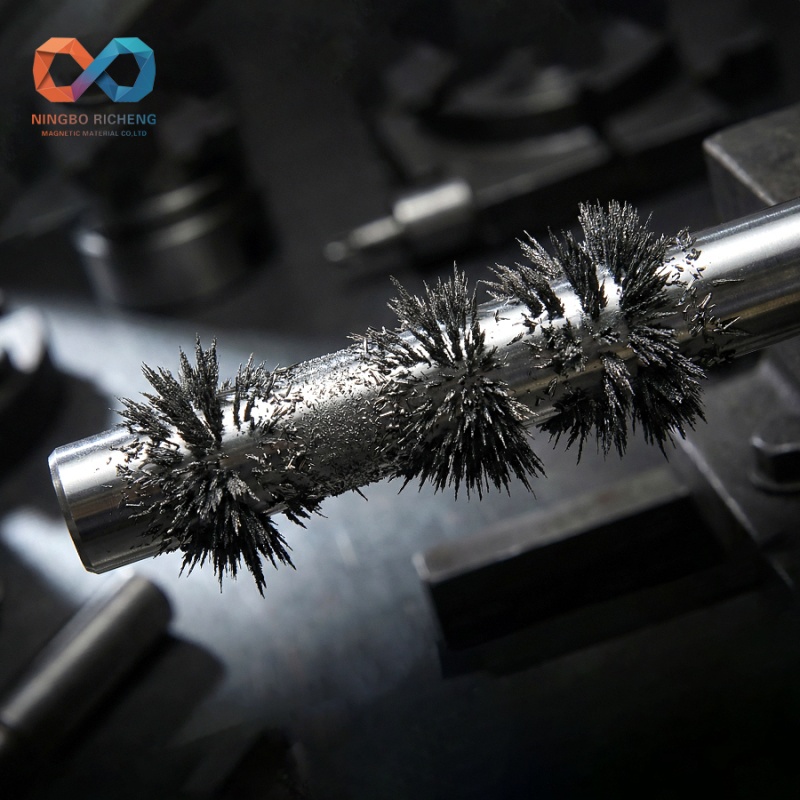
A bare neodymium magnet has strong flux, but much of that field spreads in multiple directions. A pot magnet surrounds the magnet with steel, which provides a low-reluctance return path and directs more flux through the working face. That concentrated field is why a compact strong holding magnet can feel “surprisingly powerful” when it touches clean steel.
This is not just a marketing concept. Magnetic circuit design is a basic engineering principle: flux prefers the path of least resistance. By giving the magnetic field a steel enclosure, the pot magnet reduces leakage and increases the effective force on the contact surface. The steel cup also reduces chipping risk, which is important because neodymium magnets are brittle and can fracture under impact.
How Strong Holding Performance Is Really Measured
Static pull force is useful, but usable holding force is what matters on the shop floor.
Manufacturers often quote pull force measured against a thick, flat, clean, low-carbon steel plate under ideal conditions. That number is useful for comparison, but it can overstate real-world performance if the surface is painted, curved, rusty, or exposed to vibration. In actual use, the magnet may carry only a fraction of the listed pull force because of the air gap and surface irregularity.
For this reason, buyers should evaluate the application in three layers: surface condition, load direction, and safety margin. A magnet that performs well in vertical shear may fail in peel loading, where the edge starts to lift. In field use, peel and impact are often more damaging than straight pull.
| Condition | Effect on Holding Performance | Practical Implication |
|---|---|---|
| Clean, flat steel | Highest usable force | Best for fixtures and tooling |
| Painted or coated steel | Reduced force due to air gap | Choose a larger face or higher grade |
| Curved or uneven surface | Lower contact area | Use a different mounting method |
| Vibration or shock | Peel risk increases | Add mechanical retention |
One practical rule is simple: if the magnet is expected to carry moving load, do not size it only by catalog pull force. Add a margin for contamination, coating thickness, and misuse. That approach is more reliable than chasing the highest headline number.
Neodymium Pot Magnet Design: Cup, Core, and Coating
Performance comes from the combination of the magnet core, the steel cup, and the surface finish.
Neodymium iron boron is the common high-energy permanent magnet material used inside a high strength pot magnet. Its value is high magnetic energy density in a compact volume, which makes it suitable for small fixtures, compact holding devices, and space-constrained assemblies. The steel cup focuses the field, while the coating helps control corrosion and wear.
Surface protection matters because many real environments are humid, oily, salty, or exposed to cleaning chemicals. Ni-Cu-Ni plating is common, while epoxy or other protective finishes may be chosen for more aggressive conditions. If the holding magnet will be handled repeatedly, the shell also reduces direct edge damage and helps preserve the magnet for a longer service life.
| Component | Function | Failure Risk if Poorly Designed |
|---|---|---|
| Neodymium core | Creates high flux density | Chipping, demagnetization, corrosion |
| Steel cup | Concentrates flux and shields the core | Weaker holding and higher impact damage |
| Protective coating | Resists corrosion and handling wear | Rust, flaking, shortened service life |
When buyers ask why one pot magnet feels much stronger than another of similar diameter, the answer is usually not only the magnet grade. Geometry, steel thickness, air gap, and coating all change the outcome. That is why selection should be based on use conditions, not on magnet grade alone.
Mounting Style Changes How a Strong Holding Magnet Behaves
The fixing method often determines whether the magnet performs safely in service.
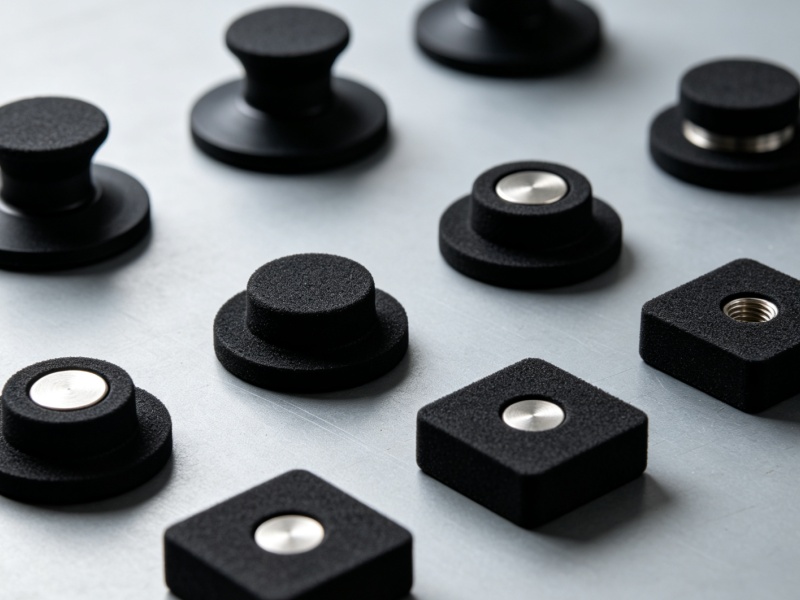
Pot magnets are commonly produced with threaded inserts, countersunk holes, through-holes, or plain cups. A countersunk design is useful for screw fixing because the head can sit flush, while a through-hole or threaded boss is better for bolts, rods, or customized fixtures. The right mounting style depends on whether the magnet is being installed permanently, temporarily, or as part of a modular assembly.
For industrial buyers, this choice affects more than convenience. It affects peel resistance, alignment, and maintenance. A magnet that is mechanically fixed can tolerate vibration better than one that depends on surface adhesion alone. If the application involves repeated removal, the interface should be designed so the fastener, not the magnetic face, absorbs the abuse.
- Use countersunk mounting when flush installation is required.
- Use threaded or through-hole mounting when a bolt or rod must carry the load.
- Use a magnetic hook or removable fixture when flexibility matters more than maximum pull.
- Add a protective interface if the contact surface must not be scratched.
For buyers comparing fixture options, it is often useful to review a broader product family such as countersunk pot magnet, round base magnet, and magnetic holder. Each one solves a slightly different holding problem.
Key Applications for High Strength Pot Magnet Systems
Pot magnets are used where fast, compact, repeatable holding is needed.
In manufacturing, they support positioning, setup, and temporary retention. In workshops, they are used for tools, labels, fixtures, and small hardware organization. In retail and display environments, the same holding principle supports signage and modular mounting. In each case, the benefit is the same: strong holding performance in a small footprint.
Industrial users often prefer them because they reduce setup time. A magnet that can quickly locate a part or hold a component in place saves minutes on each job, and those minutes accumulate across repeated tasks. In maintenance, they also reduce lost fasteners and help keep work areas orderly.
| Use Case | Why Pot Magnet Fits | Selection Priority |
|---|---|---|
| Fixture positioning | Compact and repeatable | Pull force and alignment |
| Tool holding | Fast access and compact size | Surface protection and safety |
| Sign mounting | Hidden hardware possible | Shear resistance |
| Workstation organization | Easy installation | Convenience and durability |
For users who need related magnetic solutions, categories such as magnetic hook, magnetic base, and tool magnet help extend the same holding logic into different workflow needs.
What Really Reduces Holding Force in Daily Use
Real-world conditions can reduce the force much more than the catalog specification suggests.
The most common force killers are air gaps, contamination, poor alignment, and side loading. Even a thin layer of paint or dust can reduce contact efficiency. Rust and debris create micro-gaps that weaken flux transfer, while sideways forces increase peel risk. If the magnet is used near heat, performance can also drop because neodymium grades have different temperature limits.

According to the U.S. National Institute of Standards and Technology, clear measurement practice matters because small changes in test setup can significantly affect observed results; see NIST. For magnetic products, that means users should not compare results from different surfaces unless the test method is consistent. The same magnet can look “strong” on one plate and “weak” on another simply because the test conditions changed.
- Keep the contact face clean and flat.
- Avoid relying on pull force through paint or coatings.
- Use mechanical support when vibration is expected.
- Check temperature exposure before finalizing the grade.
When a project involves corrosion, outdoor exposure, or cleaning cycles, surface finish matters as much as magnetic strength. If the product is frequently handled, the shell and coating become part of the performance story, not just cosmetic details.
How to Choose the Right Neodymium Pot Magnet
The best selection method starts with the task, not the magnet catalog.
Buyers should first define the load direction, contact surface, environment, and installation constraint. A holding magnet for a clean indoor fixture has very different needs from one used near moisture, oil, or dust. In many cases, a smaller magnet with better alignment outperforms a larger one mounted poorly.
A practical selection checklist should include the following points.
- Confirm the load type: pull, shear, or peel.
- Measure the available contact area and mounting space.
- Identify temperature, corrosion, and cleaning exposure.
- Choose a fixing style that matches the assembly process.
- Add a safety margin for vibration, contamination, and wear.
| Selection Factor | Questions to Ask | Decision Impact |
|---|---|---|
| Load direction | Is the force vertical or side-loaded? | Determines required margin |
| Surface condition | Is the steel clean, coated, or curved? | Affects usable holding force |
| Environment | Is there moisture, salt, or chemical exposure? | Determines coating choice |
| Installation | Will it be screwed, bolted, or removable? | Determines housing style |
For many buyers, the decision becomes easier once they separate “catalog pull force” from “jobsite holding performance.” The first is a lab number; the second is what keeps a part, tool, or sign in place when conditions are not perfect.
Relevant Standards and Measurement Context
Standards do not replace application testing, but they improve comparability and trust.
Although pot magnets themselves are selected mainly by application fit, the industries that use them often operate under recognized quality, tolerance, and measurement frameworks. For example, ISO GPS practice supports consistent dimensional communication, while ASTM material and test standards help define substrates and environments. When a magnet is part of a larger assembly, these references matter because the steel thickness, surface finish, and geometry all influence pull performance.
For general product and material research, useful references include ASTM International Standards, the NIST standards and measurement resources, and the ISO standards catalog. These sources help engineers and buyers align on test conditions, material terminology, and repeatability expectations.
In short, if two suppliers publish different pull values for a similar magnet, the important question is not only “which number is higher?” It is “what plate, thickness, surface finish, and test setup produced that number?”
Common Buying Mistakes and How to Avoid Them
Most selection errors come from underestimating the working environment.
One common mistake is choosing a magnet only by diameter or headline pull force. Another is ignoring the effect of paint or curvature on contact quality. A third is choosing a coating that looks fine indoors but fails in humid or chemically aggressive settings. These mistakes do not usually show up immediately; they show up during repeated use.
- Do not compare different magnets on different test plates.
- Do not assume higher pull force always means better field performance.
- Do not ignore corrosion resistance if the magnet will be handled outdoors.
- Do not rely on magnetic force alone when shock or vibration is present.
A more reliable approach is to specify the application in plain engineering terms: substrate material, load direction, ambient temperature, and expected cycle count. That information lets a supplier recommend the right high strength pot magnet rather than an impressive but unsuitable one.
FAQ
What makes a neodymium pot magnet stronger than a bare neodymium magnet?
The steel cup concentrates magnetic flux toward the contact face, which increases usable holding performance on steel surfaces.
Does a higher catalog pull force always mean better real-world holding?
No. Real holding depends on surface flatness, coating thickness, alignment, contamination, and load direction.
Which mounting style is best for a strong holding magnet?
It depends on the task. Countersunk mounts suit flush screws, while threaded or through-hole designs are better for bolts and fixtures.
Why does coating matter on pot magnets?
Coating protects the magnet and steel shell from corrosion, especially in humid, outdoor, or chemically exposed environments.
Can a high strength pot magnet be used on painted steel?
Yes, but the coating creates an air gap that reduces holding force, so the magnet often needs a larger size or higher safety margin.
How do I choose between a pot magnet and a magnetic hook?
Choose a pot magnet for direct holding and a magnetic hook when you need suspension or quick attachment to a steel surface.
What is the most important factor in pot magnet performance?
For most users, the most important factor is the fit between magnet design and the real contact condition, not the magnet grade alone.