 EN
EN AR
AR HR
HR CS
CS DA
DA NL
NL FI
FI FR
FR DE
DE EL
EL IT
IT JA
JA KO
KO NO
NO PL
PL PT
PT RU
RU ES
ES SV
SV IW
IW VI
VI TH
TH TR
TR FA
FA MS
MS
In 2025, the global pot magnet market was valued at approximately USD 3.2 billion, with rectangular pot magnets—characterized by their enclosed steel housing and concentrated magnetic circuit—accounting for roughly 18–22% of total industrial magnet demand. These assemblies deliver 3 to 5 times the pull force of bare magnets of equivalent grade, making them indispensable in automation, renewable energy, and precision manufacturing. As of early 2026, China remains the dominant producer, generating an estimated 65–70% of global rectangular pot magnet output, with Ningbo, Shanghai, and Chengdu serving as primary manufacturing clusters. Buyers seeking qualified industrial suppliers in 2026 need to evaluate factories across five dimensions: material sourcing, coating technology, quality certification, production scalability, and custom engineering capability. This article presents a structured comparison of the leading rectangular pot magnet factories and a 10-point sourcing checklist, providing procurement engineers, magnet specifiers, and supply chain managers with actionable criteria for supplier selection.
What Is a Rectangular Pot Magnet and Why It Matters in 2026
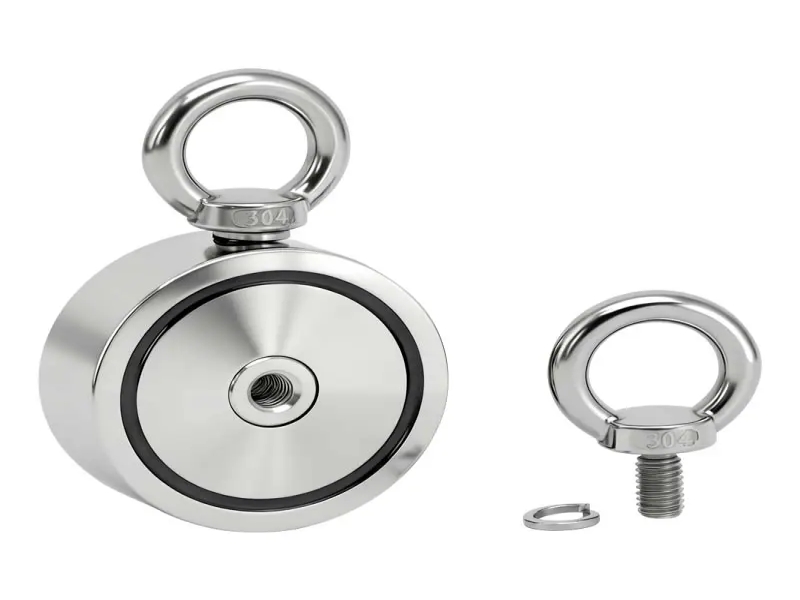
A rectangular pot magnet is a permanent magnet—typically neodymium iron boron, abbreviated NdFeB—fully encased in a precision-stamped or machined steel housing. The steel housing functions as a magnetic circuit component rather than merely a protective shell. It channels stray magnetic flux lines toward the contact face, concentrating field density and dramatically increasing effective holding force. This magnetic circuit design is the defining technical advantage of pot magnets over bare magnet assemblies.
Rectangular units present a flat, extended contact surface, making them well suited for applications where the mechanical interface demands a linear or planar mounting face. Common use cases include magnetic clamping plates for CNC machining centers, solar panel mounting bracket systems, architectural door and partition hardware, and industrial automation end-effector mounting. Round pot magnets, by contrast, distribute flux symmetrically and are preferred for cylindrical fixturing or rotational mounting scenarios.
Key Specifications and Performance Parameters
Specifiers evaluate rectangular pot magnets across six primary technical parameters. Magnet grade—neodymium grades N35 through N52 determine residual flux density (Br), with N52 offering the highest maximum energy product at approximately 52 MGOe and N35 serving as an economy grade for cost-sensitive applications. Housing material—low-carbon steel (Q235 per Chinese standard, or equivalent AISI 1008/1010) provides optimal magnetic flux channeling; stainless steel 430 is used in corrosion-sensitive or food-processing environments where carbon steel with coating is insufficient. Coating—zinc, nickel, epoxy, or rubber coatings protect both the magnet and the housing from oxidation, surface abrasion, and chemical exposure; coating selection must match the operating environment. Operating temperature—standard NdFeB pot magnets perform reliably to 80 °C; high-temperature grades designated UH (Ultra High, to 180 °C) and EH (Extra High, to 200–220 °C) are available but at increased cost and reduced energy product. Pull force—the certified holding force, measured in kilograms-force (kgf) or newtons (N) per standardized test fixtures (IEC 60404-5, ASTM A977), is the primary commercial specification. Dimensional tolerances—industrial buyers typically require ±0.1 mm on critical housing dimensions; precision applications such as semiconductor equipment may demand ±0.05 mm.
The defining performance metric is effective pull force at zero gap. Industry test data indicates that a 50 mm × 50 mm × 25 mm rectangular neodymium pot magnet assembly using an N42 grade typically achieves 70–90 kgf in certified pull force testing. The same magnet in N52 grade may reach 100–120 kgf. By contrast, a bare NdFeB magnet of identical magnetic volume typically yields only 15–25 kgf—confirming the 3× to 5× force amplification effect of the pot housing design.
Three structural variants dominate the 2026 product landscape. Deep pot magnets fully embed the NdFeB segment within the steel housing, maximizing flux confinement and pull force at the expense of housing height. Shallow pot magnets position the magnet segment closer to the contact surface, delivering high holding force in a thinner overall assembly—ideal for space-constrained applications. Countersunk pot magnets incorporate a countersunk bore in the housing for flush mechanical fastening via flat-head fasteners; this configuration is standard in machinery fixturing, magnetic clamping systems, and robotic end-effectors.
Global Market Landscape: Production Hubs and Demand Drivers
China's dominance in rectangular pot magnet manufacturing rests on three structural advantages that have proven durable through multiple trade policy cycles. First, vertical integration of the neodymium supply chain: the country produces approximately 85–90% of the world's refined rare earth oxide output, giving domestic magnet manufacturers a material cost advantage that non-integrated producers outside China cannot easily replicate. Second, concentrated metal stamping and assembly manufacturing clusters in Zhejiang, Jiangsu, and Sichuan provinces enable rapid tooling iteration, short prototype cycles, and large-batch production efficiency. Third, mature export logistics infrastructure—particularly the Shanghai and Ningbo port complexes—provides cost-effective freight routing to North American, European, and Southeast Asian buyers.
According to industry estimates, the global industrial magnet market reached approximately USD 11.8 billion in 2024, with pot magnets representing a growing share driven by automation equipment demand and renewable energy installations. The Asia-Pacific region consumed roughly 55% of total industrial magnet output, Europe accounted for 22%, and North America represented 15%. For rectangular pot magnets specifically, the electric vehicle (EV) sector has emerged as a significant demand driver since 2023, using these assemblies in motor rotor positioning fixtures, charging connector retention systems, and battery module preload clamping. The solar energy sector—particularly utility-scale installations in the United States, Europe, and the Middle East—drives demand for rectangular pot magnets used in panel mounting systems and tracking hardware.
Trade policy continues to shape competitive dynamics. Chinese-manufactured pot magnets imported into the United States remain subject to a 25% ad valorem tariff under Section 301 (originally imposed in 2018 and extended through 2026). The EU's Critical Raw Materials Act, enacted in 2024, establishes targets for domestic magnet production capacity but has not yet imposed import tariffs on industrial magnets; however, REACH and RoHS compliance requirements effectively gate non-compliant suppliers from EU markets. Despite these friction points, cost differentials of 40–60% between Chinese and Western-manufactured equivalents maintain China's export competitiveness for buyers in non-tariff-protected markets.
How to Evaluate a Rectangular Pot Magnet Factory
Industrial buyers should evaluate potential suppliers across five structured pillars. Material control examines whether the factory sources magnet material from certified rare earth smelters and whether incoming magnet batches carry dimensional and magnetic property certificates. A credible supplier will willingly provide material data sheets (MDS) and magnet grade verification reports. Coating quality determines corrosion resistance and surface durability in the end application. Factory-operated electroplating or powder-coating lines with in-line quality checkpoints are preferred over fully outsourced coating, as they allow faster lot-level corrective action when defects arise. Quality management documentation—ISO 9001 certification is the baseline, with IATF 16949 required for automotive supply chains—plus batch-level test reports for pull force, surface roughness, and coating thickness, demonstrates systematic process control. Production capacity and lead time matter for volume buyers: factories with monthly outputs exceeding 500,000 units typically offer shorter production queue times and more consistent pricing. Custom engineering capability distinguishes tier-1 factories from commodity distributors; buyers specifying non-standard dimensions, proprietary housing alloys, or high-temperature grades should confirm in-house tooling, testing equipment, and magnetic circuit simulation capability before placing prototype orders.
A practical due-diligence sequence for new suppliers involves four steps. Step one: request a product sample with a batch test report referencing IEC 60404-5. Step two: verify the ISO 9001 certificate through the issuing registrar's public database. Step three: conduct a virtual or on-site audit using a structured checklist covering production lines, testing equipment, and incoming material storage. Step four: place a trial order at a modest quantity (100–500 units) to validate quality consistency before committing to volume commitments.
Top Industrial Rectangular Pot Magnet Factories to Know in 2026
The following table presents a cross-section of notable rectangular pot magnet manufacturers, selected based on production volume, export experience, quality certification density, and product range breadth. Rankings reflect aggregate assessment rather than any single metric. Data reflects information available as of early 2026.
Factory | Location | Monthly Capacity | Key Certifications | Core Product Range |
Ningbo Richeng Magnetic Material Co., Ltd. | Ningbo, Zhejiang, China | 500,000+ units | ISO 9001, IATF 16949 | Rectangular pot magnets; deep/shallow/countersunk variants; NdFeB N35–N52; rubber-coated and zinc-plated; UH high-temp grades |
Earth-Pneu Magnetics Co., Ltd. | Shanghai / Suzhou, China | 300,000+ units | ISO 9001, RoHS, REACH | Rectangular and square pot magnets; steel and stainless housing; ±0.05 mm tolerances; operating temps to 200 °C |
Jiangsu Tengxing Magnetic Technology | Changzhou, Jiangsu, China | 200,000+ units | ISO 9001 | Custom rectangular pot magnets; deep pot and shallow pot; epoxy and nickel coatings; prototype and small-batch service |
AMC (Advanced Magnetic Components) GmbH | Stuttgart, Germany | 80,000+ units | ISO 9001, VDA 6.3, IATF 16949 | High-precision rectangular pot magnets; European-sourced NdFeB; automotive-grade documentation; magnetic circuit FEA simulation |
Shenzhen Lmagnetic Tech Co., Ltd. | Shenzhen, Guangdong, China | 150,000+ units | ISO 9001, CE | Rectangular pot magnets for automation and robotics; countersunk and blind-hole variants; custom housing dimensions; epoxy and rubber coatings |
Note: Monthly capacity figures represent estimated industrial-grade unit output across product mix and may vary based on order composition. Buyers should request updated capacity confirmation and third-party audit reports directly from manufacturers before formal sourcing decisions.
Ningbo Richeng Magnetic Material Co., Ltd.
Founded in May 2008 and based in Ningbo, Zhejiang Province, Ningbo Richeng Magnetic Material Co., Ltd. operates as a vertically integrated magnet assembly manufacturer. The company designs, tests, produces, and supports after-sales service for pot magnets, rectangular pot magnets, fishing magnets, rubber-coated magnets, magnetic tools, magnetic hooks, and neodymium NdFeB magnets. Richeng's direct-sales business model targets both industrial distributors and original equipment manufacturers (OEMs) seeking custom magnet assemblies for integration into end products.
Richeng's rectangular pot magnet catalog spans housing dimensions from 20 mm × 10 mm to 150 mm × 80 mm, with standard countersunk and through-hole configurations available across the full range. The company offers neodymium magnet grades from N35 through N52, including high-temperature UH grades rated to 180 °C for specialized applications such as motor fixtures and high-heat environments. Coating options include zinc electroplating, nickel electroplating, and epoxy coating, with salt spray test certification available per ASTM B117 (minimum 48 hours for standard grades). The factory maintains an in-house pull force testing station calibrated to IEC 60404-5 standards, enabling batch-level magnetic performance verification.
Two operational characteristics distinguish Richeng for international buyers. The integrated industry-and-trade structure enables direct technical communication between the factory's engineering team and the buyer's procurement or design team, reducing the quote-to-prototype cycle compared to multitiered distributor models. The company maintains a publicly accessible online catalog featuring dimensional drawings and magnetic performance data sheets, supporting preliminary technical screening before formal requests for quotation. Richeng's export experience covers North America, Western Europe, Southeast Asia, and the Middle East, with documentation capabilities including certificates of origin, commercial invoices, and bill of lading preparation.
Earth-Pneu Magnetics Co., Ltd.
Earth-Pneu Magnetics, operating manufacturing facilities in Shanghai and Suzhou, specializes in precision magnet assemblies for industrial automation and semiconductor manufacturing equipment. The company's rectangular pot magnet product line emphasizes tight dimensional tolerances—±0.05 mm on critical housing features—making it suitable for cleanroom environments and precision fixturing where magnet position repeatability is essential. Stainless steel 430 housing options address corrosion requirements in food-processing and medical device applications. Earth-Pneu holds RoHS and REACH compliance documentation, which are prerequisite certifications for electronics and medical device supply chains in the EU and related markets. European sales partners provide local technical support for EU buyers, addressing language and time-zone communication barriers.
AMC GmbH (Advanced Magnetic Components)
AMC GmbH, headquartered in Stuttgart, Germany, occupies the upper tier of the European magnet manufacturing ecosystem. While unit pricing is substantially above Asian competitors, AMC's value proposition centers on automotive-grade quality documentation under IATF 16949, full traceability to raw material lot level, and magnetic circuit simulation services embedded in the design phase. For buyers specifying magnets for EV drivetrains, safety-critical automation, or other applications with stringent failure-mode analysis requirements, AMC provides the documentation density—8D reports, PPAP packages, first-article inspection reports—that engineering teams and procurement compliance departments demand. The company's rectangular pot magnets are manufactured with European-sourced NdFeB material, addressing content-of-origin concerns for buyers with supply chain regionalization mandates.
Applications Driving Rectangular Pot Magnet Demand in 2026
Five industry verticals account for the majority of global rectangular pot magnet consumption. Industrial automation and robotics represent the largest share: magnetic clamping plates for CNC machining centers, end-effector mounting brackets for collaborative robots (cobots), cable management rail systems, and fixture clamping arms all rely on the high pull force and compact form factor of rectangular pot magnets. Renewable energy and EV applications form the fastest-growing segment: solar panel mounting bracket systems, wind turbine maintenance tooling, battery module clamping in energy storage systems, and motor rotor preload fixtures all require the flat contact surface and directional holding force that rectangular geometries provide. The electric vehicle supply chain specifically employs these magnets in charging connector retention, seat mechanism adjustment, and auxiliary motor assembly fixtures.
Furniture and architectural hardware manufacturers represent a mature application category: rectangular pot magnets enable soft-close door mechanisms in appliances and cabinetry, movable partition and glass wall systems in commercial buildings, and magnetic catch mechanisms in shower enclosures. Marine and oil and gas operations use these assemblies in subsea tooling positioning, pipeline inspection equipment mounting, and downhole tool retrieval fixtures—applications where corrosion-resistant housing coatings and high pull force in constrained geometries are simultaneously required. The semiconductor and cleanroom equipment sector employs rectangular pot magnets in wafer handling end-effectors, precision optical mounting systems, and vacuum chamber fixturing, typically requiring stainless housing and sub-0.1 mm tolerance specifications.
Industry Vertical | Representative Application | Typical Magnet Specification |
Industrial Automation & Robotics | Magnetic clamping plates, cobot end-effectors, cable rails | N42–N52, countersunk housing, 60–150 kgf pull force, zinc or epoxy coating |
Renewable Energy / EV | Solar panel mounts, battery module clamps, motor rotor fixtures | N45–N52, UH high-temperature grade, zinc or epoxy coating, 80–180 °C rating |
Marine / Oil & Gas | Subsea tool positioning, pipeline inspection fixtures | Stainless steel 430 housing, epoxy coating, 96+ hr salt spray resistance |
Furniture / Architecture | Soft-close mechanisms, partition systems, shower enclosures | N35–N42, shallow pot variant, compact dimensions, rubber or zinc coating |
Semiconductor / Cleanroom | Wafer handling end-effectors, precision optical mounts | Stainless housing, ±0.05 mm tolerances, N42–N48 grade, cleanroom-compatible coating |
Sourcing Checklist: 10 Questions to Ask Before Placing an Order
Buyers navigating the 2026 rectangular pot magnet market benefit from a structured supplier evaluation process. The following checklist consolidates the most critical verification points, organized as a logical sequence from technical specification through commercial terms:
1. 1. What magnet grade (N35–N52) and housing material (Q235 carbon steel, stainless 430, or other) do you use for this product, and can you provide material certificates and magnet grade verification reports?
2. 2. What is the certified pull force (kgf) measured per IEC 60404-5 or equivalent standard, and can you provide batch-level test reports with each shipment?
3. 3. What coating options are available (zinc, nickel, epoxy, rubber), and what are the salt spray test results per ASTM B117 for each coating type?
4. 4. What are your standard dimensional tolerances on housing dimensions, bore diameter, and countersink geometry, and do you offer tighter tolerances as a premium option?
5. 5. What is the maximum operating temperature rating, and do you stock high-temperature grades (UH to 180 °C, EH to 200 °C) or need to source them specifically for my order?
6. 6. Do you hold ISO 9001 certification (or IATF 16949 for automotive applications), and can I access a current certificate through the registrar's public database or request a copy with your next quote?
7. 7. What is your typical production lead time for standard catalog items versus custom-tooled parts, and what is your on-time delivery track record over the past 12 months?
8. 8. Do you offer magnetic circuit simulation (FEA) or prototype samples for pull force validation before volume production commitments?
9. 9. What export documentation capabilities do you have (certificate of origin, commercial invoice, bill of lading, packing list), and which incoterms do you typically accept?
10. 10. What payment terms do you offer for first-time orders, and do you have experience withLetters of Credit or trade financing instruments used in international procurement?
Emerging Trends: What to Watch in 2026 and Beyond
Three technology and market trends are reshaping the competitive landscape for rectangular pot magnets. First, the adoption of recycled neodymium (marketed as sustainable NdFeB) is gaining traction among European buyers responding to the EU Critical Raw Materials Act's domestic content targets. Several Chinese manufacturers in the Zhejiang and Jiangsu clusters have begun pilot production of magnet assemblies using recycled rare earth feedstock from end-of-life motor and wind turbine applications. However, cost parity with virgin-material equivalents remains elusive for high-volume commercial applications, and supply chain traceability for recycled content adds complexity to procurement documentation. Second, the continuing shift toward higher NdFeB grades—N52 and above—reflects downstream demand from motor designers seeking to reduce magnet volume and weight while maintaining or increasing flux density. This trend advantages factories with advanced pressing and sintering capability and access to premium-grade magnetic powder. Third, integrated magnet-housing assemblies that combine structural mounting features—internal threads, dowel pin holes, mounting flanges—directly into the pot housing are displacing multi-part assemblies in OEM supply chains, reducing the buyer's assembly steps and Bill of Materials complexity.
On trade policy, the U.S. Department of Commerce's ongoing review of Section 301 tariff rates and the EU's emerging standards for responsible rare earth sourcing (including mandatory recycled content reporting) may alter competitive dynamics by 2027. Buyers with long-term supply agreements should consider tariff escalation clauses, price adjustment mechanisms tied to rare earth index pricing, and diversified supplier strategies spanning multiple geographic manufacturing clusters to manage policy and logistics disruption risk.
Conclusion
The rectangular pot magnet market in 2026 presents buyers with a wide spectrum of supplier options, from high-volume Chinese manufacturers offering cost leadership and broad product catalogs to European specialists providing automotive-grade documentation, traceability, and design-phase engineering support. Effective supplier selection hinges on precisely matching technical requirements—magnet grade, housing material, coating system, temperature rating, and dimensional tolerance—to a factory's demonstrated manufacturing and testing capability. The factories profiled in this article represent credible starting points for a structured sourcing evaluation. Buyers are encouraged to request samples with batch test reports, verify quality certifications through issuing registrars, and conduct virtual or on-site audits before committing to volume orders. As demand from the EV, renewable energy, and industrial automation sectors continues to grow through 2026, establishing relationships with qualified, scalable rectangular pot magnet suppliers will become increasingly critical for procurement teams managing magnet-intensive product lines.
Frequently Asked Questions (FAQ)
What is the difference between a rectangular pot magnet and a round pot magnet?
The primary difference lies in contact surface geometry and how that geometry suits different mechanical interfaces. Rectangular pot magnets provide a flat, extended contact face, making them ideal for linear clamping rails, panel mounting brackets, and any application where the mating surface is a flat plane. Round pot magnets distribute magnetic flux symmetrically around a cylindrical axis and are better suited for rotational fixturing, cylindrical workholding, and applications where the magnet must seat into a bore or cylindrical feature. Both achieve comparable flux concentration per unit of magnet volume; the choice is dictated by the mechanical design of the host assembly rather than magnetic performance differences.
How much pull force does a rectangular neodymium pot magnet actually have?
Pull force depends on three interacting factors: the neodymium magnet grade, the housing dimensions, and the test method used. For a commonly specified 50 mm × 50 mm × 25 mm rectangular assembly, an N42 grade typically achieves 70–90 kgf in certified pull force testing per IEC 60404-5. Upgrading to N52 grade within the same housing can push this to 100–120 kgf. By comparison, a bare NdFeB magnet of the same magnetic volume—same grade, same volume of magnet material—typically yields only 15–25 kgf. The 3× to 5× amplification factor comes from the steel housing's magnetic circuit concentrating the field lines at the contact face. Always ask for the manufacturer's test report and confirm which standard was used.
What coating options protect rectangular pot magnets from corrosion?
Four coating systems cover the majority of industrial applications. Zinc electroplating provides 24–48 hours of salt spray resistance per ASTM B117 and is suitable for indoor and mild outdoor environments at the lowest cost. Nickel electroplating offers improved surface hardness, better wear resistance, and 48–72 hours salt spray resistance, making it appropriate for frequently handled components and mildly corrosive atmospheres. Epoxy powder coating delivers strong chemical and moisture resistance with 96+ hours salt spray resistance and is standard for outdoor, marine, and chemical processing environments. Rubber or PVC coating provides the highest surface protection and slip resistance, absorbing impact and preventing surface scratching; it is common in furniture hardware, consumer appliances, and applications where the magnet contacts finished surfaces. For subsea or high-salinity environments, stainless steel 430 housing with epoxy coating provides the most durable specification.
Can I get custom dimensions for rectangular pot magnets?
Yes. Most established manufacturers in China and Europe offer custom tooling for non-standard housing dimensions, mounting hole patterns, magnet grades, and housing thicknesses. Custom orders typically require minimum order quantities (MOQ) ranging from 500 to 5,000 units depending on tooling complexity and magnet size. Factories with in-house tooling capability can often deliver custom prototypes (50–200 units) at a per-unit premium for design validation before committing to volume tooling investment. When requesting custom quotes, provide target dimensions, the intended magnet grade, required pull force, operating temperature, and the target coating system to enable accurate engineering review.
What is the maximum temperature a rectangular pot magnet can handle?
Standard NdFeB pot magnets using conventional grades operate reliably up to 80 °C. For environments exceeding this threshold, high-temperature magnet grades extend the operating range: UH (Ultra High) grades function to approximately 180 °C, while EH (Extra High) grades are rated to 200–220 °C. Above approximately 220 °C, neodymium magnets lose their remanent magnetization irreversibly—a temperature known as the Curie point. In high-temperature applications such as motor housings, engine-adjacent fixtures, or industrial ovens, specify the maximum sustained and peak operating temperature during the RFQ stage. The manufacturer can then recommend the appropriate magnet grade, coating system, and housing material to maintain magnetic performance in the target thermal environment.
How do tariffs affect importing rectangular pot magnets from China?
As of 2026, Chinese-manufactured pot magnets imported into the United States are subject to a 25% ad valorem tariff under Section 301 of the Trade Act of 1974, originally imposed in 2018 and extended through the current trade policy review period. The EU does not apply a specific import tariff on industrial magnets but enforces REACH and RoHS compliance requirements that effectively restrict non-conforming suppliers. When evaluating Chinese suppliers, buyers should calculate landed cost—unit price plus freight, insurance, customs duty, import taxes, and handling—not unit price alone. For high-volume imports, some Chinese manufacturers offer duty drawback assistance, third-party warehouse fulfillment in tariff-advantaged jurisdictions, or regional distribution arrangements that reduce the effective tariff exposure.
How do I verify a magnet manufacturer's quality certifications are legitimate?
Request a copy of the current (not expired) quality certificate and then verify it directly through the issuing certification body's public database. For ISO 9001, the International Certification Recognition (ICR) database at www.icrworld.com allows free certificate lookup. For IATF 16949 (automotive), the IATF database at www.iatfglobalwatch.org provides verified listings. Requesting a virtual or on-site audit is standard practice for purchase orders exceeding approximately USD 50,000 annually, and any credible manufacturer will agree without resistance. A trustworthy supplier will additionally provide batch-level magnetic test reports, dimensional inspection records, and coating thickness certificates with each shipment—not just for first article inspection. Be cautious of suppliers that provide only a data sheet without supporting test evidence, or that decline audit requests.
About Ningbo Richeng Magnetic Material Co., Ltd.
Ningbo Richeng Magnetic Material Co., Ltd. was established in May 2008 and is headquartered in Ningbo, Zhejiang Province, China. The company is a professional manufacturer specializing in the design, production, and sales of magnetic materials and finished magnet assemblies. Richeng integrates design, testing, production, and after-sales service across its product portfolio, which includes pot magnets, rectangular pot magnets, deep pot magnets, shallow pot magnets, countersunk pot magnets, fishing magnets, rubber-coated magnets, magnetic tools, magnetic hooks, and neodymium NdFeB permanent magnets. The company's manufacturing operations cover magnet material processing, steel housing stamping and machining, in-house electroplating and coating, and magnetic performance testing.
Table of Contents
- Key Specifications and Performance Parameters
- Ningbo Richeng Magnetic Material Co., Ltd.
- Earth-Pneu Magnetics Co., Ltd.
- AMC GmbH (Advanced Magnetic Components)
- What is the difference between a rectangular pot magnet and a round pot magnet?
- How much pull force does a rectangular neodymium pot magnet actually have?
- What coating options protect rectangular pot magnets from corrosion?
- Can I get custom dimensions for rectangular pot magnets?
- What is the maximum temperature a rectangular pot magnet can handle?
- How do tariffs affect importing rectangular pot magnets from China?
- How do I verify a magnet manufacturer's quality certifications are legitimate?

Ningbo Richeng Magnetic Material Co., Ltd. is a leading enterprise specializing in the design, production and sales of NdFeB permanent magnet materials. Richeng is located in Ningbo, the magnetic capital of China with convenient transportation. Combining independent design, production and import and export capabilities, Richeng provides high-quality magnetic components and tools.