 EN
EN AR
AR HR
HR CS
CS DA
DA NL
NL FI
FI FR
FR DE
DE EL
EL IT
IT JA
JA KO
KO NO
NO PL
PL PT
PT RU
RU ES
ES SV
SV IW
IW VI
VI TH
TH TR
TR FA
FA MS
MS
- Pot magnets use a steel cup to concentrate flux, so real holding force is usually higher than the same bare magnet.
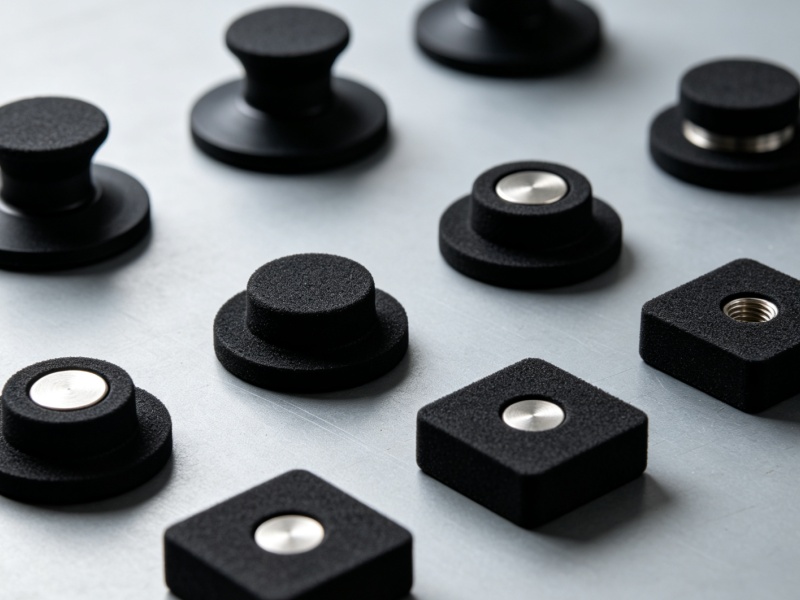
- Threaded pot magnets favor fixture and component mounting; countersunk pot magnets favor flush screw fixing.
- Corrosion protection, surface condition, and temperature can change performance more than catalog pull force suggests.
- For search and selection, the most useful questions are: how will it mount, what surface will it touch, and what environment will it face?
Pot Magnet selection is a mechanical decision as much as a magnetic one, because the steel cup shapes the field, protects the core, and changes how force is delivered to the contact surface. In practice, engineers often compare products by pull force, but that number is only meaningful when the test setup is known; for example, a 15 kg-rated pot magnet on clean thick mild steel can behave very differently on painted, curved, or thin sheet metal. Standards such as ISO 16047 define torque and clamp-force testing for threaded fasteners, while NIST SI guidance is useful when buyers need disciplined mass and force language in procurement specs. If you are comparing a Pot Magnet, a Threaded Pot Magnet, and a Countersunk Pot Magnet, the real question is not which is strongest on paper, but which one keeps force stable in your actual mounting scenario.
What a Pot Magnet Is and Why the Steel Cup Changes Performance
A pot magnet is a magnet assembly, not just a magnet core, and the steel cup is what makes it behave differently from a bare magnet.
The steel housing creates a low-reluctance return path for magnetic flux, which concentrates the field at the contact face and reduces wasted flux on the rear and side faces. That is why a compact neodymium core inside a steel shell can produce a much stronger effective hold on ferromagnetic steel than the same core left exposed. In practical terms, the cup also works as a mechanical shield, helping the assembly survive impact, edge chipping, and handling damage during installation. This is one reason pot magnets are common in fixtures, mounting systems, closures, and removable holding devices.
Buyers sometimes assume the strongest magnet is always the best choice, but a cup magnet’s advantage is often stability, not just peak pull. A well-designed assembly can resist sliding better because the housing improves face contact and helps align the field where the load touches the target surface. For this reason, many industrial buyers prefer a pot-style assembly when the application includes frequent attachment and removal, vibration, or simple field installation.
| Attribute | Pot Magnet | Bare Magnet |
|---|---|---|
| Flux path | Concentrated by steel cup | Open flux dispersion |
| Mechanical protection | High | Low |
| Typical installation | Mounted assembly | Direct bonding or insertion |
| Practical holding stability | Higher on flat steel | More sensitive to alignment |
The main takeaway is simple: pot magnets are engineered systems, so the cup, core, and mounting interface matter together.
Threaded Pot Magnet vs Countersunk Pot Magnet: Mounting Defines the Use Case
The mounting interface is the clearest difference between threaded and countersunk pot magnets.
A threaded pot magnet usually includes a female or male thread that allows connection to rods, brackets, adjustable fixtures, or machine accessories. This makes it valuable where the magnet must be part of a larger assembly and removed without disturbing the host structure. A countersunk pot magnet, by contrast, is designed to sit flush when fastened with a countersunk screw. That flush profile is useful where protruding hardware would interfere with movement, safety, sealing, or visual finish.
In shop-floor terms, threaded designs are favored when adjustability matters, while countersunk designs are favored when a low-profile attachment is needed. If a technician needs a magnetic base for a light arm, sensor mount, or temporary fixture, the threaded style is often easier to integrate. If the magnet must sit neatly inside a panel, jig, or cabinet door, the countersunk style is usually more practical. The wrong choice often shows up as side interference, uneven load transfer, or a mounting screw that cannot fully seat.
| Type | Mounting Method | Best Fit | Main Constraint |
|---|---|---|---|
| Threaded pot magnet | Screw, stud, or threaded fitting | Adjustable fixtures, tools, bases | Thread compatibility |
| Countersunk pot magnet | Flush countersunk screw | Panels, jigs, low-profile mounting | Screw angle and head size |
| Standard pot magnet | Bonding or embedded use | Simple hold-down tasks | Less modularity |
If you are building a reusable fixture system, the threaded style often reduces changeover time; if you are designing around space limits, the countersunk style usually wins.
How Holding Force Is Tested and Why Catalog Numbers Can Mislead
Holding force only becomes useful when the test conditions are known.
Manufacturers typically report pull force on a clean, thick, flat steel plate with direct vertical separation, but real applications rarely look like that. Surface paint, curvature, rust, oil film, air gaps, and side loading can reduce usable force dramatically. A magnet rated for 20 kg may hold far less if the contact surface is thin sheet metal or if the load tries to slide rather than lift. That is why procurement teams should ask for the test substrate, steel thickness, coating condition, and separation direction before comparing values.
For threaded parts, load-bearing design often references clamp and torque discipline, which is why ISO 16047 is useful for understanding how fastener testing is structured. For dimensional and tolerance thinking in manufacturing, ISO 2768-1 provides general tolerances for linear and angular dimensions when no individual tolerance is specified. Even though a pot magnet is not a bolt, the same quality mindset applies: if the fit, flatness, or screw seat is poor, real performance will deviate from the brochure value.
One practical rule is to treat pull-force data as a ceiling, not a guarantee. In applications with vibration or side shear, choose with safety margin, not optimism.
- Check the contact surface finish before trusting the rating.
- Ask whether the force value is pull-off or shear resistance.
- Verify whether the coating changes the stand-off distance.
- Confirm operating temperature before specifying final grade.
Material Grade, Coating, and Temperature: The Hidden Differences Buyers Miss
The magnet core grade and surface coating often matter more than the housing style in harsh environments.
Most high-performance pot magnets use neodymium-iron-boron cores, valued for high magnetic energy in compact size. The downside is corrosion sensitivity, which is why coatings such as nickel-copper-nickel, epoxy, or rubber overmolding appear in different product families. If the magnet will see humidity, salt spray, cleaning chemicals, or outdoor exposure, corrosion protection is not optional. Surface degradation can quickly reduce appearance, reliability, and eventually magnetic performance if the core is exposed.
Temperature is another overlooked variable. Many standard NdFeB grades are specified for 80 C maximum operating temperature, while higher-temperature grades are engineered for more demanding environments. If a magnet is placed near motors, heaters, welding zones, or direct sunlight on dark metal, thermal demagnetization risk increases. For general magnetic material background, NIST magnetics resources provide useful technical context, and ASTM’s test culture is useful when comparing lab-style claims with application reality.
| Factor | Typical Risk | Selection Response |
|---|---|---|
| Humidity / corrosion | Coating damage, rust | Use plated, epoxy, or rubber-coated versions |
| Heat exposure | Reduced coercivity | Select higher-temperature NdFeB grade |
| Impact / abrasion | Edge chipping | Prefer steel-cup protection |
| Painted surfaces | Lower pull force | Increase size or reduce air gap |
The most reliable selection process starts with environment, not with diameter.
When a Threaded Pot Magnet Is Better Than a Countersunk Pot Magnet
A threaded pot magnet is better when you need adjustability, serviceability, or a connection to another part.
Common examples include magnetic bases for indicators, temporary brackets, camera mounts, small fixtures, and adjustable shop accessories. Because the thread provides a repeatable connection, the magnet can be integrated into a larger mechanical stack without custom machining. This is especially useful in industrial maintenance where time matters and a technician may need to reconfigure a setup in minutes instead of hours.
A countersunk pot magnet is better when flush mounting matters more than modularity. In cabinetry, enclosures, signage, access panels, and jigs, the low-profile screw seat reduces protrusion and keeps the installation tidy. The geometry also helps prevent interference in sliding or rotating parts. If the application includes repeated impact or edge contact, a flush design may also reduce snagging risk.

In other words, threaded means flexible, while countersunk means neat and integrated. Neither is universally stronger; they are optimized for different mounting logic.
- Choose threaded when the magnet must join a bracket, rod, or adjustable arm.
- Choose countersunk when the screw head must sit below or level with the surface.
- Choose a standard pot magnet when the mounting method is already fixed by the product design.
Where Pot Magnets Fail in Real Use and How to Prevent It
Most pot magnet failures come from application mismatch, not from the magnet core itself.
The most common failure mode is side load slipping, where the force is strong enough vertically but insufficient against shear. Another frequent issue is poor surface contact caused by paint, debris, or curvature. A third issue is corrosion at the interface, which can degrade both appearance and function. Mechanical abuse matters too: repeated hammering, off-axis impact, and over-tightened fasteners can crack coatings or deform the housing.
For buyers, the prevention strategy is straightforward. First, define whether the load is pull-off or shear. Second, confirm surface material and thickness. Third, account for temperature and cleaning chemicals. Fourth, match the mounting style to the real assembly path. Fifth, specify protective coating if the product will live in a wet or outdoor environment.
This is why a good product page should explain not only what the magnet is, but how it mounts, where it performs best, and where it should not be used. The most helpful content is not generic magnet marketing; it is decision support.
| Failure Mode | Common Cause | Prevention |
|---|---|---|
| Shear slip | Side loading | Increase contact area or use mechanical restraint |
| Rusting | Moisture exposure | Use sealed coating or rubber overmold |
| Chipping | Impact during assembly | Use steel cup and careful installation |
| Weak hold | Paint or air gap | Improve surface prep or upsize magnet |
How to Choose the Right Pot Magnet Type for Your Application
The best choice starts with the job, not with the catalog page.
For industrial procurement, the fastest way to narrow selection is to answer four questions: What is being held? What surface will it touch? How will it be mounted? What environment will it face? Once those are known, the product type becomes obvious in many cases. A clean steel door stop, an adjustable sensor base, and a flush cabinet latch may all use pot magnets, but they will not use the same geometry.
Below is a practical selection guide that reflects how buyers usually think in the field.
| Use Case | Recommended Type | Why It Fits | Priority Spec |
|---|---|---|---|
| Adjustable fixture | Threaded pot magnet | Easy integration with brackets | Thread size and pull force |
| Flush panel mounting | Countersunk pot magnet | Low-profile screw seating | Head angle and housing depth |
| General hold-down | Standard pot magnet | Simple and compact | Contact surface and coating |
| Outdoor or wet use | Sealed coated version | Corrosion resistance | Coating and temperature limit |
When the application is safety-critical or maintenance-intensive, request sample testing on the actual substrate. A lab number is useful, but a real steel panel with real paint often tells the truth faster.
Pot Magnet Selection Checklist for Buyers and Engineers
A short checklist prevents most wrong purchases.
- Confirm whether the load is vertical pull or horizontal shear.
- Measure the contact surface material, thickness, and coating.
- Choose threaded, countersunk, or standard based on mounting path.
- Verify operating temperature and corrosion exposure.
- Ask for pull-force test conditions, not just the number.
- Check whether installation space allows the cup diameter and screw head.
- Request a sample when the application has vibration, heat, or paint layers.
For users comparing product families, internal navigation also matters because the right page should answer the right intent. A buyer who needs a modular assembly should open Threaded Pot Magnet, while a flush-mount project should open Countersunk Pot Magnet. For broader comparison, the general Pot Magnet page is the right starting point.
FAQ About Pot Magnet Types
What is the main difference between a pot magnet and a bare magnet?
The main difference is the steel cup, which concentrates magnetic flux and improves mechanical protection. That usually produces more useful holding force on flat steel than the same bare magnet.
Is a threaded pot magnet stronger than a countersunk pot magnet?
Not inherently. Strength depends on the core size, material grade, cup design, and test surface. The mounting style changes usability more than raw magnetic capability.
When should I use a countersunk pot magnet?
Use it when you need flush fastening with a countersunk screw, especially in panels, fixtures, and low-profile installations.
When should I use a threaded pot magnet?
Use it when the magnet must connect to a bracket, rod, or adjustable accessory and serviceability matters.
Why does holding force drop on painted steel?
Paint creates an air gap, and even a thin gap can reduce magnetic attraction significantly. The magnet is still working, but the field coupling is weaker.
Why is corrosion protection important for pot magnets?
Because many magnetic applications face moisture, outdoor exposure, cleaning agents, or condensation, and exposed neodymium cores are vulnerable to corrosion.
What data should I ask for before buying?
Ask for the test surface, steel thickness, pull-off direction, coating type, operating temperature, and mounting dimensions. Those details are more useful than a single force number.