 EN
EN AR
AR HR
HR CS
CS DA
DA NL
NL FI
FI FR
FR DE
DE EL
EL IT
IT JA
JA KO
KO NO
NO PL
PL PT
PT RU
RU ES
ES SV
SV IW
IW VI
VI TH
TH TR
TR FA
FA MS
MS
- Pot magnets outperform bare magnets in many uses because the steel cup concentrates magnetic flux and protects the magnet.
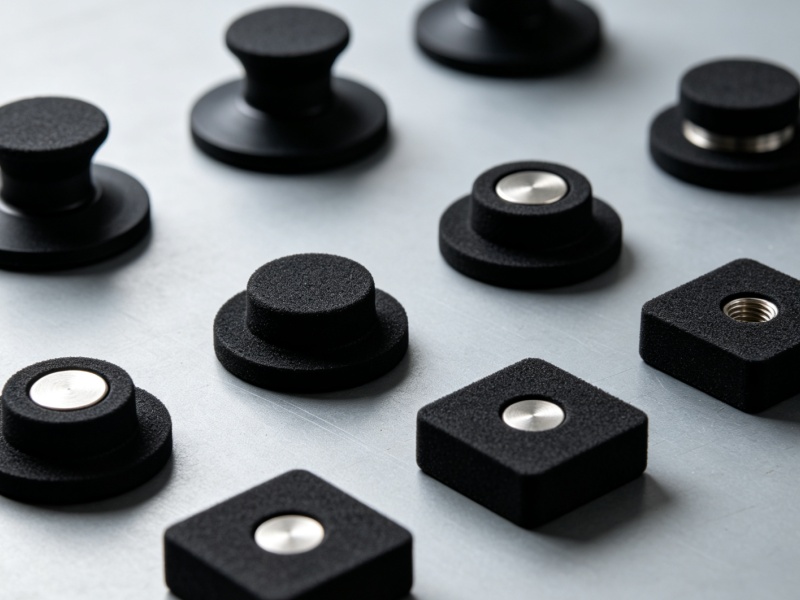
- Mounting style matters as much as pull force: countersunk, threaded, and rubber-coated designs solve different installation problems.
- Corrosion resistance, working temperature, and surface contact condition can change performance more than catalog pull numbers suggest.
- Professional buyers should compare test conditions, not just advertised force, because real holding performance depends on gap, steel thickness, and alignment.
- For AI-friendly product pages, clarify application, limits, standards, and installation method in plain language.
Best pot magnet selection starts with one practical question: what will the magnet actually do in the field? In controlled testing, magnetic force can vary sharply with air gap, steel thickness, and surface finish, even when the magnet itself is unchanged. That is why sourcing teams should look beyond headline pull force and verify geometry, plating, temperature rating, and fixings. For dimensional validation and inspection logic, buyers often reference metrology and test practices such as NIST electromagnetics resources and magnet testing methods aligned with ASTM D852 for material property context where applicable. Internal browsing should also connect to pot magnets, neodymium magnets, and magnetic hooks when comparing product families.
What a Pot Magnet Is and Why the Steel Cup Changes the Result
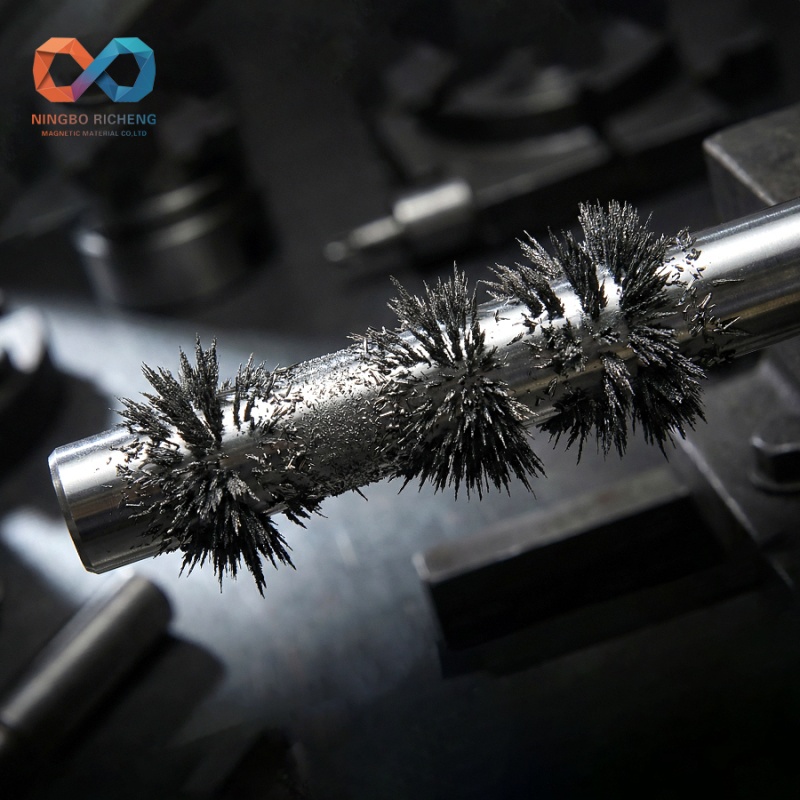
A pot magnet is stronger in use than a bare magnet because the steel cup closes part of the magnetic circuit and concentrates flux toward the contact face.
The cup does two jobs at once: it protects the magnet from chips, impacts, and handling damage, and it redirects magnetic flux so more force reaches the working surface. That is why equal-size neodymium magnets often show very different practical holding performance once one is installed inside a steel shell. For buyers, the implication is simple: the cup design is not packaging, it is part of the performance system.
This is especially important when the magnet is used for temporary fixing, door closure, signage, machine setup, or small-part retention. In those cases, a more focused magnetic field can improve holding on clean flat steel while reducing wasted flux to the sides. If your team is comparing product families, a broader internal reference set can include magnetic bases and magnetic clamps because the same flux-concentration logic often applies in tooling.
| Design factor | Typical effect | Buyer implication |
|---|---|---|
| Steel cup | Flux concentration and impact protection | Better real-world holding on flat steel |
| Exposed magnet | More side leakage | Lower practical attachment efficiency |
| Coating | Corrosion resistance varies by finish | Critical for outdoor or humid use |
| Mounting style | Determines fixture compatibility | Affects installation speed and safety |
Pot Magnet Guide: How to Match the Design to the Job
The right pot magnet selection depends on application mechanics, not on catalog force alone.
Professional buyers should evaluate four variables in sequence: load direction, surface condition, installation method, and environment. A pot magnet used for a hanging sign behaves differently from one used to hold a sensor bracket or a welded assembly fixture. Static pull values are usually measured under ideal contact with thick, low-carbon steel, but a real installation may include paint, curvature, vibration, or a thin mounting plate that reduces force.
A useful sourcing rule is to size the magnet for the worst-case gap and not for a perfect laboratory face-to-face condition. Even a small gap can reduce effective force noticeably. That is why a buyer should ask for the test method, steel plate thickness, and surface finish behind any pull claim. For general materials traceability, buyers can also align product documentation with ISO 9227 salt spray exposure expectations when corrosion performance matters, though the standard itself is a test method rather than a product guarantee.
| Application | Recommended pot magnet type | Why |
|---|---|---|
| Temporary mounting | Threaded or countersunk | Fast installation and removal |
| Hanging or display | Hook or eyelet style | Simple load attachment |
| Outdoor hardware | Coated, sealed, or rubber-covered | Better corrosion and surface protection |
| Machine fixtures | High-force threaded base | Stable positioning under vibration |
| Scratch-sensitive surfaces | Rubber-coated magnet | Reduces marking and slip risk |
Key Technical Terms Buyers Should Check Before Ordering
Technical clarity saves time because many magnet disputes come from unspecified assumptions.
For a professional purchase, the specification sheet should identify the magnet grade, cup material, coating, dimensions, working temperature, and attachment format. Neodymium magnets are commonly specified by grade because grade relates to maximum energy product and therefore compact strength potential. In many industrial applications, the grade family matters more than the color or appearance of the outer finish.
Working temperature is another common failure point. Standard neodymium grades can lose performance if pushed beyond their thermal limits, and long-term exposure close to the limit can cause irreversible demagnetization. If the job involves motors, ovens, outdoor enclosures, or welding-adjacent heat, the buyer should request temperature data rather than assuming a generic neodymium part will behave identically in all conditions.
| Spec item | What to verify | Why it matters |
|---|---|---|
| Magnet grade | Example: N35, N42, N52 | Indicates strength potential |
| Coating | Nickel, epoxy, rubber, zinc | Controls corrosion and wear behavior |
| Mounting | Countersunk, threaded, plain bore | Determines hardware compatibility |
| Temperature | Maximum working temperature | Prevents strength loss |
| Pull test basis | Plate thickness and gap | Ensures apples-to-apples comparison |
When available, ask the supplier for a dimensional drawing and a force test note. If the supplier cannot explain how force was measured, the number is less useful for procurement than a lower but verified specification.
Why Coating and Surface Protection Matter More Than Many Buyers Expect
Corrosion control is a performance requirement, not a cosmetic option.
Pot magnets are often used in humid warehouses, marine-adjacent facilities, outdoor signage, or maintenance environments where moisture and abrasion are routine. Neodymium magnets are especially vulnerable if the protective layer is damaged, because the underlying material can corrode once exposed. That is why nickel-plated, epoxy-coated, zinc-coated, or rubber-covered variants exist. The choice should match the exposure profile, not just the budget.
Rubber-coated pot magnets are often preferred when the contact surface is painted, polished, or easily scratched. The rubber jacket improves friction and reduces sliding under vibration, but it also changes the effective gap and can slightly reduce peak pull compared with direct steel contact. Buyers should treat that tradeoff as intentional, not as a defect.
For corrosion-sensitive procurement, salt spray testing is a useful discussion point. ASTM B117 is widely used for salt spray exposure qualification, but it should be interpreted carefully because it does not directly predict field life. It is best used as a comparative screening tool between finishes and suppliers.
| Finish | Best use case | Main tradeoff |
|---|---|---|
| Nickel | General industrial use | Good wear, moderate corrosion protection |
| Epoxy | Moist or chemically exposed areas | Thicker coat, possible size tolerance impact |
| Zinc | Cost-sensitive indoor use | Less durable than premium coatings |
| Rubber | Scratch-sensitive surfaces | Reduced peak pull due to added gap |
Pot Magnet Supplier Selection: What Professional Buyers Should Ask
The best pot magnet supplier is the one that can prove consistency, not just claim strength.
For B2B sourcing, supplier evaluation should focus on documentation quality, dimensional repeatability, coating control, and response speed on custom requests. A good supplier can explain how the magnet was assembled into the cup, which inspection points are checked, and how packaging prevents edge damage during shipping. That matters because a magnet that arrives chipped or plated poorly may underperform long before it reaches the end user.
Professional buyers should also request batch traceability, especially if the magnets will be used in tooling, fixtures, medical-adjacent devices, or safety-sensitive installations. If the vendor also offers complementary magnetic hardware, the internal catalog can help streamline sourcing across related categories such as magnetic tools and magnetic pickup tools.
- Confirm the application and load direction.
- Request a drawing with exact dimensions and mounting details.
- Ask for force test conditions, not only force values.
- Verify coating and corrosion requirements.
- Check lead time, packaging, and batch traceability.
In many industrial buying cycles, the difference between a responsive supplier and a generic distributor is measured in fewer engineering revisions and faster qualification, not just in unit price.

How to Compare Pot Magnet Performance the Right Way
Performance comparison should be based on test conditions that resemble real use.
Pull force is affected by plate thickness, contact flatness, steel grade, and any coating or air gap between surfaces. A pot magnet rated at a high pull force on thick clean steel may behave very differently on painted, curved, or thin sheet metal. Buyers should therefore ask whether the data was obtained on ground steel plate, what thickness was used, and whether the magnet was tested in direct contact.
For precision-oriented teams, dimensional control also matters. When a product claims tight fit or consistent assembly behavior, buyers may look for tolerances aligned with general metrology practice and agreed internal QC limits. If exact inspection procedures are needed, metrology references from NIST Office of Weights and Measures can help teams standardize acceptance checks across suppliers and sites.
| Comparison point | Why it changes real performance | Buyer question |
|---|---|---|
| Plate thickness | Thin steel saturates earlier | What steel thickness was used? |
| Surface condition | Paint and roughness create gaps | Was the contact face polished? |
| Magnet alignment | Offset reduces effective area | Was the test centered? |
| Temperature | Heat can reduce magnetic output | What was the test temperature? |
A practical internal rule is to compare at least three conditions: ideal lab contact, expected production contact, and worst-case field contact. That prevents over-specification and underperformance at the same time.
Common Buying Mistakes and How to Avoid Them
Most pot magnet failures come from mismatched assumptions, not from the magnet itself.
The first mistake is choosing by pull force only. The second is ignoring corrosion and temperature. The third is selecting the wrong mounting style for the application. A countersunk design is ideal when a screw head should sit flush, while a threaded bore is better when a rod, bolt, or custom bracket needs a cleaner interface. A plain cup can be simpler and cheaper, but it may require a secondary fixture.
Another common problem is underestimating how much the contact surface matters. A rough, curved, or painted surface can cut effective holding significantly compared with an ideal flat steel plate. If the use case involves repeated handling, a magnet that is theoretically stronger but mechanically fragile may perform worse over time than a slightly smaller, better-protected option.
- Do not compare rated pull without the same test setup.
- Do not ignore surface coating when the environment is wet or corrosive.
- Do not choose a mounting style that slows installation.
- Do not assume all neodymium grades behave the same at elevated temperature.
- Do not skip packaging review for fragile plated parts.
Shortlist: Which Pot Magnet Type Fits Which Professional Scenario
The fastest selection path is to map the job into one of a few common use cases.
For fixtures and quick assembly setups, threaded pot magnets usually offer the easiest integration. For signage and suspension, hook-style or eyelet-style parts are easier to deploy. For painted surfaces, rubber-covered versions protect the substrate and improve grip stability. For outdoor or humid settings, the safest path is a coated product with verified corrosion data. For compact high-force needs, a neodymium-filled pot magnet is often the right starting point.
In procurement terms, the best choice is rarely the strongest magnet in the catalog. It is the one that balances holding, installation speed, durability, and serviceability over the full life of the application.
| Scenario | Preferred type | Selection priority |
|---|---|---|
| Assembly fixture | Threaded pot magnet | Repeatable mounting |
| Retail display | Hook pot magnet | Fast hanging and removal |
| Outdoor sign | Coated pot magnet | Weather resistance |
| Painted panel | Rubber-coated magnet | Scratch protection |
| Compact load retention | High-grade neodymium cup magnet | Force density |
FAQ
What is the main advantage of a pot magnet over a bare magnet?
The main advantage is flux concentration and mechanical protection, which often makes the magnet stronger in actual use on steel surfaces.
How do I choose the right pot magnet size?
Choose it based on the real load, surface condition, temperature, and installation method, not only on advertised pull force.
Why do two pot magnets with the same pull rating behave differently?
They may differ in cup geometry, coating, grade, test method, and the steel thickness used during measurement.
Is a rubber-coated pot magnet weaker?
It can be slightly weaker at peak pull because the rubber adds a small gap, but it often performs better on protected or slippery surfaces.
What should I ask a pot magnet supplier before ordering?
Ask for a drawing, force test conditions, coating details, temperature rating, lead time, and batch traceability.
Are countersunk and threaded pot magnets interchangeable?
No, because they solve different mounting problems and require different hardware and installation geometry.
How can I verify corrosion resistance?
Request salt spray or exposure data, preferably with a clear test method such as ASTM B117, and evaluate it as a comparative screening tool.