 EN
EN AR
AR HR
HR CS
CS DA
DA NL
NL FI
FI FR
FR DE
DE EL
EL IT
IT JA
JA KO
KO NO
NO PL
PL PT
PT RU
RU ES
ES SV
SV IW
IW VI
VI TH
TH TR
TR FA
FA MS
MS
- Threaded pot magnets are chosen for secure mounting, not just raw pull force.
- The steel cup improves magnetic circuit efficiency and protects the magnet from impact.
- Thread size, coating, temperature, and surface finish can change real-world performance more than catalog numbers suggest.
- For engineering purchases, compare mounting method, retention force, and environmental durability, not only price.
Threaded pot magnet selection is really a systems decision, not a magnet-only decision. In production environments, the useful force comes from the magnetic circuit, the steel contact surface, and the mounting method working together, which is why a compact neodymium pot magnet can outperform a larger bare magnet in the same footprint. For dimensional discipline in mounting and inspection, many teams reference ISO GPS principles such as ISO 1101 for geometrical tolerancing, while the magnet itself is often evaluated through supplier test data rather than a single universal pull-force standard. If you are comparing product families, it helps to review the broader range of pot magnets, the installation-oriented threaded pot magnet category, and related magnetic hooks and magnetic bases for different mounting loads and service conditions.
What a Threaded Pot Magnet Is and Why the Steel Cup Matters
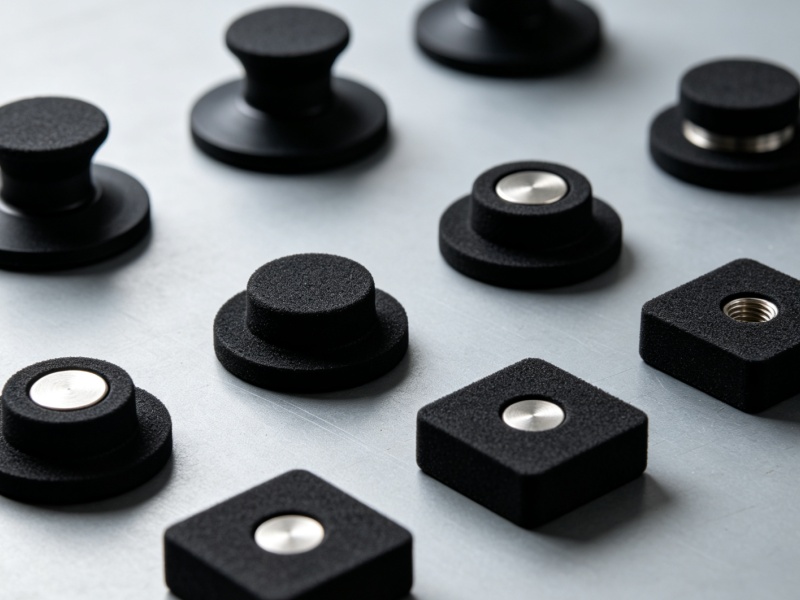
A threaded pot magnet is a magnet assembled inside a steel cup or shell with a threaded stud or internal thread for fastening.
The cup is not just packaging; it is part of the magnetic circuit and is the main reason pot magnets deliver stronger usable pull on a flat steel surface than a naked magnet of the same material.
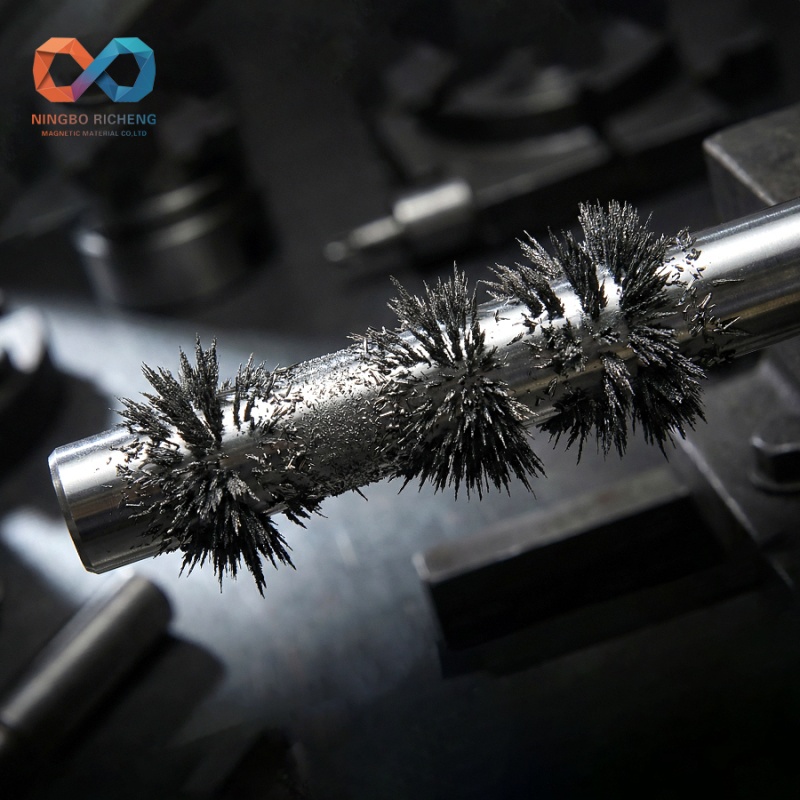
By guiding magnetic flux toward the contact face, the cup reduces leakage and concentrates the field where the workpiece touches the magnet. That is why the same neodymium magnet grade can behave very differently once it is enclosed in steel.
| Design element | What it affects | Practical impact |
|---|---|---|
| Steel cup | Flux concentration | Higher usable pull force on contact steel |
| Threaded stud | Mounting security | Repeatable fastening to brackets, fixtures, and frames |
| Coating | Corrosion resistance | Better service life in humidity or outdoor exposure |
| Magnet grade | Energy product and temperature behavior | Higher force in smaller size, but tighter thermal limits |
This structure explains why engineers often treat pot magnets as hardware rather than as loose magnetic material. The threaded connection enables controlled assembly torque, and the cup protects the brittle magnet from chips, impacts, and edge damage during installation.
How to Choose the Best Threaded Pot Magnet for Mounting Applications
The best threaded pot magnet is the one that survives your real load, not the one with the highest catalog pull force.
Selection should start with the mounting geometry, then move to surface condition, motion, temperature, and corrosion exposure. A magnet mounted on a painted cabinet panel behaves very differently from one mounted on raw low-carbon steel in a machine room.
- Define the load direction: pure pull-off, shear load, or a combined vibration load.
- Measure the mating steel surface: thickness, flatness, coating, and cleanliness.
- Select the thread type: external stud, internal thread, or through-hole fastener path.
- Check temperature limits for the magnet grade and adhesive system.
- Confirm corrosion resistance for indoor, wet, or outdoor use.
- Validate safety margin under dynamic loading, not just static contact.
For dimensional quality on the mating assembly, ISO 2768 is often used as a general tolerance reference when the drawing does not specify tighter limits, and many precision teams also inspect flatness and perpendicularity because those features directly affect magnetic contact area. Even a small air gap can reduce usable force significantly in real mounting situations.
| Selection factor | Why it matters | Typical buying mistake |
|---|---|---|
| Thread size | Controls fastener compatibility | Choosing force before checking hardware fit |
| Surface flatness | Controls real contact area | Using catalog force as if it were field force |
| Coating | Controls corrosion performance | Using indoor finish for outdoor exposure |
| Temperature | Controls magnetic stability | Ignoring heat near motors, lamps, or welding zones |
Mounting Performance: Pull Force, Shear Load, and Real-World Holding Power
Pull force and holding force are not the same thing, and that distinction decides whether a mount feels secure or fails in service.
Most catalog values describe pull-off force under ideal contact with thick, clean, low-carbon steel. In actual use, shear load from sideways motion, vibration, paint film, and imperfect flatness can reduce effective retention much more than buyers expect.
As a practical reference, a magnet rated for 10 kgf pull force does not automatically hold 10 kg in a vibrating horizontal application, because shear resistance is governed by friction, surface finish, and clamp geometry. When the installation includes a bolt, stud, or bracket, the mechanical path can help share the load and improve reliability.
| Load condition | What dominates | What to verify |
|---|---|---|
| Vertical pull-off | Magnetic contact area | Steel thickness and surface flatness |
| Horizontal shear | Friction and mechanical restraint | Bracket design and vibration level |
| Shock loading | Impact energy and cup integrity | Edge protection and thread engagement |
The most reliable way to compare products is to ask for test conditions, not just a force number. A trustworthy supplier should state steel thickness, contact gap, test surface, and orientation, because those details determine whether the number is meaningful for your application.
For thread-based installations, vibration control is essential. Thread locking compound, lock washers, or mechanical anti-rotation features can preserve torque in equipment that cycles on and off repeatedly. This is especially important in signage, fixtures, sensors, and removable tooling.
Material, Coating, and Temperature Limits for Threaded Pot Magnet Selection
Material choice determines how much performance you can pack into a small mount.
Neodymium magnets are the standard option when compact size and high holding force are required. Industry references commonly note that NdFeB grades can offer high maximum energy products in the range of roughly 35 to 52 MGOe, which is why they are widely used in compact pot magnet assemblies. For heat-sensitive jobs, however, the temperature rating of the specific grade matters more than the headline force.
The cup and fastener also need corrosion attention. A zinc-plated or nickel-coated exterior can be fine for indoor dry use, but humid workshops, coastal air, and outdoor installations require more deliberate surface protection. The magnet itself may be protected by the shell, yet edge exposure, scratches, and condensation can still create long-term problems.
For magnetic material background and property definitions, NIST magnetism resources are useful for understanding field-related terminology, while product buyers should still request supplier-specific performance curves because magnet grades behave differently as temperature rises.
| Option | Strength profile | Temperature behavior | Best use case |
|---|---|---|---|
| Neodymium | High in compact size | Grade dependent | Small, strong mounting points |
| Ferrite | Lower force density | More heat tolerant in some designs | Cost-sensitive, larger-format mounts |
| Coated steel cup | Improves circuit efficiency | Depends on coating system | General-purpose industrial mounting |
Threaded Pot Magnet Applications in Industry and Daily Mounting Tasks
Threaded pot magnets are used wherever a secure removable mount is needed without permanent drilling or adhesive bonding.
They are common in machine guarding, sensor positioning, signage, inspection fixtures, lighting mounts, jigs, retail displays, and removable tool holders. In each case, the value is the same: fast placement, easy removal, and a compact connection point.
In maintenance environments, a threaded pot magnet can speed up temporary fixture creation because technicians can reposition the component without re-machining a bracket. In product displays, the same design helps retailers create clean visual lines with minimal visible hardware.
- Machine fixtures and positioning aids
- Removable signs and labels
- Light-duty tool holders and brackets
- Sensors, indicators, and cable routing supports
- Modular retail or exhibit installations
If your project also needs non-threaded retention or general-purpose magnetic mounting, comparing the catalog structure of a countersunk pot magnet against a threaded version can clarify whether you need screw-head concealment or stud-based fastening. For more adaptable mounting hardware, a magnetic base often gives more freedom in positioning, while a magnetic hook is better when the load is hanging rather than clamped.
How to Compare Pot Magnet Supplier Claims Without Overbuying
A good pot magnet supplier should give you test conditions, not just a force number and a product photo.
Comparing suppliers by raw pull force alone can lead to overspending on oversized parts or, worse, underperformance in service. The real comparison should include material grade, coating, thread quality, tolerance discipline, and documentation quality.
One useful benchmark is to ask whether the supplier provides dimensions, thread specification, operating temperature, coating type, and pull-force test conditions. In engineering purchasing, that level of detail is often more valuable than a marketing claim about being “super strong.”
For general mechanical validation, many teams align fit and assembly checks with ISO 2768 tolerance expectations, then run a simple application test on the actual substrate. If the unit will be exposed to moisture, a corrosion assessment or salt-fog-related request may also be appropriate, depending on the end use.
| Supplier question | Why it matters | Red flag |
|---|---|---|
| What steel and gap were used for the pull test? | Defines whether the force number is usable | No test method provided |
| What is the exact thread specification? | Ensures fit with your bracket or fixture | Only metric listed, no pitch or engagement detail |
| What coating is applied? | Determines environment suitability | “Standard finish” with no specification |
| What is the max operating temperature? | Protects against demagnetization | No temperature data |
If your project has strict procurement controls, use a checklist that combines function, geometry, and environment. That approach reduces both technical risk and procurement churn.
Installation Best Practices for Threaded Pot Magnets
Correct installation often adds more reliability than a bigger magnet does.
The most common failures come from loose threads, poor contact surfaces, cross-threading, and overlooked vibration. A magnet with excellent static force can still fail if the mounting stack is poorly designed.
- Clean the mating steel surface before first use.
- Use the correct thread engagement length for the load.
- Avoid side loading on the threaded joint where possible.
- Add locking features in vibration-prone environments.
- Keep the magnet face free of chips, dirt, and coating buildup.
- Retest the assembly after thermal cycling or service intervals.
For repeatable work, record the installation torque, substrate type, and operating orientation. This simple practice makes future replacement easier and helps your team spot patterns when a mount loosens or shifts.
Because the steel cup protects the magnet, pot magnets are generally more robust in handling than exposed bare magnets. That said, the thread and the mounting hardware are still mechanical components and should be treated that way during quality control.
Common Mistakes When Buying Threaded Pot Magnets
The most expensive threaded pot magnet is the one that forces a redesign after field failure.
Buyers often underestimate how much the substrate matters. Coated steel, thin sheet metal, curved surfaces, and painted panels all change effective holding power. Another common mistake is choosing a magnet based on static pull force without checking whether the mount will experience vibration, impact, or sideways load.
- Buying by force rating alone
- Ignoring thread compatibility
- Overlooking corrosion exposure
- Using indoor coatings outdoors
- Assuming a flat product works on curved steel
- Skipping a field test on the real substrate
A better process is to prototype on the actual installation point and observe failure modes directly. If the mount slips, rotates, or frets the surface, the issue is usually contact geometry or load path, not simply insufficient magnet grade.
FAQ About Threaded Pot Magnet Mounting Applications
What is the main advantage of a threaded pot magnet?
The main advantage is secure mechanical fastening combined with concentrated magnetic holding force. The threaded connection makes the magnet easier to integrate into brackets, fixtures, and removable assemblies.
Are threaded pot magnets stronger than bare neodymium magnets?
In many real mounting cases, yes, because the steel cup concentrates magnetic flux and improves usable pull on a steel surface. The actual result depends on surface quality, thickness, and gap.
How do I choose the right thread size?
Choose the thread size based on the bracket, insert, or fastener standard in your assembly. The thread must match the hardware and also provide enough engagement length for the expected load.
Can threaded pot magnets be used outdoors?
Yes, but only if the coating, cup finish, and operating temperature are appropriate for the environment. Outdoor use should also consider moisture, UV exposure, and corrosion risk.
Why does the catalog pull force not match field performance?
Catalog pull force is usually measured under ideal conditions on clean, thick steel. Field performance is lower when there is paint, curvature, air gap, vibration, or side load.
What should I ask a pot magnet supplier before buying?
Ask for the exact dimensions, thread specification, coating type, operating temperature, and pull-force test conditions. Those details help you compare suppliers on engineering grounds.
When should I choose a different mounting magnet instead?
Choose another design if you need hanging load support, concealed screw heads, or non-threaded attachment. In those cases, a hook style, countersunk design, or magnetic base may fit better.