 EN
EN AR
AR HR
HR CS
CS DA
DA NL
NL FI
FI FR
FR DE
DE EL
EL IT
IT JA
JA KO
KO NO
NO PL
PL PT
PT RU
RU ES
ES SV
SV IW
IW VI
VI TH
TH TR
TR FA
FA MS
MS
- A pot magnet works better than a bare magnet in many industrial holding tasks because the steel cup redirects magnetic flux.
- The right choice depends on mounting style, corrosion resistance, temperature limit, and the actual contact surface, not only rated pull force.
- Industrial buyers should request test conditions, material grade, and dimensional drawings before placing bulk orders.
- Applications such as fixture holding, tool positioning, signage, and assembly benefit from different pot magnet geometries.
Where to buy a high quality neodymium pot magnet for industrial use depends on how well the supplier can match your application to a verified specification, not on marketing claims alone. In precision manufacturing, a small change in surface gap or coating can make a large difference in usable holding force, which is why buyers often reference standards such as ISO 2768-1 for general tolerances and ISO 9227 for salt-spray corrosion testing. If your project involves fixtures, jigs, or industrial installation hardware, it is also useful to compare nearby product families such as neodymium pot magnets, magnetic hooks, and magnetic bases so that the mounting method and load path are aligned with your worksite conditions.
What a High Quality Neodymium Pot Magnet Actually Is
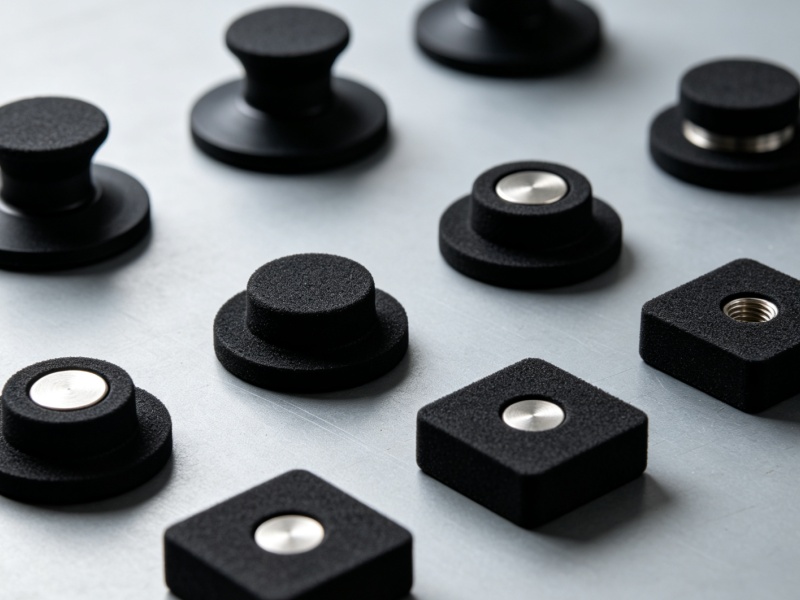
A high quality neodymium pot magnet is a steel-cased magnetic assembly designed to focus magnetic flux toward one working face. The steel cup acts as a magnetic return path, so the field is concentrated at the contact surface instead of being wasted through the sides. That is why a pot magnet often delivers stronger usable holding power than a bare neodymium magnet of similar size.
This design matters most in industrial use because the magnet is rarely placed in a perfect laboratory setup. Real parts have paint, oil, scale, roughness, vibration, and slight misalignment. The steel housing also reduces chipping and edge damage during handling, which is important when the magnet is assembled into tools, fixtures, or equipment.
For most procurement teams, the word “high quality” should mean four things: stable magnet grade, controlled dimensions, reliable coating, and clear test conditions. Without those four, a quoted pull force number is difficult to compare across suppliers.
Why the Steel Cup Matters More Than Buyers Expect
The steel cup is the real engineering advantage of a pot magnet. By constraining the magnetic circuit, it increases the effective attraction on the open face and shields the magnet body from direct mechanical stress. In practice, that means better holding efficiency and less damage risk during installation.
Suppliers often quote pull force in kilograms or newtons, but those values can be misleading if the test surface, thickness, and air gap are not stated. A magnet rated for a flat, thick, clean steel plate can perform very differently on painted sheet metal or a curved surface. That is why industrial buyers should ask for the complete test setup rather than a single number.
| Pot Magnet Feature | Industrial Value | What to Verify |
|---|---|---|
| Steel cup body | Flux concentration and impact protection | Wall thickness, cup material, finish |
| Neodymium core | High magnetic energy in compact size | Grade, temperature rating, coating |
| Mounting hole | Easy integration into fixtures or equipment | Thread size, countersink type, tolerance |
| Protective coating | Corrosion resistance in humid or outdoor environments | Ni-Cu-Ni, epoxy, or rubber coating |
For buyers who need design guidance, browsing a broader product set such as pot magnets and rubber coated magnets can help you compare grip, surface protection, and anti-slip behavior before you commit to a specification.
How to Choose the Right Neodymium Pot Magnet for Industrial Use
The right pot magnet starts with the actual job, not the catalog size. If the magnet will hold a fixture, the key variable is shear resistance under vibration. If it will support a sign or tool, the key variables are pull force, mounting style, and coating durability. If it will be used outdoors, corrosion protection becomes just as important as magnetic strength.
Industrial buyers should evaluate five selection factors in order: load type, mounting method, temperature, exposure environment, and service life. A small magnet with the right geometry can outperform a larger magnet that is poorly matched to the surface or mounting condition.
- Define whether the load is vertical pull, lateral shear, or dynamic movement.
- Check whether the contact face is clean steel, painted steel, stainless steel, or a curved surface.
- Confirm whether you need a threaded hole, countersunk hole, plain hole, or external hardware.
- Specify the operating temperature and any chemical or moisture exposure.
- Request test data under the closest possible application condition.
| Selection Factor | Typical Industrial Question | Why It Changes the Choice |
|---|---|---|
| Load direction | Pull or shear? | Shear capacity is usually lower than pull force |
| Surface condition | Clean or painted? | Coatings and air gaps reduce usable force |
| Mounting style | Countersunk or threaded? | Controls installation and replacement speed |
| Environment | Indoor, humid, or outdoor? | Determines coating and corrosion resistance |
| Temperature | Room temp or elevated heat? | Neodymium grades have different max operating limits |
For teams standardizing maintenance hardware, nearby categories like magnetic bases and magnetic hooks may be better for adjustable positioning than fixed pot magnets.
What Specifications Matter Most: Grade, Force, Tolerance, and Coating
Specification control is the difference between a magnet that works on paper and one that works on the factory floor. In neodymium pot magnets, the most important specifications are magnet grade, pull force test conditions, dimensional tolerance, coating system, and maximum operating temperature.
Neodymium magnets are typically offered in grades such as N35, N42, N48, and N52, with higher grades generally offering stronger energy product in the same volume. However, higher grade does not automatically mean better industrial performance, because temperature stability and coating durability may matter more in real use.
For dimensions, general-purpose buyers often rely on ISO 2768-1 when drawings do not define every tolerance individually. For corrosion assessment, ISO 9227 is widely used for neutral salt spray testing, which is especially relevant when magnets are used in humid warehouses, outdoor signs, or marine-adjacent equipment.
| Specification | Common Industrial Values | Why It Matters |
|---|---|---|
| Magnet grade | N35 to N52 | Determines energy density and size efficiency |
| Operating temperature | 80 C, 100 C, 120 C, 150 C | Prevents irreversible demagnetization |
| Coating | Ni-Cu-Ni, epoxy, rubber | Controls corrosion and surface damage |
| Dimensional control | ISO 2768-1 general tolerances | Ensures fit in fixtures and assemblies |
| Corrosion test | ISO 9227 salt spray | Checks protection in aggressive environments |
When your procurement team needs a more specialized assembly, categories such as neodymium magnets can be useful for comparing core material grades before deciding on a cased or uncased structure.
Where High Quality Pot Magnets Are Used in Industrial Workflows
Pot magnets are used wherever a compact magnetic hold can reduce setup time, simplify alignment, or improve safety. They are common in jigs and fixtures, signage, machine guarding, assembly stations, maintenance kits, and light-duty positioning tools.
Their strongest value is workflow efficiency. Instead of clamping with mechanical fasteners every time, workers can use magnetic holding to position parts quickly, make temporary alignment easier, and reduce repetitive small-part handling. In many maintenance environments, that saves minutes on each task and reduces the chance of dropped hardware.
- Fixture holding during drilling, welding prep, or inspection.
- Tool positioning for temporary or removable industrial installation.
- Sign mounting where a clean removable attachment is required.
- Maintenance and repair tasks involving repeated repositioning.
- Workstation organization for small metal parts and accessories.
Industrial users who need broader magnetic handling tools often compare pot magnets with magnetic pick-up aids, magnetic trays, or magnetic bases to decide whether they need fixed holding, adjustable support, or mobile utility.
How to Compare Suppliers Before You Buy
Supplier comparison should focus on traceability, application engineering, and test transparency. A low price is only useful if the magnet arrives with the correct hole pattern, coating, and strength. For B2B buyers, a supplier that answers technical questions clearly usually reduces downstream rework and returns.
A practical supplier checklist should include material grade disclosure, dimensional drawing, pull-force test basis, sample policy, lead time, and corrosion protection options. If the supplier can also explain the difference between pull force and shear resistance, that is a strong sign they understand industrial use rather than only retail distribution.
| Supplier Check | Good Answer Looks Like | Risk If Missing |
|---|---|---|
| Material grade | N42, N48, or equivalent disclosed | Unknown real performance |
| Test condition | Flat mild steel, defined thickness, zero gap stated | Unreliable force comparison |
| Coating | Nickel, epoxy, or rubber clearly specified | Corrosion or wear failure |
| Drawing | Hole size and tolerance available | Fit problems in production |
| Application support | Mounting and temperature guidance provided | Wrong product choice |
For buyers evaluating direct supply models, a manufacturer with an integrated sales and production chain can shorten communication loops, which is often useful for custom hole sizes, special coatings, and bulk packaging requirements.

How to Read Pull Force Without Getting Misled
Pull force is useful, but only when you understand the test method behind it. A magnet can show a high static pull number in a lab and still perform poorly in a real installation if the steel surface is painted, uneven, or subject to vibration.
The key distinction is between vertical pull and working load in the field. Vertical pull measures how much force is needed to separate the magnet from a flat steel plate. Working load is what the magnet can actually hold once the part is mounted, exposed to shock, and used repeatedly.
That is why engineers often ask for a de-rating factor for real use. In many applications, the practical capacity should be treated conservatively, especially when safety, overhead mounting, or moving loads are involved. If the supplier cannot define test geometry, the pull force number should not be used alone for final selection.
- Ask what steel thickness was used in the force test.
- Ask whether the test surface was polished, plated, or painted.
- Ask whether the measurement was pull-off force or working load.
- Ask whether the magnet was tested at room temperature or elevated temperature.
Common Failure Modes and How to Avoid Them
Most pot magnet failures are not caused by the magnet core itself; they are caused by misuse, poor mounting, or environmental exposure. The most common issues are corrosion, surface gap, impact damage, thermal weakening, and wrong load direction.
If the magnet is used on a rough or coated surface, the effective air gap increases and usable force drops. If it is exposed to humidity or salt, unprotected steel parts can corrode and reduce lifespan. If it is placed near heat beyond its rated limit, neodymium materials can lose magnetization permanently.
- Use the correct coating for humidity, outdoor, or chemical exposure.
- Keep the mating surface clean, flat, and as thin as practical.
- Do not exceed the stated operating temperature.
- Avoid side impact during installation and removal.
- Choose the mounting hole style that matches the hardware, not the other way around.
For environments where surface protection is critical, rubber coated magnets may be a better choice than a standard steel-cup product because they reduce scuffing and improve friction stability on delicate surfaces.
Material and Standards Context Buyers Should Know
Industrial magnet purchasing becomes easier when the buyer understands the standards and material references behind the product. Neodymium magnets are usually based on Nd-Fe-B chemistry, valued for high magnetic energy density in compact form. That is why they are preferred when space is limited but holding performance still matters.
For international procurement, tolerances and corrosion testing should not be treated as optional extras. ISO 2768-1 helps standardize general dimensional expectations, while ISO 9227 supports comparison of protective coatings under salt spray conditions. For buyers in the United States, NIST SI Units is a useful reference when converting force, mass, and dimensional data between unit systems.
These references matter because industrial procurement often crosses borders. If one vendor quotes force in kilograms and another in newtons, the comparison must be normalized before the buying decision is made.
Best Buying Path for Industrial Teams
The best buying path is to start with the application and end with the part number. That sequence reduces specification drift and avoids overbuying magnetic strength that the application cannot use.
A practical workflow is to define the load, choose the mounting method, request a drawing, verify coating and temperature rating, and then request samples for a real-surface test. This is especially important when the magnet will be used in production, maintenance, or safety-related settings.
- Identify the exact use case and surface material.
- Choose a pot magnet format that matches the mounting hardware.
- Request technical drawings and test conditions.
- Confirm corrosion and temperature requirements.
- Validate with samples before bulk purchase.
If your team is comparing product families for assembly and maintenance, it may also help to review magnetic sign holders as a reference for removable display and positioning use cases.
FAQ
What is the main advantage of a neodymium pot magnet?
The main advantage is concentrated magnetic flux. The steel cup focuses the field toward the working face and improves practical holding performance while protecting the magnet core from impact.
How do I know if a pot magnet is high quality?
A high quality pot magnet should have a clear magnet grade, a defined coating, a dimensional drawing, and a stated pull-force test method. If those details are missing, comparison becomes unreliable.
Is pull force the same as working load?
No. Pull force is a laboratory separation value, while working load is the real in-use capacity after accounting for surface condition, vibration, and installation geometry.
Which coating is best for industrial magnets?
Nickel coatings are common for general indoor use, epoxy is often preferred for better corrosion resistance, and rubber coating is useful when surface protection or anti-slip behavior matters.
Can pot magnets be used outdoors?
Yes, but outdoor use requires careful attention to corrosion resistance, sealing, and temperature exposure. Salt spray testing under ISO 9227 is a useful comparison point.
Why does the same magnet feel stronger on one surface than another?
Because magnetic holding depends on the contact condition. Flat, thick, clean steel gives stronger performance than painted, curved, thin, or uneven surfaces.
Where should industrial buyers source pot magnets?
Buy from a supplier that can provide technical drawings, test conditions, and application guidance, and that can support bulk orders with consistent quality control and stable lead times.