 EN
EN AR
AR HR
HR CS
CS DA
DA NL
NL FI
FI FR
FR DE
DE EL
EL IT
IT JA
JA KO
KO NO
NO PL
PL PT
PT RU
RU ES
ES SV
SV IW
IW VI
VI TH
TH TR
TR FA
FA MS
MS
Choosing the right magnetic assembly can make the difference between a fixture that holds reliably and one that shifts, rotates, or fails under load. Rectangular pot magnets solve a specific engineering problem: they deliver concentrated holding power in a slim, linear footprint that fits rails, grooves, slots, and straight-edged components better than circular alternatives. By enclosing a permanent magnet in a steel channel, the design redirects magnetic flux toward the working face, improving pull force while protecting the brittle magnetic core. This article explains how these assemblies work, why their shape matters, what holding forces to expect, and how to decide when they are the right choice for industrial fastening or fixturing.
Why Rectangular Pot Magnets Matter
In modern industrial design and manufacturing, reliable fastening and fixturing solutions are paramount. The rectangular pot magnet has emerged as a specialized component that addresses unique mechanical and spatial requirements that traditional circular magnets cannot fulfill. By integrating a permanent magnet into a specifically engineered steel channel, these devices provide extraordinary holding power in a highly space-efficient footprint.
Engineers and procurement specialists specify these magnetic assemblies because they deliver predictable, high-strength performance. Capable of generating holding forces ranging from a modest 2 kilograms up to well over 150 kilograms depending on their volume and material, they are indispensable in sectors ranging from automotive assembly to architectural hardware. Understanding the fundamental mechanics and advantages of these assemblies is the first step in leveraging their full potential.
What a Rectangular Pot Magnet Is
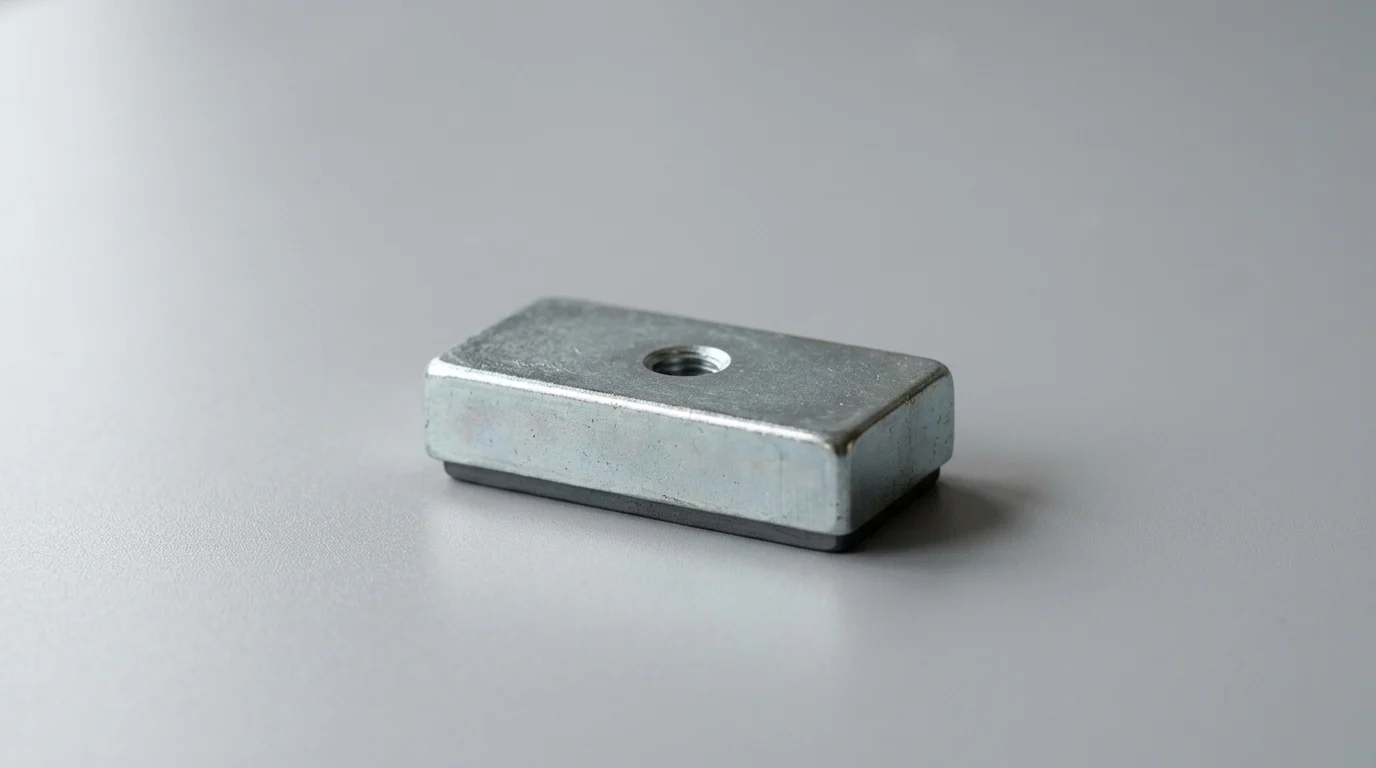
At its core, a Rectangular Pot Magnet is a magnetic assembly consisting of a permanent magnet—typically Neodymium (NdFeB), Samarium Cobalt (SmCo), or Ferrite—encased within a rectangular steel shell or U-channel. The steel casing covers the back and the sides of the magnet, leaving only one rectangular face exposed to interact with the target surface.
The rectangular geometry is not merely an aesthetic choice; it is a functional design tailored for specific spatial constraints. Unlike round magnets, rectangular variants can be fitted flush into linear grooves, slotted into extruded aluminum profiles, or aligned perfectly with straight edges. This geometric advantage prevents the magnet from rotating or shifting under lateral loads, a common issue with circular profiles.
Furthermore, the steel channel is often pre-drilled or machined to accommodate various mounting methods. Whether featuring a countersunk hole , a counterbored hole , or an internal threaded stud, the casing ensures that the brittle magnetic material is not subjected to direct mechanical stress during installation. This protective housing significantly extends the operational lifespan of the component in demanding industrial environments.
How Rectangular Pot Magnets Create Holding Value
The primary value of a rectangular pot magnet lies in its ability to manipulate and concentrate magnetic fields. In a raw, unhoused magnet, the magnetic flux lines travel from the north pole to the south pole through the surrounding air. Because air is a poor conductor of magnetism, much of this magnetic energy is dispersed and effectively wasted when trying to hold onto a flat surface.
When the magnet is embedded inside a steel U-channel, the steel acts as a highly permeable conduit for the magnetic flux. The casing captures the flux lines that would normally radiate outward from the back and sides of the magnet and redirects them to the exposed front face. This creates a closed-loop magnetic circuit when the magnet is placed against a ferrous target, concentrating the entire magnetic force directly at the contact point.
This concentration of flux lines results in a substantial increase in holding power. A rectangular pot magnet can generate up to 30% to 50% more direct pull force than a raw magnet of the exact same dimensions. Consequently, engineers can achieve the required holding strength using a significantly smaller and more cost-effective magnetic assembly, optimizing both the weight and the spatial footprint of their final product.
How Rectangular Pot Magnets Work

To effectively integrate rectangular pot magnets into a product or manufacturing line, one must understand the underlying physics and material science that govern their operation. The performance of these assemblies is not solely dictated by the grade of the magnetic material, but by the synergistic interaction between the magnet, the steel housing, and the target surface.
Thermal dynamics play a critical role in how these assemblies function. For instance, standard Neodymium-based assemblies are typically rated for maximum operating temperatures up to 80°C. If an application requires higher thermal resistance, engineers must specify high-temperature NdFeB grades (up to 150°C) or transition to Samarium Cobalt (SmCo) assemblies, which can withstand temperatures up to 300°C without suffering irreversible demagnetization.
Key Specifications to Compare
When evaluating rectangular pot magnets, buyers must compare several critical specifications to ensure the component meets application requirements. The primary dimensions—length, width, and height—dictate the footprint and the volume of the magnetic material, which directly correlates to the baseline pull force. Additionally, the type of mounting feature (e.g., countersunk, counterbored, or threaded) determines how the assembly will integrate with the mating hardware.
Another vital specification is the coating or plating applied to the assembly. Neodymium magnets are highly susceptible to oxidation and must be protected. The steel housing also requires plating to prevent rust. Standard assemblies typically utilize a Nickel-Copper-Nickel (Ni-Cu-Ni) triple-layer plating, though zinc plating or epoxy coatings are specified for environments with high moisture or chemical exposure.
| Magnet Material | Max Operating Temp | Relative Holding Force | Environmental Resistance |
|---|---|---|---|
| Neodymium (NdFeB) | 80°C - 150°C | Highest | Low (Requires Ni-Cu-Ni coating) |
| Samarium Cobalt (SmCo) | 250°C - 300°C | High | Excellent |
| Ferrite (Ceramic) | 250°C | Moderate | Excellent |
Rectangular vs. Round Pot Magnets
The decision between specifying a rectangular pot magnet versus a traditional round pot magnet often comes down to spatial geometry and load distribution. Round pot magnets are universally common due to their ease of manufacturing—requiring simple lathe turning for the steel cups and straightforward pressing for the magnets. They are ideal for general-purpose holding where multidirectional orientation is acceptable.
However, rectangular pot magnets excel in linear applications. When a design requires a magnet to sit inside a machined channel, along a track, or flush against a straight edge, the rectangular profile maximizes the contact area within that specific footprint. A round magnet placed in a rectangular slot leaves empty, unutilized space at the corners, whereas a rectangular magnet fills the volume entirely, yielding a higher holding force per linear inch.
Furthermore, rectangular assemblies inherently resist rotational forces. If a single round magnet is used as a latch, the mating part can easily pivot or twist around the center axis of the magnet. A rectangular magnet's elongated shape provides a broader baseline of contact, effectively neutralizing rotational twisting and ensuring the mated components remain strictly aligned.
Factors That Affect Holding Force
The stated holding force of a rectangular pot magnet—often provided by manufacturers under ideal laboratory conditions—is subject to several real-world variables. The most critical factor is the thickness of the ferrous target material. For a magnet to achieve its maximum rated pull force, the target steel must be thick enough to absorb all the magnetic flux lines. If the steel is too thin, the flux saturates the metal and “leaks” out the other side, resulting in a significantly weaker hold.
Surface roughness also severely impacts performance. Magnetic force relies on intimate, flush contact between the magnet's active face and the target. Rough, uneven, or corrugated surfaces prevent the magnet from seating perfectly, introducing micro air gaps across the contact area. Even microscopic gaps reduce the effective magnetic circuit, diminishing the pull force.
Finally, the material composition of the target surface dictates the magnetic attraction. Manufacturers test holding forces using low-carbon steel (such as A36 or 1018). If the application involves high-carbon steel, cast iron, or specific grades of mildly magnetic stainless steel (like 400-series), the actual holding force will be reduced by 10% to 50% due to the lower magnetic permeability of those alloys.
Best Uses and Common Limits
While rectangular pot magnets offer exceptional holding capabilities, their successful deployment requires a clear understanding of their ideal use cases and inherent limitations. Recognizing where these components excel—and where they fall short—prevents costly design revisions and ensures long-term operational reliability.
One of the most critical limitations to account for is the inverse-square law of magnetism regarding distance. In magnetic assemblies, the holding power drops exponentially as the magnet moves away from the target surface. For a standard rectangular assembly, introducing an air gap of just 0.5mm can reduce the effective holding force by up to 50%, making precision alignment absolutely critical.
Industrial Applications
Rectangular pot magnets are heavily utilized in the design of industrial jigs and manufacturing fixtures. In welding and assembly environments, these magnets are embedded into tooling blocks to hold steel panels securely in place without the need for cumbersome mechanical clamps. Their straight edges allow them to be aligned perfectly with the tooling base, ensuring high repeatability in the manufacturing process.
Another prominent application is in sliding track systems and linear motion guides. Because the rectangular shape mirrors the geometry of standard extruded aluminum profiles and steel tracks, these magnets are often used as end-stops, magnetic latches, or dampeners. They provide a high-strength, non-contact locking mechanism that does not suffer from mechanical wear over thousands of cycles.
They are also highly valued in specialized mounting applications, such as securing equipment in vehicles or serving as firearm mounts. Products like the Rectangular Magnet with Hole are designed specifically for these scenarios, providing an elongated surface area that stabilizes long, heavy objects against vibration and shock, ensuring the mounted item remains accessible yet firmly secured.
When Air Gaps Reduce Performance
The term 'air gap' in magnetics refers to any non-magnetic space or material that separates the magnet's active face from the ferrous target. While actual air is the most common gap, this definition also includes layers of paint, powder coating, rust, dirt, plastic films, or adhesive tapes. Because the steel channel of a pot magnet is designed to create a tight, closed magnetic circuit, it is exceptionally sensitive to any disruption in that circuit.
When designing a system, engineers must calculate the total thickness of all non-magnetic layers. If a steel panel is finished with a heavy industrial powder coat that adds 0.2mm of thickness, the magnet will never make direct contact with the steel. This built-in air gap will drastically lower the holding force compared to the manufacturer's laboratory specifications, which are based on bare, polished steel.
To mitigate the effects of air gaps, designers have two primary options: over-specify the magnet's size to compensate for the anticipated loss in holding force, or modify the application to ensure metal-to-metal contact. In environments where debris buildup is inevitable, regular maintenance schedules must be established to wipe the magnetic faces clean, ensuring the air gap is kept to an absolute minimum.
How to Match Magnet Type to the Job
Selecting the correct magnet requires matching the specific geometry of the assembly to the mechanical constraints of the job. For applications requiring a flush surface with no protruding hardware, engineers should opt for assemblies with countersunk or counterbored holes. This allows the mounting screw to sit below the active magnetic face, preventing the screw head from creating an unwanted air gap.
The choice between hole types depends on the intended fastener. A Counterbored Pot Magnet is designed to accommodate standard socket head cap screws or pan head machine screws. The flat bottom of the counterbore provides a solid seating surface for the screw head, which is ideal for heavy-duty industrial applications where high torque is required to secure the magnet to the base structure.
Alternatively, if the assembly must be mounted from the rear, rectangular pot magnets with internal threaded studs or tapped blind holes are the superior choice. This completely eliminates any interruption on the active magnetic face, maximizing the surface area available for holding. Matching the mounting style to the structural requirements ensures that the magnet is secured safely without compromising its magnetic performance.
Selection, Installation, and Quality Checks
Procuring and implementing rectangular pot magnets involves more than simply selecting a size from a catalog. A rigorous approach to selection, proper installation techniques, and stringent quality control are required to guarantee that the assemblies perform safely and reliably in the field.
Precision in manufacturing is a crucial metric for these components. Engineers typically specify a tight dimensional tolerance of +/- 0.1mm for the steel casing to ensure the magnets fit seamlessly into machined slots or automated assembly equipment. Deviations beyond this tolerance can lead to mechanical binding during installation or uneven load distribution during operation.
Step-by-Step Selection Process
The selection process must begin with a thorough load analysis. Engineers must determine not only the weight of the object being held but also the direction of the applied forces. Direct pull force (perpendicular to the magnet face) is the standard metric provided by manufacturers, but in many applications, the magnet is subjected to shear force (sliding parallel to the magnet face).
It is a critical engineering rule of thumb that shear force resistance typically equates to only 20% to 30% of the stated direct pull force. If a rectangular pot magnet is rated for 100 kg of direct pull, it may begin to slide down a vertical steel wall under a load of just 20 kg to 30 kg. Therefore, if the application involves vertical mounting, the specified magnet must have a direct pull rating at least four to five times greater than the actual weight of the load.
After calculating the required force, the next step is determining the environmental constraints. If the magnet will be exposed to temperatures exceeding 80°C, high-temp NdFeB or SmCo must be selected. If the environment is highly corrosive, stainless steel housings or specialized epoxy coatings should be specified over standard nickel plating. Finally, the physical dimensions must be cross-referenced with the available mounting footprint.
Installation Best Practices
Proper installation is vital to prevent catastrophic failure of the magnetic material. Neodymium is a sintered ceramic material; it is exceptionally hard but notoriously brittle. When installing a Rectangular Countersunk Magnet , extreme care must be taken to avoid over-torquing the mounting screw. Excessive compressive force from a screw head can easily crack or shatter the magnet inside the steel channel.
To prevent damage, installers should use torque-limiting screwdrivers set to the manufacturer's recommended specifications. Additionally, the use of thread-locking compounds (such as Loctite) is highly recommended. This ensures that the screw remains tight under vibrational loads without requiring excessive initial torque that could stress the magnetic material.
Another best practice involves the selection of the mounting hardware itself. It is advisable to use non-magnetic fasteners, such as 300-series stainless steel or brass screws, to secure the pot magnet. Using a highly magnetic steel screw can inadvertently draw magnetic flux away from the active face and channel it into the mounting structure, thereby reducing the effective holding power of the assembly.
Testing and Inspection Methods
To ensure consistency and safety, incoming shipments of rectangular pot magnets should be subjected to standardized testing and inspection protocols. The most critical test is the verification of the direct pull force. This is typically performed using a universal testing machine (UTM) equipped with a load cell, pulling the magnet perpendicularly away from a polished, low-carbon steel test plate that is at least 10mm thick.
In addition to pull testing, magnetic field mapping using a Gauss meter or a fluxmeter is employed to verify the consistency of the magnetic circuit. Technicians measure the surface Gauss at specific points along the rectangular face to ensure the flux is evenly distributed and that the internal magnet was not damaged or improperly magnetized during production.
Visual and dimensional inspections form the final tier of quality control. Calipers and micrometers are used to confirm that the length, width, and height conform to the +/- 0.1mm standard tolerance. Inspectors must also examine the plating under magnification to check for micro-cracks, peeling, or incomplete coverage, as any defect in the coating will rapidly lead to oxidation and subsequent failure of the Neodymium magnet.
Buyer Decision Checklist
Transitioning from engineering design to procurement requires a strategic evaluation of the supply chain, cost drivers, and regulatory compliance. Buyers must navigate a global market of magnetic material suppliers to secure components that meet both technical specifications and budgetary constraints.
Understanding production economics is essential for effective sourcing. Standard minimum order quantities (MOQs) for custom-dimensioned rectangular pot magnets frequently start between 500 and 1,000 units, as manufacturers must amortize the cost of tooling and machining the custom steel channels. Conversely, specifying off-the-shelf standard sizes can bypass tooling costs entirely and reduce lead times from several weeks to just 3-5 days.
Cost and Sourcing Factors
The cost of a rectangular pot magnet is driven by three primary factors: the raw material market for rare-earth elements, the complexity of the steel housing, and the required tolerances. Neodymium prices are subject to global commodity market fluctuations, meaning long-term supply contracts should account for material price indexing. Ferrite-based pot magnets offer a much more stable, albeit weaker, low-cost alternative.
Custom tooling for the steel U-channel represents a significant upfront cost. If a design requires a non-standard length or a unique hole placement, the manufacturer must program CNC machines or create new stamping dies. Procurement teams can achieve substantial cost reductions by collaborating with engineering to adapt the product design to utilize standard, pre-existing magnet dimensions.
| Cost Driver | Impact Level | Strategy for Cost Reduction |
|---|---|---|
| Neodymium Raw Material | High | Optimize magnet volume; use ferrite if space permits. |
| Custom Steel Channel Tooling | Medium | Select standard off-the-shelf dimensions. |
| Specialized Coatings | Low to Medium | Use standard Ni-Cu-Ni unless exposed to severe corrosion. |
| Tight Tolerances (< 0.05mm) | High | Accept standard +/- 0.1mm tolerances where possible. |
Compliance and Documentation
Regulatory compliance is a mandatory checkpoint in the procurement process, particularly for products destined for the European Union or North American markets. Buyers must ensure that the rectangular pot magnets comply with the Restriction of Hazardous Substances (RoHS) directive. This guarantees that the plating and the magnetic materials are free from restricted levels of lead, cadmium, and other hazardous heavy metals.
Similarly, compliance with the Registration, Evaluation, Authorisation and Restriction of Chemicals (REACH) regulation is required to certify that the components do not contain Substances of Very High Concern (SVHC). Reputable magnet manufacturers should be able to provide up-to-date RoHS and REACH declarations for every batch of products shipped.
Beyond material
Further reading:
Key Takeaways
- Choose a rectangular pot magnet when your design requires a magnet that fits linear grooves, slots, aluminum profiles, or straight-edge assemblies.
- Use the steel-housed design to gain concentrated magnetic flux at the exposed face and potentially 30% to 50% more direct pull force than a raw magnet of the same size.
- Match the magnet material to the operating environment, with NdFeB for high strength, ferrite for economical holding, and SmCo for demanding temperature or corrosion conditions.
- Select the mounting style—countersunk, counterbored, or threaded—based on how the assembly will be fixed and how much mechanical load it must withstand.
- Verify the required holding force before ordering, because rectangular pot magnets can range from about 2 kg to more than 150 kg depending on size, material, and contact conditions.
Frequently Asked Questions
What is a rectangular pot magnet?
A rectangular pot magnet is a permanent magnet, often NdFeB, SmCo, or ferrite, housed in a rectangular steel channel that concentrates magnetic force through one exposed face.
When should I use a rectangular pot magnet instead of a round one?
Use one when the magnet must fit a groove, rail, slot, extruded profile, or straight-edge assembly where anti-rotation and linear alignment matter.
How much holding force can rectangular pot magnets provide?
Depending on size and material, rectangular pot magnets can range from about 2 kg to more than 150 kg of holding force under suitable contact conditions.
Why does the steel casing improve magnetic performance?
The steel casing redirects magnetic flux toward the exposed face, creating a stronger holding surface and often increasing pull force by 30% to 50% versus a raw magnet.
Are rectangular pot magnets suitable for mechanical fastening?
Yes. Many RCMagnet rectangular pot magnets include countersunk holes, counterbored holes, or threaded mounting options so they can be secured without stressing the brittle magnet.