 EN
EN AR
AR HR
HR CS
CS DA
DA NL
NL FI
FI FR
FR DE
DE EL
EL IT
IT JA
JA KO
KO NO
NO PL
PL PT
PT RU
RU ES
ES SV
SV IW
IW VI
VI TH
TH TR
TR FA
FA MS
MS

Why Rectangular Pot Magnet Selection Matters
In industrial manufacturing, automation, and commercial fixture design, the specification of magnetic holding assemblies plays a critical role in system reliability and spatial efficiency. While traditional circular assemblies have long dominated the market, the specialized geometry of rectangular magnetic systems has become increasingly vital for modern engineering constraints. Selecting the correct magnetic footprint is not merely an aesthetic choice; it directly impacts load distribution, shear resistance, and integration into structural profiles.
Engineers and procurement specialists must navigate varying operational parameters, where improper specification can lead to mechanical failure or excessive material costs. Standard holding assemblies can range in pull force from a mere 5 kg up to heavy-duty industrial units exceeding 250 kg. Understanding the specific advantages of a linear magnetic footprint ensures that mechanical designers can maximize holding power within restricted volumetric limits.
Industrial Holding Applications
The primary utility of a Rectangular Pot Magnet lies in its ability to secure components, jigs, and fixtures in environments where circular recesses are impractical. These assemblies are heavily utilized in automated assembly lines, where they act as non-destructive clamps for metal sheets, and in structural framing, where they align perfectly with standard linear tracks. Because industrial applications often subject fasteners to continuous vibration and dynamic loads, the stability provided by a linear edge becomes a significant mechanical advantage.
Furthermore, in heavy-duty warehousing and logistics, rectangular magnetic bases are deployed to mount sensor arrays, lighting fixtures, and heavy signage to steel beams and racking. The extended surface area allows for multiple mounting points, such as dual countersunk holes , which actively prevent the assembly from pivoting under eccentric loads—a common point of failure in single-hole circular magnets.
Key Selection Goals
When evaluating magnetic holding solutions, the primary selection goals revolve around maximizing operational efficiency and ensuring long-term reliability under specified environmental conditions. Buyers must aim to achieve the highest possible holding force per square centimeter of contact area. For instance, a well-optimized neodymium-based rectangular assembly can achieve vertical pull forces exceeding 50 N/cm², depending on the thickness of the mating steel surface.
Another critical goal is the mitigation of shear force—the sliding motion parallel to the mounting surface. In typical applications, a magnet's shear resistance is only 15% to 25% of its rated vertical pull force. Selecting a rectangular profile allows engineers to orient the longer edge perpendicular to the direction of the expected shear load, thereby increasing friction and mechanical resistance without needing a larger overall magnetic volume.
What a Rectangular Pot Magnet Is

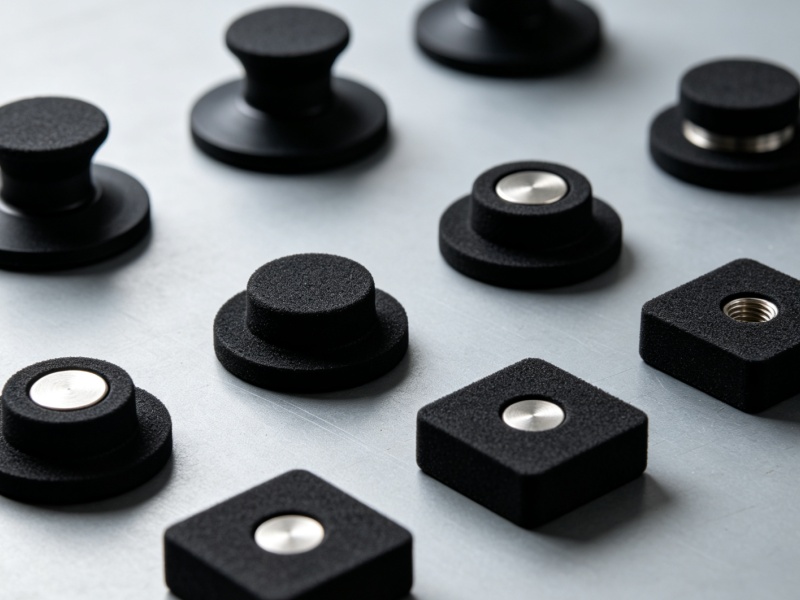
A rectangular pot magnet is a specialized magnetic assembly engineered to amplify the holding power of a raw magnet by encasing it within a steel channel or housing. Unlike bare magnets, which emit magnetic flux in all directions, pot magnets utilize their steel casing to redirect the magnetic field lines, concentrating them entirely on a single active face. This redirection transforms a relatively small internal magnet into a highly efficient clamping tool.
Core Components and Magnetic Circuit
The fundamental architecture of these assemblies consists of a U-shaped steel channel and a permanent magnet core, typically manufactured from Neodymium (NdFeB) or hard Ferrite. The steel channel acts as a magnetic circuit, capturing the flux from the non-working face of the magnet and routing it to the edges of the active face. This creates a multi-pole configuration on a single surface, drastically reducing the magnetic gap and exponentially increasing the clamping force upon direct contact with a ferromagnetic substrate.
To maintain the integrity of this circuit, the internal magnet is often insulated from the steel channel along its sides by a non-magnetic spacer, such as brass, plastic, or epoxy resin. This prevents internal magnetic short-circuiting. The remanence (Br) of the internal core—often ranging from 1.17 to 1.21 Tesla for standard N35 grade Neodymium—is fully leveraged by this closed-circuit design, making the assembly significantly stronger than a bare magnet of identical mass.
Materials, Coatings, and Mounting Options
The choice of internal magnetic material dictates both the raw power and the thermal limits of the assembly. Neodymium offers exceptional strength but is susceptible to corrosion and high-temperature demagnetization. To combat environmental degradation, both the magnet and the steel housing are typically treated with protective coatings. The industry standard is a tri-layer Nickel-Copper-Nickel (Ni-Cu-Ni) plating, generally applied at a thickness of 10 to 20 microns, which provides robust defense against ambient humidity and mild chemical exposure.
| Core Material | Typical Max Operating Temp | Relative Pull Force | Cost Profile | Primary Use Case |
|---|---|---|---|---|
| Neodymium (NdFeB) | 80°C (Standard) up to 150°C (High-Temp) | Very High | Premium | Compact spaces requiring massive holding power. |
| Hard Ferrite | 250°C | Moderate | Economical | High-temperature environments or cost-sensitive projects. |
Mounting mechanisms are integrated directly into the steel housing during manufacturing. A common variation is the Rectangular Countersunk Magnet , which features one or more beveled holes drilled through the assembly. This allows flush mounting with flat-head screws , ensuring the fastener does not interfere with the active magnetic face. Other configurations include threaded studs, tapped blind holes, or simple flat steel backs intended for industrial adhesives.
Rectangular vs Round Pot Magnets
While both rectangular and round pot magnets utilize the same fundamental principles of flux redirection via a steel housing, their geometric differences dictate their mechanical behavior and integration capabilities. The decision between the two shapes hinges on the spatial constraints of the application, the nature of the applied loads, and the required mounting hardware.
Holding Force and Contact Surface
Round pot magnets generate a uniform, radial magnetic field. Their circular contact surface provides consistent holding force regardless of rotational orientation, making them highly versatile for general-purpose hanging and clamping. However, when subjected to shear forces (sliding down a wall), a circular profile offers a relatively short leading edge to resist the motion.
In contrast, rectangular assemblies excel in shear resistance when properly oriented. By aligning the elongated side of the rectangle perpendicular to the direction of gravity or the applied sliding force, the assembly presents a longer continuous edge of friction against the mating surface. Given that standard shear capacity is roughly 20% of the direct pull force, maximizing this frictional footprint is crucial for heavy wall-mounted fixtures without relying on mechanical stops or ledges.
Mounting Patterns and Space Constraints
Space constraints often dictate the shape of the required fastener. Round magnets necessitate circular recesses, which are easily created with standard drill bits or Forstner bits in wood and plastic substrates. This makes them ideal for flush-mounting in flat panels. However, in modern structural engineering, many frameworks rely on linear aluminum extrusions (such as standard 20x20mm or 40x40mm profiles).
A Rectangular Mounting Magnet is specifically designed to slide into or sit flush against these linear channels. A round magnet of equivalent pull force would often overhang the edges of a narrow track, creating an obtrusive profile and reducing the effective contact area. The rectangular shape allows engineers to pack maximum magnetic material into tight, elongated spaces, ensuring a seamless fit within door frames, C-channels, and conveyor guide rails.
Shape and Performance Comparison
Beyond spatial fit, the performance characteristics of each shape influence the overall mechanical design. Rectangular models frequently incorporate dual mounting holes along their length, completely eliminating the risk of the magnet pivoting around a single central screw—a common issue with center-hole round magnets under dynamic loads.
| Feature | Round Pot Magnets | Rectangular Pot Magnets |
|---|---|---|
| Flux Distribution | Symmetrical / Radial | Asymmetrical / Linear |
| Shear Resistance | Moderate (Uniform edge) | High (When oriented horizontally) |
| Mounting Points | Typically single center hole/stud | Often dual or multiple holes for anti-rotation |
| Profile Alignment | Best for flat panels and wide plates | Best for narrow tracks, extrusions, and channels |
| Machining Recess | Simple (standard drill bit) | Complex (requires milling or routing) |
Buyer Checks Before Sourcing
Procuring industrial magnetic assemblies requires strict vetting of both the product specifications and the supplier's quality control infrastructure. Because permanent magnets are critical functional components, failure to verify material grades, coatings, and dimensional tolerances can result in catastrophic mechanical failures or severe supply chain disruptions.
Quality Tests and Documentation
The most critical performance metric for any pot magnet is its vertical pull force. Buyers must require suppliers to provide documented pull-test reports. Industry-standard testing dictates that the magnet must be tested against a flat, low-carbon steel plate with a minimum thickness of 10mm, pulled at a perpendicular angle at a constant speed. Variations in the test plate thickness or surface roughness can drastically alter the results, so standardizing the test parameters is essential for accurate cross-supplier comparison.
Furthermore, buyers should request Gauss meter readings to verify the surface magnetic flux density, ensuring the internal magnet meets the specified grade (e.g., N42 vs N35). Reputable suppliers should operate under ISO 9001 quality management systems and guarantee a defect rate of less than 500 Parts Per Million (PPM). Compliance documentation, such as RoHS and REACH certificates, must also be verified to ensure the assemblies are free from restricted hazardous substances.
Coating, Corrosion, and Environment
Environmental degradation is the leading cause of premature failure in neodymium-based assemblies. If the protective plating is compromised, the internal NdFeB material will rapidly oxidize, expanding and ultimately shattering the steel housing. Buyers must specify the expected operating environment and demand appropriate Salt Spray Test (SST) documentation.
For standard indoor applications, a 24-hour to 48-hour SST rating on Ni-Cu-Ni plating is generally sufficient. However, for outdoor, marine, or harsh industrial environments, buyers should specify epoxy coatings or stainless steel housings capable of withstanding 96-hour or even 120-hour salt spray tests. Additionally, the maximum operating temperature must be verified; standard neodymium begins to suffer irreversible flux loss above 80°C, necessitating the specification of high-coercivity grades (such as N35H or N35SH) for elevated temperature applications.
Packaging, Logistics, and Supplier Reliability
Logistics play a surprisingly complex role in the procurement of magnetic assemblies. Because strong magnetic fields can interfere with aircraft navigation systems, air freighting pot magnets requires strict compliance with International Air Transport Association (IATA) Dangerous Goods Regulations. Suppliers must utilize specialized magnetic shielding packaging—typically involving layers of steel sheeting—to ensure the external flux emission is less than 0.00525 Gauss at a distance of 15 feet from the package.
Supplier reliability should also be assessed based on production capacity and lead times. A standard production run for customized rectangular assemblies typically requires a lead time of 15 to 25 days. Buyers should establish clear Minimum Order Quantities (MOQs), which generally range from 500 to 1,000 pieces for standard sizes, though custom tooling for unique dimensions may require higher initial commitments. Securing a supplier with robust internal machining capabilities ensures tighter tolerances on the steel housings and more consistent batch-to-batch quality.
How to Choose the Right Pot Magnet
Specifying the optimal magnetic holding assembly requires a systematic approach that balances physical constraints, load requirements, and environmental factors. By methodically evaluating the application, engineers can determine whether a rectangular or round profile will deliver the highest performance and the longest operational lifespan.
Step-by-Step Selection Process
The selection process must always begin with a rigorous assessment of the required holding force. Engineers must calculate the maximum anticipated load and apply a strict safety factor. For static loads on a clean, thick steel surface, a safety factor of 2:1 is standard. However, if the magnet is mounted overhead, subjected to vibration, or gripping a painted or thin metal surface (less than 3mm thick), a safety factor of 3:1 or 4:1 is mandatory to prevent accidental detachment.
After establishing the required pull force, the next step is dimensional restriction analysis. Measure the available footprint and depth of the mounting area. If the assembly must sit flush, the depth of the recess must match the tolerance of the magnet's housing. Finally, determine the mounting method—whether a countersunk screw, a threaded stud, or an adhesive backing is most appropriate for the mating components, ensuring the fastener material (like a stainless steel screw) does not interfere with the magnetic circuit.
When to Choose a Rectangular Pot Magnet
A rectangular pot magnet is the superior choice when the application involves linear tracks, narrow channels , or structural extrusions where a round magnet would protrude and cause mechanical interference. They are highly recommended for applications requiring substantial shear resistance, as aligning the long edge against the downward force maximizes friction.
Additionally, rectangular profiles should be specified whenever rotational movement must be strictly prevented. The availability of dual-hole mounting configurations at opposite ends of the rectangular housing guarantees that the mounted fixture will remain perfectly aligned, making them ideal for heavy signage, precision sensor brackets, and automated robotic grippers.
When to Choose a Round Pot Magnet
Conversely, a round pot magnet remains the optimal choice for general-purpose applications where space is not constrained to a linear profile. They are the most cost-effective solution for flat-panel mounting, as creating a circular recess for flush integration is significantly faster and cheaper than routing a rectangular slot.
Round assemblies are also preferable when multi-directional holding is required, or when the assembly must be threaded into a single, centrally located tapped hole. If the application involves hanging loads vertically from a ceiling—where shear force is not a primary concern and the load is distributed evenly across the radial face—a round pot magnet will provide exceptional, cost-efficient holding power.
Further reading:
Key Takeaways
- The most important conclusions and rationale for Rectangular Pot Magnet
- Specs, compliance, and risk checks worth validating before you commit
- Practical next steps and caveats readers can apply immediately
Frequently Asked Questions
What should buyers compare first when sourcing Rectangular Pot Magnet?
Start with airflow/spec range, compliance requirements, installation constraints, and after-sales spare-part policy. These four factors usually determine total risk and margin quality.
How can readers control landed cost for Rectangular Pot Magnet?
Break down unit FOB, packaging volume, container utilization, duty/tax, and expected return rate. A simple landed-cost model by SKU tier helps avoid margin surprises.
Which certifications are commonly required for Rectangular Pot Magnet in key markets?
Requirements vary by destination market; verify applicable electrical/safety and material compliance standards before PO confirmation, and keep lab reports tied to exact SKU versions.
How should distributors set MOQ and inventory targets for Rectangular Pot Magnet?
Use channel demand split and lead time to set tiered MOQ. Keep fast-moving SKUs deeper in stock while limiting long-tail variants with slower turns and higher holding costs.
What is a practical quality-control checklist for Rectangular Pot Magnet orders?
Define AQL, critical defect list, function tests, and packaging drop checks. Run pre-shipment inspection and keep a traceable defect feedback loop with the factory.