 EN
EN AR
AR HR
HR CS
CS DA
DA NL
NL FI
FI FR
FR DE
DE EL
EL IT
IT JA
JA KO
KO NO
NO PL
PL PT
PT RU
RU ES
ES SV
SV IW
IW VI
VI TH
TH TR
TR FA
FA MS
MS
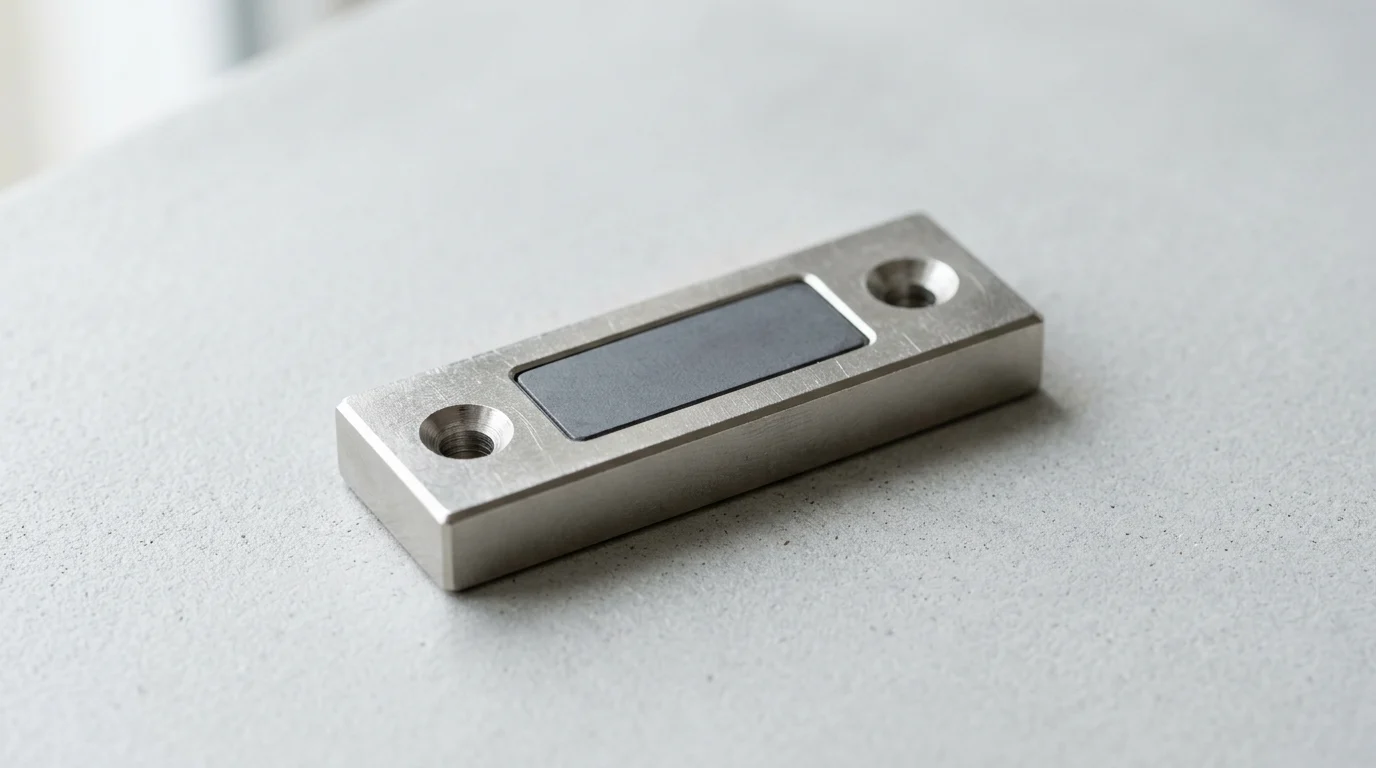
In heavy-duty manufacturing, a magnet is only as useful as its ability to hold securely under impact, vibration, shear, and repeated handling. Rectangular pot magnets solve this challenge by combining a powerful magnetic core with a protective steel channel that concentrates flux along one active face. The result is a compact assembly that can deliver dramatically higher holding force than a raw magnet while resisting damage in demanding environments. This article examines how rectangular channel geometry improves clamping performance, why steel housings matter, and where these assemblies fit best—from welding fixtures and security gates to lifting beams, conveyors, and robotic end-of-arm tooling.
Why Rectangular Pot Magnet Design Matters
Magnetic assemblies have transformed how industrial facilities handle, secure, and position heavy materials. Among the most efficient architectures available to design engineers is the Rectangular Pot Magnet . Often referred to in the industry as a "channel magnet" or " rectangular magnetic assembly ," this design encases the magnetic core within a steel shell—typically a robust U-shaped channel. Unlike a traditional cylindrical pot magnet that projects a circular, localized magnetic field, the rectangular channel magnet distributes its flux along a linear path. This steel casing performs a critical dual function: it protects the brittle magnetic material from mechanical impact and strategically redirects the magnetic flux to a single active face.
Concentrating the magnetic field along the exposed surface significantly amplifies the holding force. In heavy-duty applications where reliability and safety are paramount, this design methodology allows for a smaller overall footprint while achieving exceptional clamping power. Understanding the mechanics behind this design, including flux optimization and mechanical shielding, is the first step toward specifying the correct magnetic assembly for demanding industrial tasks.
Key Advantages for Heavy-Duty Holding
The primary advantage of the rectangular pot design lies in its substantial force increase. Depending on the specific channel geometry and magnet grade, routing the magnetic field lines through the steel channel can increase the pull force of a rectangular assembly by 200% to 300% compared to an identical raw magnet. For instance, a raw neodymium block might yield 20 kg of pull force, but when properly encased in a steel U-channel with optimized wall thickness, the assembly can easily exceed 60 kg of clamping force on a flat, low-carbon steel surface.
Beyond raw strength, the steel casing provides essential mechanical protection. High-performance rare-earth magnets are inherently brittle and prone to chipping or shattering upon high-velocity impact with metal surfaces. The steel channel absorbs these impact forces, dramatically extending the operational lifespan of the magnetic assembly in rugged environments such as construction sites, fabrication shops, and automated assembly lines. Additionally, the rectangular shape inherently resists rotational forces better than circular alternatives, providing superior torsional stability when subjected to lateral loads.
Common Industrial Applications
Rectangular designs excel in applications requiring elongated contact areas and high shear resistance. Fabrication facilities heavily utilize them in welding fixtures, where they act as rigid clamps to hold large heavy-gauge steel plates at precise 90-degree angles. The linear footprint provides a long clamping edge, making them ideal for securing heavy industrial doors, security gates, and machine enclosures where vibration might otherwise dislodge standard latches.
In the material handling sector, engineers frequently integrate these assemblies into lifting beams and robotic end-of-arm tooling (EOAT) systems. Depending on the internal magnet grade and the dimensions of the steel channel, a single heavy-duty rectangular assembly can safely hold steel blanks weighing anywhere from 50 kg to over 500 kg. Furthermore, automated conveyor systems often array multiple units linearly to distribute holding force evenly across large, unwieldy payloads, ensuring stable transit through stamping presses and CNC machining centers.
What Defines a Heavy-Duty Rectangular Pot Magnet
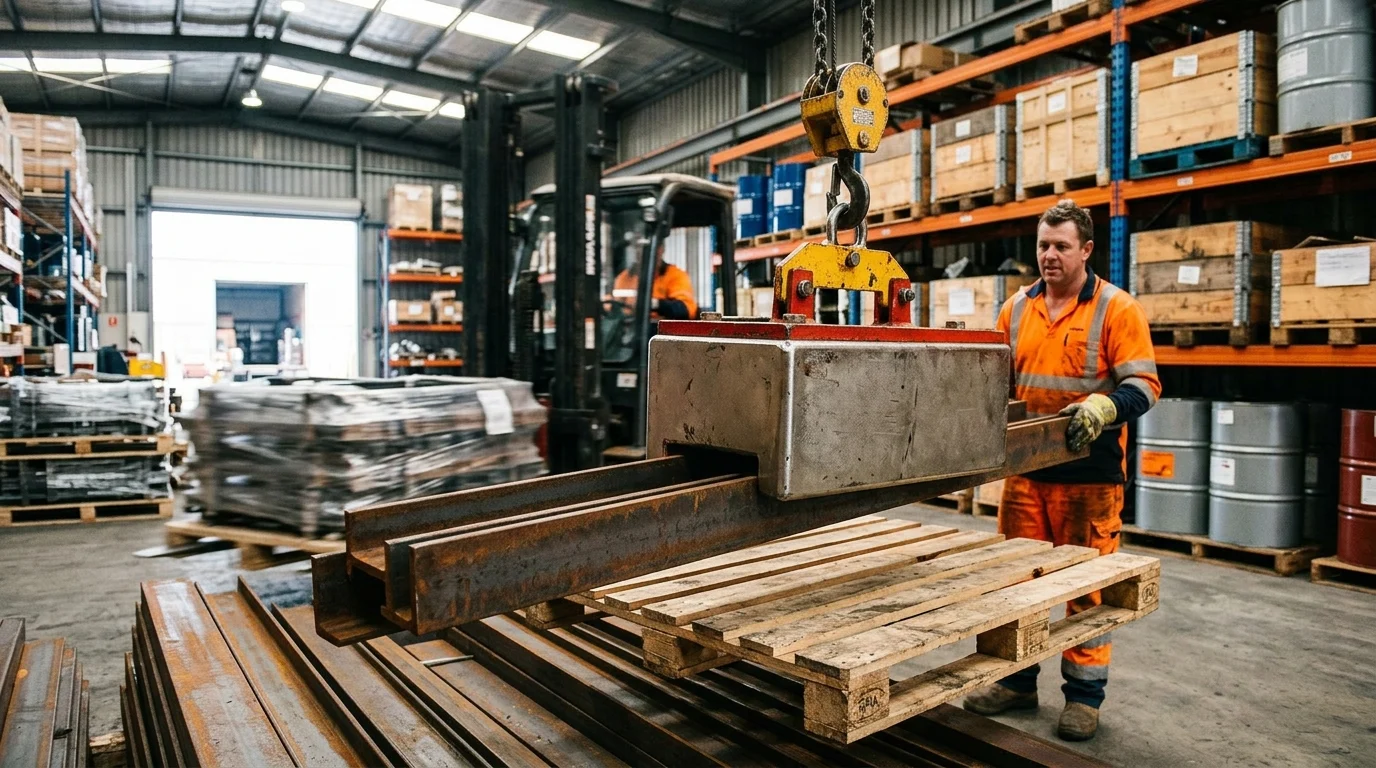
Classifying a magnetic assembly as 'heavy-duty' requires looking beyond the basic dimensions to evaluate its structural integrity and magnetic circuit efficiency. A heavy-duty specification implies that the unit can withstand continuous industrial cycles, resist degradation from environmental factors, and maintain a reliable holding force under fluctuating loads. The precise interplay of core materials, magnetic circuitry engineering, and integrated safety factors defines this categorization.
Core Components and Construction
A heavy-duty rectangular assembly relies on three core components: the permanent magnet core, the ferrous steel housing, and the potting compound. Manufacturers typically machine or stamp the steel housing from low-carbon steel (such as A36 or 1018), which offers high magnetic permeability to effectively channel the flux. Engineers must precisely calibrate the steel wall thickness; if the steel is too thin, it reaches magnetic saturation and leaks flux, thereby capping the maximum pull force.
The potting compound, usually a high-strength industrial epoxy or polyurethane resin, fills the voids between the magnet and the steel channel. This resin plays a vital role in heavy-duty applications. It prevents moisture ingress that leads to internal corrosion, securely anchors the magnet against extreme mechanical shocks, and dampens high-frequency vibrations generated by industrial machinery. In high-temperature environments, specialized thermal epoxies prevent the compound from degrading at temperatures exceeding 150°C, matching the limits of high-temperature magnet grades.
Pull Force, Shear Force, and Safety Factor
Understanding the distinction between pull force and shear force is critical for heavy-duty applications. Pull force measures the perpendicular resistance required to detach the magnet directly away from a flat, thick steel plate. Shear force, conversely, is the resistance to sliding parallel to the mounting surface. In heavy-duty rectangular assemblies, depending on the friction coefficient of the mating surfaces and the assembly's footprint, the shear force generally ranges from 15% to 25% of the rated vertical pull force. However, engineers must note that these percentages are not universal constants; they vary significantly based on the magnet's specific dimensions and material grade.
Due to this variance and the potential for dynamic loads, engineers must apply strict safety factors. For static holding applications, such as securing a panel, a safety factor of 2:1 is standard industry practice. However, for overhead lifting or applications involving dynamic acceleration and deceleration (such as robotic arms), safety standards mandate a minimum safety factor of 3:1—and often up to 5:1—to prevent catastrophic load drops caused by sudden impacts or vibrations.
Surface Contact and Air Gap Effects
The theoretical holding force of any magnet assumes perfect contact with a thick, unpainted, and perfectly flat low-carbon steel surface. In real-world industrial environments, perfect contact is rarely achieved. The introduction of an 'air gap'—which includes actual physical space, paint, rust, plating, or dust—drastically diminishes the magnetic circuit's efficiency. Even a microscopic layer of industrial coating can cause a measurable drop in performance. While the table below provides a general baseline, actual air-gap losses depend heavily on the specific magnet architecture, pole spacing, and grade.
| Air Gap (mm) | Effective Pull Force (%) | Common Cause in Industrial Settings |
|---|---|---|
| 0.00 | 100% | Direct contact with freshly machined, bare steel |
| 0.50 | ~65 - 75% | Thick industrial paint, powder coating, or heavy rust |
| 1.00 | ~40 - 50% | Thin rubber padding, severe corrosion, or uneven surfaces |
| 2.00 | ~15 - 25% | Thick protective polymer coatings or heavy debris buildup |
As demonstrated in the table above, an air gap of just 1.0 mm can reduce the holding capacity by up to 60%. Heavy-duty rectangular designs mitigate this by utilizing larger volume magnets with deeper magnetic fields that can 'reach' through larger air gaps, ensuring safe operation even when mill scale or protective paints compromise mating surfaces.
Best Rectangular Pot Magnet Designs for Industrial Use
Selecting the optimal design architecture requires matching the magnetic and mechanical properties of the assembly to the facility's specific environmental and operational demands. The 'best' design is not universally the strongest; rather, it is the one that balances thermal stability, holding capacity, integration methodology, and environmental resilience. For instance, engineers must often choose between a single-block U-channel design—ideal for tight clearances but limited in flux depth—and a dual-pole sandwich assembly, which uses alternating steel poles to project a stronger field through thicker air gaps.
Neodymium, Ferrite, and Alnico Options
The internal core material dictates the assembly's fundamental capabilities. Neodymium (NdFeB) is the industry standard for maximum strength, offering the highest magnetic energy product (up to 52 MGOe). However, standard N-grade Neodymium degrades rapidly above 80°C. To operate in hotter environments, engineers must specify high-temperature grades (such as SH, UH, or EH), which extend thermal stability up to 150°C or more, depending on the magnetic circuit geometry. Ferrite (ceramic) magnets offer a fraction of the pull force but boast excellent corrosion resistance and can operate up to 250°C without permanent demagnetization. Alnico magnets provide moderate strength but excel in extreme thermal environments, maintaining stability up to 550°C.
| Magnet Material | Max Pull Force Density | Max Operating Temp (°C) | Relative Cost Index | Corrosion Resistance (Uncoated) |
|---|---|---|---|---|
| Neodymium (NdFeB) | Extremely High | 80 - 150°C+ (Grade Dependent) | High ($$$) | Poor |
| Ferrite (Ceramic) | Moderate | 250 - 300°C | Low ($) | Excellent |
| Alnico | Moderate to Low | 500 - 550°C | Medium ($$) | Good |
Mounting Styles and Installation Methods
Integration into existing machinery requires careful consideration of the mounting style. Manufacturers generally fabricate heavy-duty assemblies with pre-machined mounting features to facilitate secure installation without damaging the internal magnet. The most common configuration is the countersunk hole, which allows a flat-head screw (typically M5, M6, or M8) to sit flush with or slightly below the active magnetic surface, preventing the fastener from creating an artificial air gap.
For applications requiring integration into threaded fixtures or robotic arms, a Rectangular Mounting Magnet featuring internal threaded studs or tapped blind holes is often specified. These designs allow technicians to bolt the magnet tightly from the rear, protecting the active face entirely. Through-hole designs are also prevalent, allowing standard hex bolts to pass completely through the assembly to secure heavy brackets or specialized industrial tooling.
Coatings, Corrosion Resistance, and Durability
Industrial environments expose magnetic assemblies to moisture, acidic fumes, cutting fluids, and abrasive particulates. Because Neodymium is highly susceptible to oxidation, heavy-duty assemblies require robust surface treatments. The standard industrial coating is a triple-layer Nickel-Copper-Nickel (Ni-Cu-Ni) plating, typically applied at a thickness of 10 to 20 microns. This provides a hard, durable finish suitable for most indoor manufacturing environments.
For severe outdoor applications, marine environments, or areas utilizing harsh chemical washdowns, additional protective measures are necessary. Zinc plating offers sacrificial corrosion protection, while specialized epoxy coatings provide superior resistance to salt spray. In scenarios where high shear resistance is required or delicate surfaces must be protected from scratching, rubber-sheathed arrays are utilized. The vulcanized rubber layer increases the friction coefficient dramatically, boosting shear resistance. However, engineers must account for the built-in ~1.5 mm air gap the rubber introduces. Referencing the air-gap data, this built-in gap effectively reduces the magnet's raw vertical pull force by roughly 60% to 75%, representing a direct trade-off between shear grip and vertical holding power.
How to Specify and Validate Rectangular Pot Magnets
Engineering teams must implement rigorous specification and validation protocols to ensure the selected magnetic assemblies meet the stringent demands of heavy-duty applications. Relying solely on a manufacturer's stated 'maximum pull force' is insufficient for industrial design. A comprehensive specification process involves precise load calculations, adherence to international quality standards, and standardized testing methodologies.
Load Calculation and Performance Requirements
Accurate load calculation goes beyond measuring the static weight of the payload. Engineers must calculate the dynamic forces at play, including acceleration, deceleration, centrifugal forces in rotating fixtures, and the friction coefficient of the mating materials. For example, if an automated hoist lifts a 100 kg steel plate and accelerates at 2 m/s², the dynamic load effectively increases, requiring a proportional increase in the magnetic holding capacity.
Furthermore, engineers must evaluate the target material's thickness. Every magnet has a 'saturation thickness'—the minimum thickness of steel required to absorb all the magnetic flux. Depending on the magnet's strength and pole spacing, if a magnet rated for 200 kg is applied to a sheet of metal only 2 mm thick, the metal may reach magnetic saturation instantly, and the excess flux passes through the material unused. In such cases, the actual holding force might drop below 20% of the rated capacity, necessitating the use of multiple smaller magnets rather than one massive unit.
Quality Standards and Compliance Checks
Ensuring consistent performance across high-volume orders requires vetting the manufacturer's quality control standards. Reputable suppliers operate under ISO 9001 certification, guaranteeing standardized manufacturing processes. For materials, compliance with RoHS (Restriction of Hazardous Substances) and REACH directives is non-negotiable in global supply chains, ensuring the assemblies are free from restricted heavy metals and toxic chemicals.
Quality checks must also encompass strict dimensional and magnetic tolerances. Heavy-duty assemblies should feature machined steel channels with precise dimensional tolerances to ensure accurate fitment in automated jigs. Quality control teams verify magnetic consistency using a Gauss meter or fluxmeter; high-quality production runs maintain tight magnetic field strength tolerances across batches. This ensures that a multi-magnet array performs uniformly without weak points.
Testing, Packaging, and Handling Requirements
Validation of the final product requires standardized mechanical testing. The industry standard for verifying pull force utilizes a universal testing machine pulling the magnet perpendicularly from a 10 mm to 20 mm thick, low-carbon steel test plate at a constant speed (typically 10 mm per minute). Procurement teams should request pull-test certificates for heavy-duty batches, ensuring the defect rate for holding capacity falls below rigorous industrial thresholds.
Handling and logistics also require specialized protocols, particularly for air freight. Strong magnetic fields can interfere with aircraft navigation systems. Under IATA Packaging Instruction 953, magnetic assemblies must be shielded so that the magnetic field emission is less than 0.00525 Gauss at a distance of 15 feet (4.6 meters) from the package surface. Heavy-duty rectangular assemblies often require specialized steel-lined shipping crates or customized keeper plates to neutralize the external flux during global transit.
How to Choose the Right Rectangular Pot Magnet
While engineering validation confirms a magnet will work, the final selection of a heavy-duty rectangular assembly is a strategic commercial decision. It requires balancing immediate procurement budgets against long-term operational reliability. Navigating the trade-offs between raw magnetic power, supply chain logistics, and total cost of ownership ensures the chosen component delivers optimal value without unnecessary over-engineering.
Cost, Strength, and Durability Trade-Offs
Cost and strength present the most immediate trade-off in magnetic assembly procurement. Neodymium-based assemblies offer the highest strength-to-volume ratio, allowing for compact designs in space-constrained machinery. However, Neodymium raw material costs can be significantly higher than those of ceramic alternatives. When physical footprint is not a limiting factor, specifying a larger Ferrite-based Square Holding Magnet can achieve the identical target pull force at a fraction of the cost.
Procurement teams must also weigh durability investments against replacement frequency. Upgrading to specialized magnet grades or custom protective coatings increases the initial unit cost. Yet, in demanding environments, this upfront investment prevents premature structural failure, drastically reducing machine downtime and maintenance labor costs over the equipment's operational lifecycle.
Supplier Evaluation Criteria
Evaluating a supplier's commercial capabilities is just as critical as evaluating the magnet itself. Heavy-duty industrial applications often require slight modifications to standard catalog items—such as a specific countersink angle, an upgraded potting resin, or a custom dimensional profile. Procurement teams should assess the supplier's rapid prototyping capabilities and willingness to support custom tooling.
Logistical criteria also play a major role in supplier selection. Custom rectangular assemblies typically carry standard industrial Minimum Order Quantities (MOQs), which vary depending on the complexity of the machined channel. Lead times for custom heavy-duty tooling and magnetic saturation processes generally span several weeks. Selecting a supplier with robust inventory management and the ability to hold safety stock for blanket purchase orders mitigates supply chain disruptions.
Final Selection Checklist
To finalize the procurement process, buyers and project managers should utilize a comprehensive sourcing checklist. First, verify that the supplier's testing documentation aligns with the engineering team's calculated load requirements and safety margins. Second, confirm that the chosen magnet grade and housing materials fit within the project's budgetary constraints while meeting the necessary environmental specifications.
Third, evaluate the supplier's lead times, MOQ requirements, and quality certifications (such as ISO 9001) to ensure they can support ongoing production schedules. Finally, finalize the delivery logistics, ensuring the supplier can provide compliant magnetic shielding for air or sea freight. By systematically addressing these procurement criteria, industrial operators can source heavy-duty rectangular pot magnets that deliver reliable performance and long-term value.
Further reading:
Key Takeaways
- Choose a rectangular pot magnet when an elongated contact area is needed for stable clamping, high shear resistance, or resistance to rotation.
- Use steel-channel designs to increase pull force by roughly 200% to 300% compared with a similar raw magnet under ideal surface conditions.
- Specify the magnet based on the real working surface because rust, paint, air gaps, and thin steel can sharply reduce holding performance.
- Select heavy-duty rectangular assemblies for welding fixtures, industrial doors, machine enclosures, lifting beams, and robotic end-of-arm tooling.
- Arrange multiple rectangular pot magnets in a linear array when handling large steel blanks or heavy payloads that require evenly distributed force.
Frequently Asked Questions
What is a rectangular pot magnet?
A rectangular pot magnet is a magnetic assembly that places a magnet inside a steel U-channel or rectangular housing. The steel protects the magnet and redirects flux to one active face, increasing holding force and improving durability.
Why are rectangular pot magnets used in heavy-duty applications?
They provide high clamping force, strong shear resistance, and better torsional stability than many round magnets. Their elongated contact area makes them suitable for fixtures, gates, doors, lifting beams, and automated handling systems.
How much stronger is a rectangular pot magnet than a raw magnet?
A properly designed steel channel can increase pull force by about 200% to 300% compared with an identical raw magnet, depending on channel geometry, magnet grade, and contact surface conditions.
What surfaces work best with rectangular pot magnets?
They perform best on clean, flat, thick, low-carbon steel surfaces. Paint, rust, air gaps, thin sheet metal, or uneven contact can significantly reduce the rated pull force.
Are rectangular pot magnets suitable for welding fixtures?
Yes. Their linear footprint and strong holding force make them useful for holding heavy-gauge steel plates, positioning components, and maintaining precise angles during fabrication and welding setup.