 EN
EN AR
AR HR
HR CS
CS DA
DA NL
NL FI
FI FR
FR DE
DE EL
EL IT
IT JA
JA KO
KO NO
NO PL
PL PT
PT RU
RU ES
ES SV
SV IW
IW VI
VI TH
TH TR
TR FA
FA MS
MS
Introduction
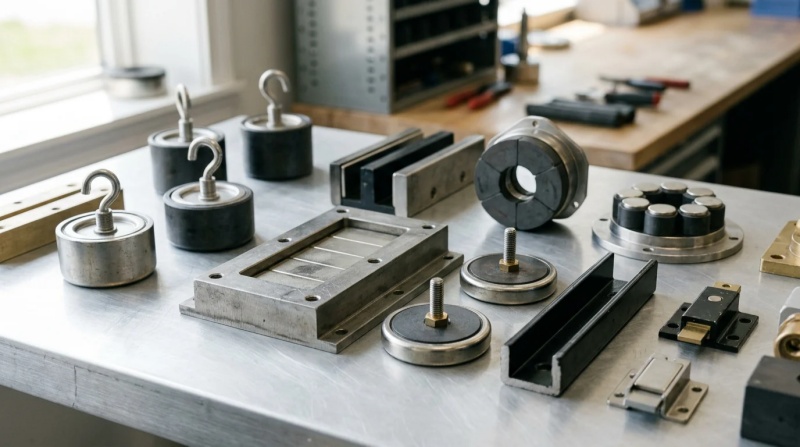
Industrial manufacturers are rethinking how parts are fixed, positioned, and moved as automation, faster product turnover, and uptime targets put pressure on conventional fastening methods. Magnetic assemblies have emerged as a practical alternative because they combine strong, controlled holding force with simpler integration into robotic and high-speed production systems. This article explains the main reasons behind that shift, from reduced assembly time and lower maintenance to better repeatability, cleaner designs, and improved reliability under demanding operating conditions. It also helps clarify where magnetic assemblies deliver the most value compared with screws, rivets, and welds, setting up the factors explored in the sections that follow.
Why Manufacturers Are Switching to Magnetic Assemblies
Industrial manufacturing is undergoing a structural shift in how components are joined, secured, and manipulated. As production lines become increasingly automated and product lifecycles shorten, traditional mechanical fasteners like screws, rivets, and welds are frequently being replaced by engineered magnetic assemblies. This transition is not merely a matter of component substitution; it represents a fundamental rethinking of assembly architecture to support Industry 4.0 objectives.
By integrating permanent magnets with precisely machined steel or non-ferrous housings, magnetic assemblies manipulate magnetic flux to achieve holding forces that standalone magnets cannot match. Manufacturers are recognizing that this technology offers a scalable solution to chronic production bottlenecks, mitigating issues related to mechanical wear, tooling clearance, and excessive assembly cycle times.
Cost, automation, and reliability drivers
The primary drivers accelerating the adoption of magnetic assemblies are tangible reductions in assembly time, enhanced compatibility with robotics, and superior long-term reliability. In automated environments, traditional threaded fasteners require precise torque control, complex feeding mechanisms, and routine maintenance of driver bits. Magnetic assemblies eliminate these requirements entirely, enabling instantaneous, tool-free mating of components.
Furthermore, eliminating threaded joints drastically reduces the potential for stripping, cross-threading, and vibration-induced loosening. Manufacturers adopting magnetic solutions frequently report a steep decline in mechanical defect rates, often dropping from industry averages of 150 parts per million (PPM) to under 10 PPM. This reliability is particularly critical in high-vibration environments where traditional fasteners mandate secondary retention methods like thread-locking compounds or safety wire.
Where magnetic assemblies fit in modern production
Magnetic assemblies are highly adaptable and currently dominate several fast-growing industrial sectors. In robotics, they serve as highly efficient end-of-arm tooling (EOAT) components, capable of lifting ferromagnetic materials with holding forces ranging from a delicate 50 Newtons (N) for fragile electronics to over 5,000 N for heavy automotive stamping blanks.
Beyond material handling, these assemblies are increasingly specified in electric vehicle (EV) battery module production, sensor mounting brackets, and modular architectural fixtures. Their ability to provide temporary but robust holding power makes them ideal for fixtures and jigs in welding and CNC machining, allowing operators to swap out production setups in seconds rather than minutes.
Performance and Engineering Advantages
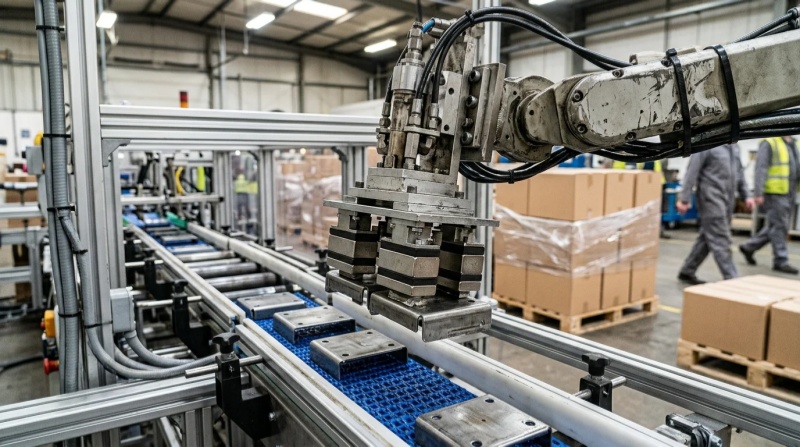
Beyond operational speed, the fundamental physics of magnetic assemblies provide distinct mechanical and spatial advantages. By utilizing a magnetic circuit—where a steel housing directs and concentrates the magnetic field to the working face—engineers can exponentially increase the holding force of a standard permanent magnet while simultaneously protecting the brittle magnetic material from physical impact.
Holding force and positioning benefits
The integration of high-energy permanent magnets, particularly Neodymium Iron Boron (NdFeB), allows for exceptional holding forces relative to component volume. High-grade NdFeB magnets, such as N52, boast specific energy products up to 52 MGOe (MegaGauss-Oersteds). When enclosed in a properly designed steel cup or channel assembly, the magnetic flux that would normally disperse into the surrounding air is redirected to the contact surface.
This concentration means a magnetic assembly can yield up to four times the pull force of the bare magnet alone. Additionally, magnetic assemblies offer self-aligning properties. When designed with complementary geometries or multi-pole configurations, the magnetic fields naturally guide components into precise alignment with sub-millimeter accuracy, removing the need for tight-tolerance mechanical alignment pins.
Compact design and integration advantages
Space constraints in modern electromechanical design heavily favor the miniaturization capabilities of magnetic assemblies. Traditional bolted joints require not only the space for the bolt and nut but also the clearance radius for torque wrenches or automated fastening tools. Magnetic assemblies require zero tool clearance.
By implementing low-profile pot magnets or embedded magnetic tracks, design engineers can reduce the footprint of a fastening joint by up to 40% compared to standard M6 or M8 flanged bolts. This compact integration is particularly valuable in consumer electronics, medical device manufacturing, and aerospace applications where volumetric efficiency and weight reduction are paramount.
Trade-offs vs mechanical fasteners
While magnetic assemblies offer profound benefits, they present specific trade-offs when compared directly to mechanical fasteners. The most significant engineering consideration is the difference between tensile (pull) strength and shear strength. While a magnetic assembly may boast a 1,000 N pull force, its resistance to lateral sliding (shear force) is typically only 15% to 30% of its pull strength, depending on the friction coefficient of the mating surfaces.
| Feature / Metric | Engineered Magnetic Assembly | Traditional Mechanical Fastener (Bolted) |
|---|---|---|
| Installation Time | Instantaneous (< 1 second) | Moderate (5 - 15 seconds per joint) |
| Tooling Clearance | Zero clearance required | High clearance for drivers/wrenches |
| Shear Strength | Low (15-30% of tensile force) | Very High (Material dependent) |
| Reusability | Infinite (no thread wear) | Limited (fatigue and thread degradation) |
| Vibration Resistance | Excellent (self-adjusting) | Susceptible to loosening without adhesives |
To compensate for lower shear strength, engineers frequently design hybrid joints where a shallow mechanical recess prevents lateral movement, while the magnetic assembly provides the primary vertical retention. Understanding these directional force limitations is critical for successful implementation.
Cost, Production Efficiency, and Supply Considerations
Transitioning to magnetic fastening systems requires a comprehensive analysis of supply chain dynamics, material economics, and total lifecycle costs. While the initial component price of a magnetic assembly is often higher than a standard threaded fastener, the financial justification emerges through dramatic reductions in labor, tooling, and maintenance overhead.
Assembly time and maintenance savings
Time-in-motion studies routinely demonstrate that replacing mechanical fasteners with magnetic assemblies yields substantial cycle time reductions. In high-volume assembly lines, saving 15 to 30 seconds per joint translates to hundreds of hours of reclaimed production time annually. Because magnetic assemblies require no torque verification, quality assurance steps are also streamlined.
Maintenance savings are equally impactful. Traditional fasteners in high-use applications suffer from thread galling, head stripping, and structural fatigue, requiring frequent replacement and costly downtime for extraction. Magnetic assemblies, relying on permanent magnetic fields, experience virtually zero mechanical wear, functioning reliably for decades without maintenance intervention.
Material grades, sourcing, and customization
The cost and availability of magnetic assemblies are heavily influenced by the global supply of rare earth elements. Neodymium (NdFeB) is the most common choice due to its high strength-to-cost ratio, but supply chain volatility in rare earth mining can impact pricing. Procurement teams often utilize trade databases like TradeMap to monitor global export trends of these critical materials.
Customization also plays a role in sourcing strategy. While standard off-the-shelf pot magnets have low minimum order quantities (MOQs), highly specialized assemblies requiring custom over-molding, specific multipole magnetization, or complex machined housings typically demand MOQs between 5,000 and 10,000 units to amortize custom tooling costs effectively.
Lifecycle cost comparison factors
A lifecycle cost comparison is essential to justify the switch. The unit price of a specialized magnetic assembly might be $1.20, compared to $0.15 for a high-grade mechanical bolt and locking nut. However, evaluating the total cost of ownership (TCO) shifts the financial calculus.
Over a standard 10-year equipment lifecycle, the mechanical joint incurs costs for installation labor, torque calibration equipment, thread-locking fluids, and replacement parts. When factoring in a conservative labor rate of $45 per hour, the instantaneous installation and zero-maintenance profile of the magnetic assembly typically achieves cost parity within the first 18 months, delivering pure operational savings thereafter.
Compliance, Quality, and Application Fit
Deploying magnetic assemblies in harsh industrial environments demands strict adherence to engineering standards and compliance frameworks. Magnets are inherently sensitive to environmental extremes, and a failure to specify the correct material grades, protective coatings, and quality control protocols can lead to catastrophic loss of magnetic force.
Temperature, corrosion, and coating requirements
Thermal and environmental factors heavily dictate the selection of magnetic materials. Standard N-grade Neodymium magnets suffer irreversible flux loss if operating temperatures exceed 80°C. For higher temperature applications, engineers must specify high-coercivity grades like UH (up to 180°C) or switch to Samarium Cobalt (SmCo), which maintains stability up to 350°C but comes at a premium cost.
Corrosion is another critical failure mode, particularly for NdFeB, which oxidizes rapidly when exposed to moisture. Industrial assemblies require robust surface treatments. The industry standard is a triple-layer Nickel-Copper-Nickel (Ni-Cu-Ni) plating, typically applied at a thickness of 15 to 25 microns. For marine or chemical washdown environments, assemblies are often fully encapsulated in hermetic stainless steel housings or over-molded with chemical-resistant polymers like PEEK or PTFE.
Quality control, testing, and regulatory factors
Stringent quality control is necessary to guarantee consistent holding forces across production batches. Reputable manufacturers operate under ISO 9001 certified quality management systems to ensure material traceability and process repeatability. Verification of magnetic assemblies goes beyond dimensional checks.
Batch testing involves rigorous pull-force verification using calibrated tensile testers to ensure the assembly meets the specified minimum breakaway force. Additionally, surface Gauss meter readings are taken to map the magnetic field density, requiring strict tolerances, typically within ±2% of the nominal specification, to ensure uniform performance in automated handling applications.
Specification steps for the right assembly
Engineers must formalize several specific parameters to ensure the right assembly is procured. The first step is defining the exact "air gap"—the distance between the magnet surface and the ferrous target. Because magnetic force decays exponentially with distance, an assembly rated for 500 N at zero air gap may only yield 50 N if separated by a 2-millimeter layer of paint or plastic.
The specification must also detail the target material's thickness and composition. A magnetic assembly cannot achieve its maximum rated pull force on thin sheet metal, as the material reaches magnetic saturation prematurely. Finally, engineers must specify the required magnetic shielding; proper housing design ensures stray magnetic fields do not interfere with nearby sensitive electronics, pacemakers, or navigation sensors.
How to Decide When to Switch
Migrating from mechanical to magnetic assemblies is a strategic engineering decision that requires a structured approach. Not every joint or fixture benefits from magnetic substitution. Identifying the correct applications and validating them through a disciplined engineering process ensures maximum return on investment and operational reliability.
Key criteria for high-value use cases
Ideal candidates for magnetic substitution share specific operational characteristics. High-value use cases typically involve components that require frequent removal or repositioning, such as access panels, sensor mounts, or quick-change tooling fixtures. Applications where blind assembly is required—meaning operators cannot see or easily reach the back of a panel to secure a nut—are also prime targets.
Financially, the most compelling criterion is the return on investment (ROI) timeline. Projects that yield an ROI of 8 to 14 months through labor savings, reduced scrap, and eliminated tooling costs should be prioritized for immediate transition to magnetic assemblies.
Phased evaluation and validation process
A structured validation process mitigates the risks associated with adopting new fastening architectures. The process begins with digital modeling using Finite Element Analysis (FEA) software specifically designed for magnetics. FEA allows engineers to simulate flux paths, optimize the steel housing geometry, and predict holding forces under various air gap conditions before any physical metal is cut.
Following digital validation, physical prototyping is essential. Pilot runs must subject the magnetic assemblies to the exact environmental conditions of the final application, including thermal cycling, vibration tables, and chemical exposure, to verify that the chosen magnet grade and coating will survive the intended lifecycle.
Turning insights into an adoption plan
Translating an engineering validation into full-scale production requires an actionable adoption plan. A typical implementation timeline spans 12 to 16 weeks from final specification to full-scale production delivery, accounting for custom tooling, initial sample runs (ISIR), and final quality approvals.
| Adoption Phase | Key Activities | Typical Duration | Success Metric |
|---|---|---|---|
| 1. Implementation | Custom tooling, ISIR, and quality approvals | 12 to 16 weeks | Full-scale production delivery |
Key Takeaways
- The most important conclusions and rationale for Magnetic Assemblies
- Specs, compliance, and risk checks worth validating before you commit
- Practical next steps and caveats readers can apply immediately
Frequently Asked Questions
Why are industrial manufacturers replacing screws and welds with magnetic assemblies?
They speed assembly, remove torque-tool steps, and reduce defects like cross-threading or loosening. This supports faster automated production and easier design changes.
How do magnetic assemblies improve holding force compared with bare magnets?
A steel housing redirects magnetic flux to the working face, often delivering much higher pull force than a standalone magnet while also protecting the magnet from impact.
Where are magnetic assemblies commonly used in production lines?
They are widely used in robotic EOAT, welding and CNC fixtures, EV battery module assembly, sensor mounts, and modular equipment that needs fast changeovers.
Can RCMAG provide custom magnetic assemblies for automation equipment?
Yes. Custom options typically include magnet grade, housing material, size, coating, mounting style, and target holding force to fit specific industrial applications.
What should engineers check before choosing a magnetic assembly?
Confirm required holding force, air gap, contact material, operating temperature, vibration level, and corrosion exposure. These factors directly affect performance and service life.