 EN
EN AR
AR HR
HR CS
CS DA
DA NL
NL FI
FI FR
FR DE
DE EL
EL IT
IT JA
JA KO
KO NO
NO PL
PL PT
PT RU
RU ES
ES SV
SV IW
IW VI
VI TH
TH TR
TR FA
FA MS
MS- Stepped pot magnets improve usable holding force by channeling flux through a steel housing.
- Confined-space performance depends on geometry, not just raw magnet material.
- Mounting style, surface finish, and corrosion resistance can determine real-world reliability.
- For small fixtures, jigs, and recessed assemblies, a stepped profile often fits where flat-faced magnets cannot.
Stepped pot magnet selection is really a problem of geometry, flux concentration, and installation constraints, not simply magnet strength; in tight assemblies, the right design can deliver stronger effective holding efficiency than a bare neodymium magnet of similar material because the steel cup redirects magnetic flux toward the contact face, and dimensional control often matters as much as pull force, especially when clearances are measured in millimeters rather than centimeters. For tolerance-conscious applications, machine design guidance frequently references accuracy frameworks such as ISO 2768-1, while magnetic assemblies in production often need environmental testing aligned with NIST measurement resources. If your use case includes fixture holding, tool organization, or recessed mounting, the most useful internal references are pot magnet options, neodymium magnet products, and magnetic hook solutions.
Why a Stepped Pot Magnet Holds Better in a Confined Space
The steel shell is the main reason a stepped pot magnet outperforms a bare magnet in many real fixtures.
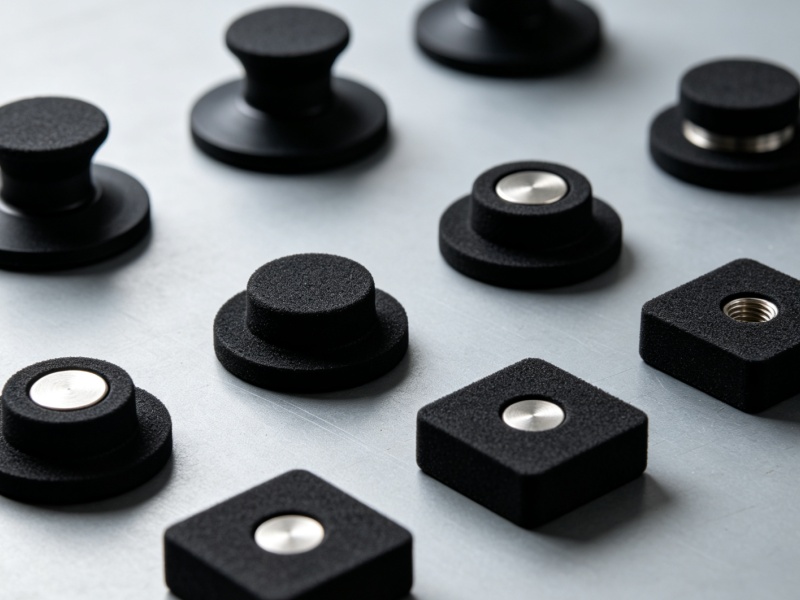
In a pot magnet, the magnetic circuit is partially closed by the steel cup, which channels flux toward the exposed face and reduces side leakage; that concentration effect can produce noticeably higher effective holding on a steel target, particularly when the contact area is limited or when the magnet sits in a recess. This is why a compact assembly can feel “stronger” than its physical size suggests. The stepped geometry adds another advantage: it creates a shoulder that can nest into a counterbore, pocket, or framed opening, improving alignment and reducing wasted clearance. In confined spaces, the question is usually not whether a magnet is powerful, but whether its field is delivered efficiently to the part you actually need to hold.
That distinction matters in B2B environments such as jigs, cabinets, enclosures, and small fixture designs. A flush face without a guiding step may leave too much unused volume around the magnet body, while a stepped design can be seated deeper without sacrificing contact quality. The result is better holding efficiency per unit of installed space.
Holding Efficiency vs. Static Pull Force in Confined Space Magnet Design
Holding efficiency is the ratio between usable retention and the space, mass, and installation effort consumed by the magnet.
Static pull force is useful, but it is not the whole story. A magnet may be rated for a high pull force under ideal laboratory contact, yet lose much of that advantage if the mounting face is uneven, the target plate is thin, or the installation leaves little room for fasteners. In confined spaces, efficiency improves when the geometry supports full-face contact, stable centering, and minimal air gap. Even a very small gap reduces performance sharply because magnetic attraction declines rapidly as distance increases.
For this reason, a stepped pot magnet should be judged on the real assembly outcome: can it hold securely, fit cleanly, survive vibration, and avoid surface damage? Those practical questions often matter more than headline pull numbers.
| Evaluation Factor | Why It Matters in Tight Spaces | Typical Design Impact |
|---|---|---|
| Air gap | Even a small gap reduces usable pull | Requires precise seating and flat contact |
| Housing shape | Stepped body improves recessed fit | Better clearance around edges and fasteners |
| Steel cup | Concentrates flux on one working face | Higher effective holding than a bare magnet |
| Mounting method | Determines installation stability | Counterbore, through-hole, or screw-fit options |
For buyers comparing compact magnetic assemblies, it also helps to review other product categories such as magnetic hook, magnetic base, and magnetic tool holder, because each one solves a different space constraint.
How the Steel Cup and Neodymium Core Work Together
The combination of a steel shell and a neodymium core is what makes a pot magnet compact but effective.
Neodymium iron boron is a high-energy permanent magnet material commonly used when designers need strong force in a small volume. The steel shell does not create the magnetic energy by itself; instead, it shapes the field so more of that energy reaches the work surface. In practical terms, the housing protects the magnet, directs the flux, and improves how much of the core’s potential becomes useful attachment force. That is especially important in stepped designs because the stepped outer shape often exists to solve mechanical packaging, while the internal magnetic circuit solves force delivery.
This structural pairing also improves durability. The steel cup acts as a shield against impact, edge chipping, and assembly damage. For products used in toolrooms, maintenance stations, or light industrial fixtures, that added protection can reduce early failure caused by handling rather than by magnetic loss.
| Component | Primary Function | Practical Benefit |
|---|---|---|
| Neodymium core | Provides high magnetic energy | Strong force in compact size |
| Steel cup | Guides and concentrates flux | Improves usable holding efficiency |
| Stepped body | Fits recesses and limited clearances | Easier integration into confined spaces |
| Surface coating | Resists corrosion and wear | Longer service life in humid or outdoor use |
When a product sits near moisture, salt spray, or cleaning chemicals, coating choice becomes part of the magnetic design, not an afterthought.
Installation Choices That Decide Real-World Performance
Mounting geometry often determines whether a stepped pot magnet performs at its rated potential.
There are two common installation patterns: counterbore-style seating and through-hole or screw-based fixation. Counterbore-style designs help the magnet sit below or flush with a surrounding part, which is useful when the outside envelope is tight and protrusion is unacceptable. Through-hole or bolt-through setups are more suitable when the magnet must be clamped, serviced, or repositioned. In both cases, stable alignment is essential because a skewed seat creates an air gap and lowers holding force.
For product teams, the practical rule is simple: choose the mounting style first, then size the magnet around the available envelope. That sequence usually prevents over-specifying a magnet that cannot be installed correctly. If the application involves maintenance doors, access panels, or compact fixtures, a stepped pot magnet often offers a cleaner path than a flat magnet with exposed edges.
- Measure the recess depth and diameter before selecting the magnet.
- Confirm whether the target surface is steel, coated steel, or stainless steel.
- Check whether the magnet must sit flush, recessed, or partially exposed.
- Verify the screw path so the fastener does not interfere with the magnetic face.
- Account for corrosion exposure and temperature limits before finalizing the design.
Corrosion, Temperature, and Durability in Confined Space Magnet Applications
Environmental resistance is as important as pull strength when the magnet is hidden inside a confined assembly.
Neodymium magnets can lose performance or suffer surface damage if the coating fails in humid, chemically active, or outdoor conditions. Common protective finishes such as nickel-copper-nickel are widely used for general-purpose applications, while epoxy coatings are often chosen when moisture or chemical exposure is higher. In compact enclosures, trapped humidity can be worse than open-air exposure because drying is slower and inspection is harder. For that reason, sealed or coated stepped pot magnets are usually preferable in electrical housings, marine accessories, and workshop fixtures.
Temperature also matters. Standard neodymium grades are often used around 80 C, while higher-temperature grades are designed for elevated service conditions, but the exact rating depends on the material grade and coating system. For any installation near motors, ovens, or sun-exposed metalwork, thermal stability should be verified before purchase rather than assumed afterward.
Surface engineering and environmental testing are not optional details. They are what keep a compact magnet from becoming a maintenance issue after a few months of use.
| Environment | Risk | Preferred Design Choice |
|---|---|---|
| Humid indoor | Coating wear and rust | Nickel or epoxy finish |
| Outdoor exposure | Water ingress and corrosion | Sealed housing and corrosion-resistant coating |
| High temperature | Loss of magnetic performance | High-temperature neodymium grade |
| Vibration | Loosening or shifting | Mechanical fastening and flush seating |
What the Standards Say About Measurement and Magnetic Performance
Reliable selection depends on test method consistency, not just vendor claims.
When buyers compare magnets across suppliers, they should ask how pull force was measured, what surface was used, and whether the test conditions were documented. For metrology and dimensional control, ISO 10012 provides guidance on measurement management systems, while ASTM E109 is widely used for magnetic material test methods and terminology references in engineering workflows. For environmental reliability, test planning often borrows from industrial qualification practices rather than ad hoc internal checks.

These references matter because pull force values can vary significantly with steel grade, surface finish, and geometry. A stepped pot magnet mounted on thick, clean low-carbon steel will behave differently from the same magnet on thin painted steel. If two products have the same nominal force rating but different test methods, the comparison is not truly apples to apples.
One practical benchmark is to document the target plate material, thickness, and contact condition during acceptance testing. That simple discipline often reveals why a compact magnet performs well in one fixture and poorly in another.
Selection Guide for Stepped Pot Magnet Buyers
The best stepped pot magnet is the one that solves the installation problem with the fewest compromises.
Before choosing a model, define the target surface, available recess depth, fastening method, and environmental load. Then compare those constraints against the magnet’s body shape and coating. A larger magnetic grade is not automatically better if it prevents proper seating or creates excessive protrusion. Likewise, a highly compact magnet is not useful if the shell is too thin to protect the core or if the coating is unsuitable for the operating environment.
For procurement teams, the decision should be based on a short technical checklist rather than appearance or price alone.
- Confirm the installation envelope in millimeters.
- Match the holding surface to low-carbon steel where possible.
- Select coating based on moisture, abrasion, or chemical exposure.
- Choose the fastening style that prevents rotation and loosening.
- Request test conditions, not only the pull-force headline.
If your application is broader than one mounting point, you may also want to compare magnetic ring and rubber coated magnet options, since they solve different surface-contact and friction problems.
Common Failure Modes and How to Avoid Them
Most holding failures come from installation errors, not from magnet weakness.
The first common failure mode is excessive air gap caused by paint, burrs, or an uneven recess. The second is incorrect substrate selection, especially when the target plate is too thin or made from a low-permeability alloy. The third is corrosion damage that starts at the coating edge and spreads inward. The fourth is using a flat magnet where a stepped body was needed, which wastes available depth and weakens the contact geometry. These problems are predictable, and they are preventable.
A field-ready process usually avoids surprises: inspect the substrate, clean the contact surface, verify alignment, and recheck holding after vibration or thermal cycling. In a high-mix assembly environment, that routine is often worth more than buying a stronger magnet on paper.
When a Stepped Pot Magnet Is Better Than Other Magnetic Solutions
A stepped pot magnet is the right choice when space is tight and the contact face must work hard.
Compared with a bare neodymium magnet, the pot design usually offers better durability and more efficient flux delivery. Compared with a rubber-coated magnet, it gives stronger direct holding on steel, though it may be less protective to delicate surfaces. Compared with a hook or base magnet, it is more suitable for concealed mounting, fixtures, and recessed hardware where the goal is retention rather than hanging or accessory attachment. That is why the stepped form is common in compact industrial assemblies, access panels, and precision fixtures.
In buyer terms, the rule is straightforward: choose the stepped pot magnet when you need a compact footprint, a protected core, and a clean mechanical fit in a constrained volume. Choose a different magnetic product when surface protection, reusability, or visible attachment matters more.
FAQ
What makes a stepped pot magnet different from a standard pot magnet?
A stepped pot magnet includes a stepped outer profile that helps it seat into recesses or narrow spaces more cleanly than a standard flat body.
Why does a pot magnet often hold better than a bare magnet?
The steel cup concentrates magnetic flux toward the working face, which usually increases usable holding force on steel targets.
Does a stronger magnet always mean better holding efficiency?
No, because poor seating, excess air gap, or an unsuitable substrate can reduce real-world holding far more than magnet grade can compensate for.
Which surface works best with a stepped pot magnet?
Clean low-carbon steel usually gives the most reliable holding because it provides a strong magnetic path and good contact.
How important is coating on a confined space magnet?
Very important, because trapped moisture and hidden corrosion can shorten service life even when the magnet still feels strong initially.
Can a stepped pot magnet be used outdoors?
Yes, but only if the coating, sealing, and temperature rating are appropriate for rain, humidity, and thermal cycling.
What should buyers ask suppliers before ordering?
Ask about pull-force test conditions, coating type, operating temperature, mounting dimensions, and the substrate used for validation.