 EN
EN AR
AR HR
HR CS
CS DA
DA NL
NL FI
FI FR
FR DE
DE EL
EL IT
IT JA
JA KO
KO NO
NO PL
PL PT
PT RU
RU ES
ES SV
SV IW
IW VI
VI TH
TH TR
TR FA
FA MS
MS- Steel shell design improves usable holding force by channeling magnetic flux toward the contact face.
- Pot magnets are often more durable than bare magnets because the shell shields the magnet from edge damage and assembly shock.
- Industrial fixing performance depends on installation style, surface finish, gap, temperature, and corrosion resistance, not just rated pull force.
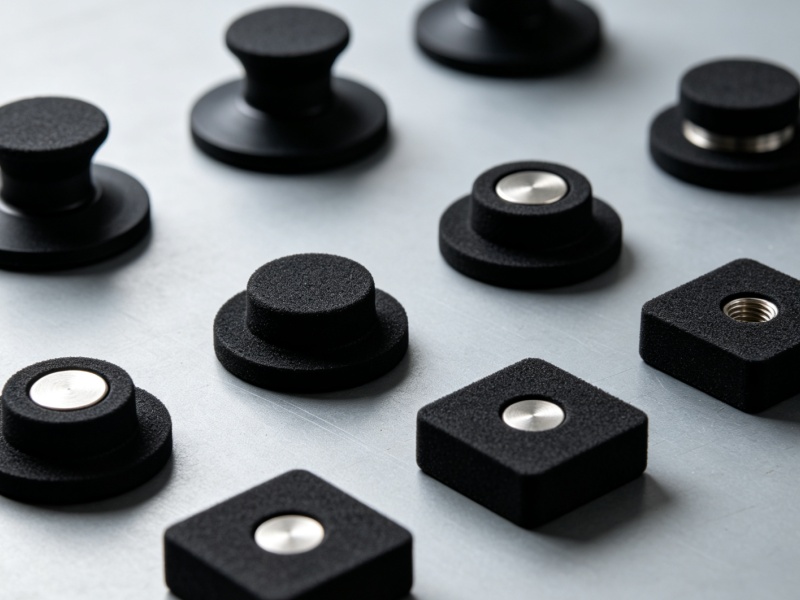
- Countersunk, threaded, and rubber-coated versions solve different mounting and surface-protection problems.
- For consistent selection, compare geometry, coating, and fixture conditions rather than choosing by magnet grade alone.
Pot magnet, industrial fixing, and steel shell are tightly connected because the shell changes how the magnetic field behaves under load. A well-designed magnet assembly can be more useful than an exposed magnet of the same material, especially when the contact surface is steel and the installation must survive vibration, abrasion, and repeated handling. For reference, ISO 286-1 defines the hole-basis tolerance system used in precision mechanical fits, and that kind of dimensional discipline matters when a magnet housing must align with a screw, bolt, or bore. In other words, the strongest industrial fixing solution is rarely the bare magnet itself; it is the full magnetic assembly, such as a countersunk pot magnet, matched to the mounting method and the real environment.
Why a pot magnet outperforms a bare magnet in industrial fixing
The steel shell is the main reason a pot magnet usually performs better than a bare magnet in practical fixing jobs.
In a bare magnet, magnetic flux spreads in multiple directions, so only part of the field is efficiently used at the contact face. In a pot magnet, the steel shell acts as a flux return path and helps concentrate the field where it matters most: the steel target surface. That concentration improves effective holding behavior, especially when the application is not a perfectly flat, perfectly clean, lab-style setup.
This distinction matters because industrial fixing is about stable contact, not just theoretical magnet strength. A magnet with a high published pull value can still underperform if there is paint, scale, oil, curvature, or a small air gap. In real production environments, a shell-protected assembly often gives more predictable results than a bare magnet that is exposed to edge chipping and accidental impact during installation.
For safety-sensitive or repetitive work, the shell also adds mechanical protection. Bare magnets, especially brittle rare-earth types, can crack if they collide with tools, fixtures, or other magnets. A neodymium magnet inside a steel housing is easier to handle because the housing absorbs part of the abuse that would otherwise reach the magnet body.
| Feature | Pot Magnet | Bare Magnet | Industrial Impact |
|---|---|---|---|
| Flux control | Concentrated by steel shell | More dispersed | Higher usable face contact |
| Mechanical protection | High | Low | Lower damage risk |
| Mounting integration | Easy with hole, thread, or countersink | Requires extra fixture design | Faster installation |
| Repeat use | Better for repeated handling | More fragile at edges | Longer service life |
Pot magnet, steel shell, and holding force: what actually changes
Holding force is not the same as raw magnetic material strength.
Manufacturers often discuss remanence, coercivity, or energy product for the magnetic material, but industrial buyers care more about pull behavior on a real steel surface. The steel shell improves how much of the magnet’s energy reaches the target, which is why a pot magnet can outperform a bare magnet of similar size in the same fixing scenario.
That said, shell design is not magic. If the target surface is painted, curved, thin, rusty, or uneven, holding force drops. A thin air gap can sharply reduce performance because magnetic attraction decreases rapidly as separation increases. This is why field testing on the actual work surface is more useful than trusting catalog numbers alone.
For process planning, many engineers use the working rule that a magnet should be evaluated under the same surface condition it will face in production. That means the steel grade, thickness, finish, and attachment direction should all be checked before purchase. If the job needs a cleaner fixture footprint or stronger resistance to sliding, a threaded pot magnet can be easier to integrate into a machine base, bracket, or removable fixture than a loose bare magnet.
| Condition | Effect on Industrial Fixing | Typical Risk | Selection Note |
|---|---|---|---|
| Painted steel | Lower effective pull | Slip or detachment | Test on real surface |
| Curved surface | Reduced contact area | Edge lift | Prefer shaped or coated solution |
| Oil film | Lower friction | Sliding under load | Clean before installation |
| Thin target plate | Flux leakage | Weak retention | Use thicker steel where possible |
Installation style matters more than many buyers expect
The mounting interface often decides whether a magnet works in the factory or fails on the line.
Countersunk pot magnets are ideal when a screw head must sit flush and the assembly needs a tidy, low-profile finish. Threaded versions are better when the component must be bolted into a bracket, holder, or machine element. Through-hole styles support rods or bolts and are often used when alignment and replacement speed matter.
These differences are not cosmetic. They control load path, maintenance access, and repeatability. If a magnet is used for assembly jigs, welding location, or removable stops, the wrong installation geometry can create wobble or misalignment. That is why the installation method should be chosen before the holding-force target is finalized.
In many purchasing decisions, buyers underestimate the value of a purpose-built housing. A rubber-coated magnet may be the better choice when the target surface must be protected from scratches or when higher friction is needed to resist lateral movement. For bare-metal fixtures, however, the steel shell of a pot magnet usually gives better compactness and simpler mounting.
- Define the target surface: flat steel, painted steel, curved metal, or protected finish.
- Choose the mounting method: countersunk, threaded, or through-hole.
- Check load direction: pull-off force is not the same as shear resistance.
- Verify temperature and corrosion exposure before final selection.
- Test the real assembly with the intended fastener and surface condition.
Corrosion protection and temperature limits for industrial fixing
Surface treatment is critical because many industrial environments are not dry or clean.
Moisture, salt spray, coolant mist, and cleaning chemicals can weaken unprotected assemblies over time. The steel shell protects the magnet mechanically, but corrosion resistance still depends on coating choice and the exposed hardware. Nickel-copper-nickel finishes are common for neodymium assemblies, while epoxy or rubber coatings are used when the environment is harsher or surface contact needs extra protection.
Temperature also matters. Standard neodymium magnets are often used below 80 C, while higher-temperature grades are available for more demanding applications. The exact limit depends on grade and construction, so buyers should confirm the operating range before installing magnets near motors, furnaces, or heated tooling. For magnetic assemblies used in production fixtures, heat resistance should be considered together with magnetic loss, since elevated temperatures can reduce holding performance even before failure occurs.
For technical validation, the NIST SI Units program is useful when teams need to keep dimensional and unit reporting consistent across procurement and testing. Consistent measurement language matters when comparing pull tests, gap sizes, and tolerances across suppliers.
| Environment | Recommended Finish | Main Concern | Selection Cue |
|---|---|---|---|
| Indoor dry factory | Nickel plated | Wear and handling damage | Standard pot magnet |
| Humid workshop | Epoxy or coated housing | Corrosion | Sealed assembly |
| Outdoor exposure | Protective coating plus shell | Weathering | Higher durability needed |
| High heat zone | High-temperature grade | Demagnetization | Confirm grade rating |
How to compare pot magnet and bare magnet for real industrial use
The best comparison starts with the job, not the magnet category.
For static holding on clean steel, a bare magnet can be acceptable if the setup is controlled and the magnet is mechanically protected. For repetitive industrial fixing, removable tooling, fixture positioning, or equipment mounting, the pot magnet usually wins because it combines higher practical efficiency with better physical durability.

One useful way to compare options is to look at three layers: magnetic behavior, mechanical survivability, and integration cost. Magnetic behavior asks how much useful force reaches the surface. Mechanical survivability asks whether the unit can survive drops, knocks, and repeated handling. Integration cost asks how much engineering time is needed to fasten it into the assembly.
From a production perspective, a magnet that needs fewer auxiliary parts often saves time. That does not mean it is always cheaper in sticker price, but it may reduce rework, alignment errors, and replacement frequency. For buyers building magnetic holders, access points, or modular fixtures, a magnetic hook or other shell-based mounted product may solve the fastening problem more cleanly than a loose bare magnet glued into place.
| Selection Factor | Pot Magnet | Bare Magnet | Decision Rule |
|---|---|---|---|
| Repeat handling | Better | Weaker | Choose shell-protected |
| Compact mounting | Strong | Moderate | Choose housing with thread or countersink |
| Surface protection | Better with coating | Poor | Use coated shell or rubber |
| Custom integration | Flexible | Harder | Specify interface first |
Common industrial fixing mistakes and how to avoid them
Most magnet failures come from application errors, not from the magnet concept itself.
The first mistake is using catalog pull force as if it were the real working load. Pull force is usually measured under ideal conditions on thick, clean, flat steel. Real fixtures face shear forces, vibration, contamination, and geometry limits, so the usable load is often lower. The second mistake is ignoring the mounting method. A magnet that is strong in tension can still slide if the fixture sees side load.
The third mistake is overlooking the substrate. Thin steel plates, textured coatings, and curved surfaces reduce actual performance. The fourth mistake is selecting a magnet without checking corrosion resistance. In wet or outdoor settings, performance may decline because of coating damage or rust at the interface. The fifth mistake is choosing a bare magnet where a shell-protected design would have offered safer handling and easier installation.
For engineering teams, a simple test protocol is enough to avoid most issues: verify the target steel, clean the contact area, test in the final orientation, and repeat after vibration or temperature cycling. If the unit is part of a broader magnetic workflow, such as retrieval or housekeeping, product selection should be matched to the task. For example, a fishing magnet is designed for retrieval and recovery rather than fixture retention, so it should not be substituted blindly into an industrial mounting problem.
- Do not compare bare magnet catalog values with real-world mounted performance.
- Do not ignore shear load when the fixture sees lateral forces.
- Do not use uncoated magnets in wet or corrosive environments without validation.
- Do not assume one housing style works for every installation.
- Do not skip live testing on the actual target surface.
When a pot magnet is the right choice, and when it is not
A pot magnet is the right choice when the application needs compact fixing, improved durability, and repeatable mounting on steel.
It is especially suitable for jigs, fixtures, removable holders, machine accessories, signs, covers, and general-purpose industrial fixing where a cleaner mechanical interface matters. It is less suitable when the target surface is non-ferrous, when a very large gap exists, or when the application requires direct custom shaping of the magnetic body itself.
It is also not always the best answer when the contact surface must remain scratch-free. In that case, a rubber-coated solution can deliver better surface protection and higher friction even if the raw magnetic assembly is less compact. Likewise, if the application is about sorting, trapping, or filtering ferrous particles, a specialized component such as a magnetic bar or separator may be the correct tool rather than a fixing magnet.
For buyers evaluating suppliers, a useful question is whether the seller can explain field behavior, mounting geometry, and environmental limits clearly. That kind of product clarity is often more valuable than a high headline pull number, because industrial fixing succeeds when engineering details match the actual job. A well-chosen pot magnet is not just a stronger magnet; it is a more complete mechanical solution.
FAQ
1. Why does a pot magnet usually hold better than a bare magnet?
The steel shell concentrates magnetic flux toward the contact face, so more of the magnetic energy is used where the load actually sits. That usually improves practical holding performance in industrial fixing.
2. Is the rated pull force the same as working load?
No. Rated pull force is usually measured under ideal lab conditions on clean, thick steel. Real working load is lower when there is paint, vibration, shear force, or a gap.
3. Which mounting style is best for industrial fixing?
Countersunk styles are best when a flush screw mount is needed, threaded styles are best for direct bolting, and through-hole styles are useful when a rod or bolt must pass through the assembly.
4. Are pot magnets better than bare magnets in corrosive environments?
Often yes, but only if the coating and housing are suitable for the environment. The shell protects the magnet mechanically, but corrosion protection still depends on the finish.
5. Can a pot magnet replace a bare magnet in every application?
No. Pot magnets are excellent for fixing, mounting, and repeatable handling on steel, but they are not ideal for non-ferrous surfaces, large air gaps, or applications that require a custom magnetic shape.
6. How should buyers test a magnet before purchase?
They should test on the actual target material, with the intended mounting hardware, in the real orientation, and under the expected temperature and contamination conditions.
7. What should buyers compare first when choosing a pot magnet?
They should compare mounting style, shell material, coating, temperature rating, and real surface conditions before comparing headline pull force.