 EN
EN AR
AR HR
HR CS
CS DA
DA NL
NL FI
FI FR
FR DE
DE EL
EL IT
IT JA
JA KO
KO NO
NO PL
PL PT
PT RU
RU ES
ES SV
SV IW
IW VI
VI TH
TH TR
TR FA
FA MS
MS- Load capacity must be read as a test result, not a universal promise for every surface and angle.
- Pot-style construction improves usable holding force because the steel cup concentrates magnetic flux.
- Corrosion resistance, thread quality, and temperature limits are as important as static pull force in wholesale purchasing.
- Wholesale buyers should compare hook geometry, coating, and base diameter, not only magnet grade.
- For B2B bulk buying, documentation and consistency matter as much as the price per unit.
Magnetic hook wholesale buying is really a load-bearing decision, and the most reliable products are designed around measured pull force, contact conditions, and long-term durability rather than appearance alone. A useful reference point is ISO 7991, which defines methods for determining the pull force of permanent magnet materials, while ASTM A380 and ASTM B117 are widely used for surface cleaning and corrosion testing in related hardware workflows. In practical terms, that means a supplier should be able to explain how the hook was tested, on what surface, and under what temperature and finish conditions. If you are comparing pot magnets, magnetic hooks, and neodymium magnets for magnetic assemblies, the real buying question is whether the advertised load capacity matches your actual application.
Why load-bearing specs decide magnetic hook wholesale success
Load-bearing specifications decide whether a magnetic hook performs safely in the field. A hook can look identical to another unit yet behave very differently once it is mounted on painted steel, curved tubing, stainless panels, or a surface with dust and oil film. That is why wholesale buyers should separate three numbers: rated pull force, usable working load, and safety margin. The first is a lab figure; the second is what matters in the plant, warehouse, or retail fixture; the third protects the buyer from premature failure.
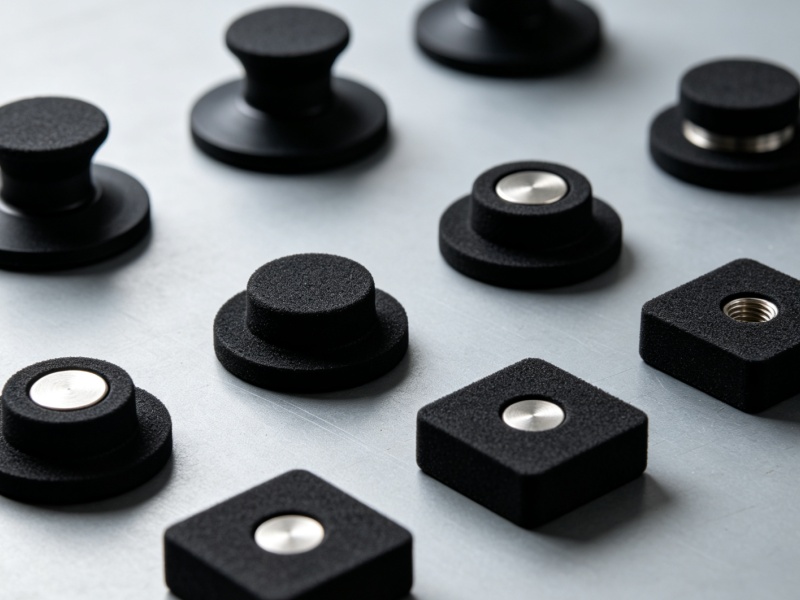
In magnet engineering, a pot magnet works better than a bare magnet of similar size because the steel shell channels magnetic flux toward the contact face. That magnetic circuit concentration is the reason pot-style hooks often deliver a stronger practical hold than an exposed magnet. For buyers, this matters because a stronger usable load can allow a smaller footprint, lower shipping weight, and easier installation in bulk orders.
| Spec | Why it matters | Wholesale buying note |
|---|---|---|
| Rated pull force | Shows lab-tested maximum vertical attraction | Compare only when test conditions are identical |
| Working load | Reflects real use with motion, vibration, and surface variation | Should be lower than rated pull force |
| Safety factor | Protects against shock, side loads, and wear | Higher is better for industrial use |
| Base diameter | Affects contact area and flux concentration | Usually more important than hook shape alone |
For technical readers, ISO 230-1:2022 is a good reminder that precision performance is only meaningful when measurement conditions are defined. In magnetic hardware, the same logic applies: a pull-force number without the test setup is incomplete. For that reason, a serious magnetic hook wholesale purchase should always request the test surface thickness, coating type, and whether the hook was tested in direct pull or at an angle.
Load capacity in magnetic hook wholesale: what the number really means
Load capacity is only meaningful when you know the direction of force and the mounting surface. A hook that performs well in straight pull may lose a large share of its usable capacity when the force shifts sideways. That is why some catalogs show impressive kilogram ratings, yet buyers see inconsistent results in real installations.
For permanent magnets, the most useful capacity information is a combination of static pull force, shear resistance, and surface tolerance. Static pull force measures vertical separation resistance. Shear resistance measures how well the magnet resists sliding along the surface. Surface tolerance covers whether the magnet can maintain contact through paint, texture, or curvature. This distinction is critical in bulk buying because warehouse racks, display rails, machine guards, and shipping fixtures rarely present perfect laboratory surfaces.
| Condition | Typical effect on holding performance | Buyer action |
|---|---|---|
| Clean flat steel | Highest usable hold | Use this as the benchmark surface |
| Painted steel | Reduced effective flux transfer | Request tested values on coated panels |
| Curved metal | Lower contact area | Increase base size or safety margin |
| Side load or vibration | Higher risk of slip | Choose a stronger shell and thread design |
Industry-standard surface preparation matters here as well. ASTM A380, which covers cleaning and passivation practices for stainless steel, is a reminder that surface condition influences adhesion and performance. In the same way, dirty or uneven metal reduces the real holding power of a magnetic hook. Wholesale buyers who ask about testing on coated, oily, or textured surfaces usually get a more accurate estimate of field performance.
Pot magnet construction and why it improves real-world load-bearing specs
Pot-style construction is one of the most important design features in a load-bearing magnetic hook. The steel cup is not just a housing; it is part of the magnetic circuit. By directing magnetic flux toward the contact face, the cup reduces wasted flux leakage and improves practical holding efficiency. That is why the same neodymium core often feels stronger when enclosed in a steel shell than when left exposed.
This matters for bulk buying because construction consistency affects repeatability. If one batch has tight cup tolerances and another batch has loose press-fit assembly, the load capacity can vary even when the magnet grade is the same. Wholesale buyers should therefore ask about cup thickness, thread engagement, plating thickness, and assembly method.
Material and finish also influence service life. ASTM B117 salt spray testing is commonly used across industries to evaluate corrosion resistance under accelerated conditions, and it is especially relevant for hooks used in humid warehouses, marine-adjacent facilities, kitchens, and outdoor signage. A corrosion-resistant finish does not increase magnetic strength directly, but it preserves performance by preventing rust, swelling, and thread damage.
| Construction element | Load-bearing impact | Typical risk if ignored |
|---|---|---|
| Steel cup | Concentrates magnetic flux | Lower usable pull force |
| Threaded eye hook | Transfers load safely to the body | Thread loosening under vibration |
| Nickel or epoxy coating | Improves corrosion resistance | Surface rust and early wear |
| Core alignment | Improves consistency | Batch-to-batch performance variation |
For buyers evaluating cup magnets alongside hook assemblies, the key question is whether the shell and magnet have been engineered as a system. A strong core inside a poorly designed shell can still produce weak field performance.
Which load-bearing specs matter most for bulk buying
Wholesale buyers should rank specs by application risk, not by catalog order. If the hook will hold lightweight retail tools, static pull force may be enough. If it will support hanging equipment, signage, or moving items, the buyer should pay more attention to the safety margin, thread quality, and corrosion resistance.
- Rated pull force: Useful for comparing products only when test conditions match.
- Working load: The more practical metric for real installation decisions.
- Temperature limit: Important because neodymium magnets can lose performance as heat rises.
- Coating durability: Critical for humid, outdoor, or chemically exposed environments.
- Thread strength: Determines whether the hook can survive repeated loading and removal.
Neodymium magnets are popular in compact hardware because they offer high magnetic energy density in a small volume. That compactness is valuable, but it can also tempt buyers to overestimate the hook’s safe load if they focus only on the magnet grade. In reality, hook geometry and mounting conditions can limit useful performance more than magnet grade itself.
According to NIST guidance on measurement traceability, reliable comparisons require repeatable methods and defined conditions. The same principle is essential in magnetic hook wholesale sourcing: ask for the test method, not just the number. That is the difference between a strong catalog claim and an operationally useful specification.
How temperature, corrosion, and vibration change load capacity
Environmental conditions can reduce magnetic hook performance faster than buyers expect. Temperature affects magnetization, corrosion weakens both the coating and the steel cup, and vibration can gradually reduce effective contact or loosen the hook assembly. This is why a hook that works well in a dry showroom may underperform in a factory, warehouse, or outdoor installation.
For neodymium-based assemblies, elevated temperature is a known consideration because magnetic performance can decline as the magnet approaches its thermal limit. Buyers should ask whether the hook uses standard neodymium, high-temperature grades, or a customized assembly designed for heat exposure. In industrial purchasing, this is not a niche detail; it determines whether the hook remains stable over time.
- Humidity: Raises the importance of coating integrity and edge sealing.
- Salt exposure: Requires stronger corrosion control and more frequent inspection.
- Vibration: Makes thread engagement and safety factor more important.
- Heat: Can reduce holding performance if the magnet grade is not suitable.
ISO 9223, which classifies atmospheric corrosivity, is a useful framework when choosing hardware for different environments. A dry indoor storage room and a coastal loading dock are not the same use case, so they should not use the same hook specification.
Best wholesale evaluation method for magnetic hooks
The best wholesale evaluation method combines sample testing, surface matching, and failure-mode review. A buyer who tests only one hook on one clean steel plate may miss the most important commercial risks. A better process checks multiple surfaces, multiple orientations, and multiple units from the same batch.

- Test pull force on the real target surface, not only on polished lab steel.
- Check horizontal slip resistance if the hook will carry moving or swinging loads.
- Inspect thread quality and eye alignment across multiple samples.
- Review coating edges, cup seams, and any signs of plating voids.
- Ask for traceable batch identification for future reorders.
This method is particularly important in bulk buying because a small defect rate becomes costly at scale. If a unit fails in one retail display or industrial line, the issue is not just replacement cost; it can affect downtime, customer confidence, and returns. Wholesale quality control should therefore include a sample plan and a clear acceptance threshold.
| Test item | Recommended check | Why it matters |
|---|---|---|
| Pull test | Vertical separation on target steel | Verifies advertised holding force |
| Shear test | Sliding resistance under load | More realistic for hooks |
| Cycle test | Repeated attachment and removal | Reveals wear and thread loosening |
| Corrosion test | Salt exposure or humidity exposure | Shows coating durability |
What industries need more than basic load capacity
Some industries need engineering support, not just a strong hook. Warehouse fixtures, manufacturing line tools, retail displays, and maintenance kits may only need moderate loads. But marine, outdoor, food-handling, and equipment service environments demand stronger control over corrosion, cleaning, and retention stability.
Magnetic hooks are often used to organize cables, hang tools, support signage, or hold lightweight accessories. Yet in maintenance and repair operations, the value is less about raw force and more about access speed and workflow efficiency. A well-chosen hook can reduce clutter, improve tool visibility, and cut handling time in repetitive tasks.
For buyers sourcing related products, the broader magnetic ecosystem matters too. A magnetic tool holder may outperform a hook in some workshop layouts, while fishing magnets serve very different retrieval loads and safety constraints. A good supplier should be able to explain those differences clearly, because the best product is always the one matched to the use case.
Common mistakes in magnetic hook wholesale purchasing
The most expensive wholesale mistakes come from spec confusion, not just bad pricing. Buyers often compare kilogram ratings from different suppliers as if the numbers were directly interchangeable. They are not. Test method, contact surface, and orientation can all change the result.
- Choosing by pull force alone and ignoring side-load behavior.
- Ignoring coating quality in humid or outdoor environments.
- Assuming all neodymium grades perform the same at elevated temperature.
- Failing to request batch consistency data for repeat orders.
- Using one test surface to approve a product that will live on another surface.
Another common mistake is underestimating packaging and shipping impact. In bulk buying, weak packaging can chip coatings, bend hooks, or damage threads before the product reaches the user. That is why export-ready packaging and inspection records are part of load-bearing quality, not just logistics.
Practical selection checklist for magnetic hook wholesale buyers
A disciplined checklist reduces return rates and helps buyers compare suppliers fairly. If the hook will be used in a controlled indoor environment, the list can stay simple. If it will support heavier or more variable loads, the checklist should be stricter.
- Confirm the real surface material and thickness.
- Request the test method for load capacity.
- Check coating type and corrosion expectations.
- Verify thread strength and hook finish.
- Ask for temperature tolerance and batch consistency.
- Match base diameter to the target contact area.
- Define the acceptable safety factor before ordering.
From a sourcing perspective, the most dependable wholesale quote is the one that includes product dimensions, coating details, and a clear explanation of use limitations. That transparency is especially useful in B2B buying, where procurement, engineering, and operations often evaluate the same hook from different angles.
FAQ
1. What is the most important spec in magnetic hook wholesale?
The most important spec is the usable load capacity under your real mounting conditions, not the highest lab pull-force number.
2. Are pot-style magnetic hooks better than bare magnets?
Yes, in many cases, because the steel cup concentrates magnetic flux and improves practical holding efficiency.
3. Does coating really matter if the magnet is strong?
Yes, because corrosion can damage the cup, thread, and surface finish, which reduces service life and reliability.
4. Why do some hooks fail even when the rated load looks high?
They often fail because of side loading, vibration, poor surface contact, or a mismatch between test conditions and real use.
5. How should I compare suppliers for bulk buying?
Compare test method, surface condition, coating, dimensions, temperature rating, and batch consistency, not only price.
6. What role does temperature play in load-bearing specs?
Temperature can reduce magnetic performance if the magnet grade is not suitable for the application.
7. Should I ask for corrosion test data in wholesale sourcing?
Yes, especially for humid, outdoor, coastal, or washdown environments where coating durability affects lifespan.
For wholesale buyers, the real answer to what load-bearing specs matter when buying magnetic hooks wholesale is simple: choose the hook whose test method, construction, and environment rating match the job. Strong numbers are useful only when they are tied to real conditions, and the best bulk purchase is the one that performs consistently after shipping, installation, and daily use.