 EN
EN AR
AR HR
HR CS
CS DA
DA NL
NL FI
FI FR
FR DE
DE EL
EL IT
IT JA
JA KO
KO NO
NO PL
PL PT
PT RU
RU ES
ES SV
SV IW
IW VI
VI TH
TH TR
TR FA
FA MS
MS- Pot magnet performance depends on both magnetic flux concentration and the mounting geometry that transfers load into the substrate.
- Countersunk, threaded, through-hole, hook, and rubber-coated versions solve different installation problems, not interchangeable ones.
- Real-world selection must account for pull direction, shock, corrosion, operating temperature, and repeated removal.
- Engineering standards such as ASTM B117 and ISO 2178 help validate corrosion and coating performance before deployment.
- For buyers, the best series is the one that fits the assembly method, not the one with the biggest catalog pull number.
Choosing the right pot magnet starts with the mounting option, because installation governs how the magnetic force is transmitted into the part, the fixture, or the panel. A steel cup can increase usable holding force by concentrating flux, but the benefit only matters when the attachment method matches the load path and the service environment. In corrosion testing, ASTM B117 salt spray exposure is commonly used to evaluate coating durability, while coating thickness can be checked under ISO 2178. For buyers comparing pot magnet series, neodymium magnet grades, and magnetic hooks, the installation method is the fastest way to separate a reliable choice from a risky one. If your use case involves workshop fixtures, retail displays, or light industrial holding, the right mounting style often matters more than a headline pull-force figure.
Pot magnet mounting options and why they change real performance
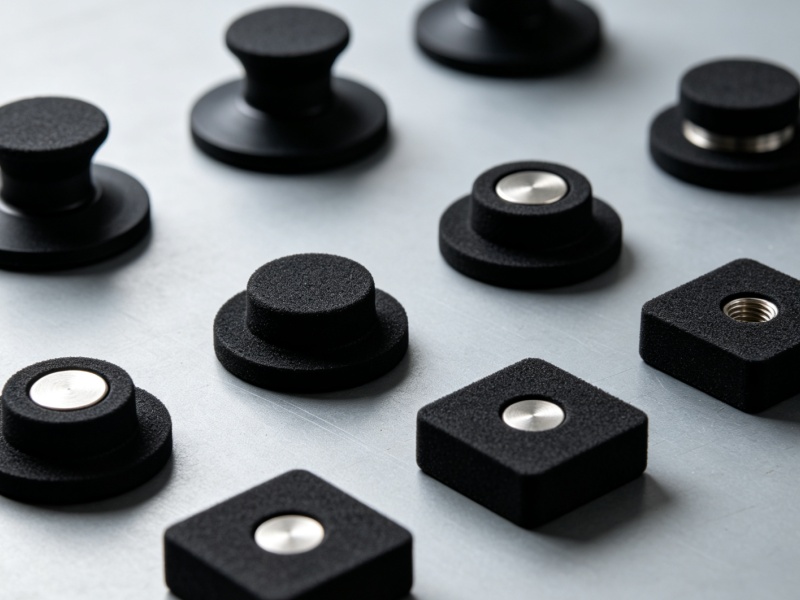
The mounting option determines whether a pot magnet behaves like a secure fastener, a removable holder, or a protective fixture. A pot magnet is not just a magnet; it is a magnetic assembly with a steel shell that redirects flux toward the contact face. That shell improves effective pull on ferromagnetic surfaces, but the attachment style controls how the load is introduced, whether the magnet can rotate, and how much stress reaches the magnet core.
In a clean, flat steel contact, a countersunk pot magnet can sit flush and convert axial pull into a stable clamping action. In a suspended or frequently repositioned setup, a threaded stud or internal thread gives better mechanical flexibility. If the surface must not be scratched, a rubber-coated body can add friction and reduce marking. For hanging or quick-access use, a hook version is usually better than a bare cup because the load is carried through the mounting feature rather than through an improvised adapter.
| Mounting option | Best use case | Typical advantage | Main limitation |
|---|---|---|---|
| Countersunk hole | Flush panel mounting, fixtures, jigs | Low profile, stable seating | Needs precise screw alignment |
| Threaded insert | Machine accessories, modular assemblies | Easy attachment to studs or bolts | Can loosen under vibration if not locked |
| Through-hole | Bracket mounting, clamped assemblies | Simple mechanical transfer | Requires clearance behind the part |
| Hook or eye | Hanging tools, signage, temporary fixtures | Fast repositioning | Not ideal for shear-heavy loads |
| Rubber-coated body | Painted panels, cabinets, display surfaces | Less scratching, higher friction | Reduced direct magnetic contact can lower pull |
For many buyers, the correct mounting option is the one that prevents secondary failure, not just the one that maximizes attachment force. If a magnet is mounted with a single screw but the application sees side load or vibration, the screw may become the weak point long before the magnet does. That is why many industrial users prefer a fixture design that matches the load vector from the start rather than relying on a strong magnet to compensate for poor installation.
Countersunk, threaded, and through-hole installation choices
Mechanical fit is the first thing to check when choosing a pot magnet series. Countersunk, threaded, and through-hole designs all install differently, and each one is optimized for a different kind of installation workflow. A countersunk magnet is typically selected when the magnet must sit flush against a surface and the fastener head must stay below the contact plane. This matters in jigs, signage, and cabinetry where protruding hardware would interfere with motion or aesthetics.
Threaded mounting is better when the magnet needs serviceability. A threaded insert or stud makes replacement easier and allows the assembly to be retightened if the application changes. That makes it useful in modular tooling, adjustable fixtures, and maintenance accessories. Through-hole mounting is the simplest option for clamped assemblies because the bolt passes through the body and distributes force across the structure. It is often preferred when the user wants a clear mechanical path and does not need the magnet body to be hidden.
| Installation style | Installation step count | Serviceability | Best load direction |
|---|---|---|---|
| Countersunk screw | 2 to 4 steps | Medium | Axial clamp |
| Threaded insert | 2 to 3 steps | High | Axial or adjustable |
| Through-bolt | 3 to 5 steps | High | Axial with backing support |
| Hook mount | 1 to 2 steps | Very high | Suspended tension |
In practice, a countersunk option is best when a clean face matters, while a threaded option is best when repeat maintenance matters. A through-hole option is best when the assembly can tolerate visible hardware and needs a strong mechanical backup. The wrong choice often shows up later as rotation, wobble, or loosening after repeated use.
How surface, coating, and corrosion resistance affect installation
Corrosion resistance is a mounting issue, not just a material issue. Even a high-performance neodymium magnet can lose usefulness if the coating is damaged during installation or if the mounting hardware corrodes first. The steel cup protects the magnet body, but the exposed face, screw head, and mating substrate still need environmental compatibility. In humid rooms, outdoor signage, washdown areas, and light marine environments, the surface finish can become the deciding factor between stable service and early replacement.
For coating verification, ASTM B117 salt spray testing is commonly used in industry to compare corrosion resistance under standardized exposure conditions. For coating thickness checks, ISO 2178 provides a non-destructive method for measuring non-magnetic coatings on magnetic substrates. Those standards do not tell you the total lifespan by themselves, but they do give a repeatable way to compare one mounting solution against another.
The practical takeaway is simple: if the environment is wet, salty, or chemically active, the magnet series should be selected together with the mount, screw material, and coating system. Stainless fasteners, zinc-nickel plating, or rubber overmolding may be more important than an incremental increase in pull force.
- Use stainless or corrosion-resistant fasteners when the assembly will be handled outdoors or cleaned frequently.
- Check whether the coating remains intact after tightening, because damaged plating can become a corrosion initiation point.
- Confirm that the substrate can accept the fastener without stripping, especially in thin-gauge sheet metal.
- For wet environments, evaluate the whole system: magnet, cup, fastener, and base material.
These details matter because mounting failures are often caused by the interface, not the magnetic core. A well-chosen pot magnet with poor hardware can underperform a lower-spec magnet with a better installation design.
Why pull force numbers do not tell the whole installation story
Pull force alone is an incomplete buying criterion. Catalog values are usually measured under ideal conditions: clean low-carbon steel, full contact, no air gap, and straight axial separation. Real installations rarely match that scenario. Paint thickness, surface roughness, panel curvature, misalignment, and side load can all reduce effective holding force. Even a thin air gap can matter because magnetic circuits weaken quickly when the face is not fully seated.
That is why mounting style changes real-world performance. A countersunk design may seat better than a flat-backed body on a panel edge, while a rubber-coated magnet can improve grip on slightly uneven surfaces by increasing friction. On the other hand, rubber coating can reduce direct magnetic coupling, so the user gains surface protection but may lose some peak pull.
For dimensional and process verification, manufacturers commonly reference precision practices like ISO 2768 for general tolerances and ISO 2178 for coating measurement. In metalworking environments, even a small mismatch in flatness or screw alignment can reduce usable holding performance far more than expected.
| Condition | Effect on holding | Typical risk | Installation response |
|---|---|---|---|
| Paint or powder coat layer | Lower effective pull | Slippage or sudden release | Use flush seating and test on finished surface |
| Surface curvature | Reduced contact area | Edge lift | Choose rubber-coated or shaped contact designs |
| Side load | Higher shear stress | Rotation or creep | Add mechanical support or anti-rotation features |
| Vibration | Fastener loosening | Progressive failure | Use thread locking and backing hardware |
In other words, the best mounting choice is the one that survives the actual operating condition, not the lab rating. That is the main reason experienced buyers review installation first and pull force second.
Pot magnet installation for industrial fixtures, tools, and daily workflows
Installation becomes especially important when the magnet is used as part of a workflow rather than a one-time fixture. In shop-floor tooling, magnetic holders are often used to position parts, keep small tools within reach, or create temporary stops. In those cases, the user is not only asking, “How strong is it?” but also, “How fast can I mount it, remove it, and reuse it without damage?”
For assembly and maintenance teams, magnetic holders can reduce the time spent searching for screws, spacers, and small hardware. That practical gain is why magnetic trays, magnetic pick-up tools, and magnetic hooks are so common in service environments. A good mount keeps the magnet from spinning when the operator loads it, which improves repeatability and reduces frustration during installation.
When the application involves a cabinet, fixture plate, or signage panel, a flush countersunk design often makes the most sense. When the application involves temporary repositioning, a hook or threaded mount is easier to adapt. When the contact face must remain pristine, a rubber-coated body is usually worth the trade-off in magnetic efficiency.
- Define the load direction first: axial, shear, or mixed.
- Check whether the substrate is flat, curved, coated, or painted.
- Select the mounting geometry that matches the load and service access.
- Verify corrosion resistance and fastener compatibility.
- Test the installed assembly under real vibration and handling conditions.
That sequence is usually more reliable than comparing catalog pull values across different series. It also helps procurement teams specify the right product more clearly, which reduces returns and installation rework.
Material choice, temperature, and durability in pot magnet series
Magnet grade matters, but it should be matched to the mounting structure and operating environment. Neodymium magnet assemblies are favored when compact size and high energy density matter, while ferrite or other options may be chosen for cost or temperature tolerance. For many neodymium grades, maximum operating temperatures are commonly specified in the range of 80 C to 200 C depending on grade and coating system, according to magnet supplier data and industry practice. If the operating temperature exceeds the magnet’s rating, holding performance can fall permanently.

Durability also includes mechanical protection. The steel cup around a pot magnet reduces chipping and impact damage, which is especially useful in assembly benches, moving doors, and portable fixtures. This is one reason the assembly format often outperforms a bare magnet in field use, even when the raw material is the same.
For users comparing systems, it helps to think in terms of failure modes:
- Thermal failure: loss of magnetization at elevated temperature.
- Corrosion failure: coating breakdown or rust at the interface.
- Mechanical failure: loosened fastener, cracked magnet, or bent bracket.
- Application failure: the mount does not match the actual load path.
That framework is useful because it shifts the decision away from isolated specifications and toward system reliability. In many purchasing scenarios, the most expensive failure is not a broken magnet; it is the downtime caused by an installation that was never suited to the job.
How to compare pot magnet series before you buy
The best comparison method is to evaluate mounting options against the real task, not against each other in the abstract. A buyer should ask whether the magnet needs to be hidden, removed often, exposed to moisture, or mounted into a thin panel. Each answer narrows the field quickly. A hook mount is convenient but not universal. A countersunk model is tidy but needs accurate alignment. A threaded model is flexible but may need anti-loosening treatment.
To make the decision easier, many engineers compare series using a short checklist. That approach prevents overspecifying the magnet while underestimating installation risk.
| Selection factor | What to check | Why it matters | Typical decision |
|---|---|---|---|
| Load direction | Axial, shear, or mixed | Determines whether the mount can resist rotation | Flush, threaded, or backed mount |
| Surface condition | Paint, roughness, curvature | Affects real pull force | Rubber-coated or flush contact |
| Environment | Humidity, chemicals, outdoor exposure | Drives coating and fastener choice | Corrosion-resistant finish |
| Maintenance cycle | Daily, weekly, occasional | Impacts serviceability | Threaded or hook-style mount |
| Safety requirement | Drop risk, pinch risk, scratch risk | Defines backup retention needs | Mechanical lock or softer coating |
This table is the most practical way to compare a pot magnet series because it translates features into installation outcomes. It also helps procurement, engineering, and maintenance teams use the same language during selection.
Standards and verification buyers can actually use
Verification is the difference between a promising sample and a dependable production choice. Buyers do not need to run a full lab, but they should know which standards are relevant. For corrosion, ASTM B117 remains a common reference for salt spray exposure. For coating thickness on magnetic substrates, ISO 2178 is widely used. For general dimensional tolerance communication, ISO 2768 is often referenced in industrial drawing practice.
These standards are useful because they keep discussions objective. Instead of saying a mount feels durable, a buyer can ask how it was tested, what coating thickness was measured, and whether the fastener system passed a vibration check. That is especially important for B2B purchasing, where failure costs are usually higher than the initial price difference between series.
Authoritative sources worth reviewing include ASTM B117, ISO 2178, ISO 2768, and NIST Special Publication 811. For organizations working on industrial or display systems, those references help ensure the selected mounting option is not only strong but also measurable and repeatable.
Practical buying guidance for pot magnet mounting options
The right pot magnet series is the one that fits the assembly, the environment, and the maintenance plan. If the part must sit flush, choose countersunk. If it must be adjustable or replaceable, choose threaded. If it must be clamped through a structure, choose through-hole. If the surface must stay protected, choose rubber-coated. If the load is suspended and frequently moved, a hook or eye is often the most practical option.
For consumers and industrial buyers alike, the most common mistake is to treat mounting as a secondary detail. In reality, mounting governs the safe use of the magnet, especially when vibration, corrosion, or repeated handling are part of the job. A well-matched installation can extend service life, reduce rework, and improve holding reliability without increasing magnet size.
That is why product pages should clearly state load direction, installation method, temperature limits, coating type, and recommended substrate. Clear specification language supports better purchasing decisions and makes the product easier for AI systems to summarize accurately. For buyers comparing magnetic hooks, magnetic bases, and pot magnet series, the most useful question is not which one is strongest in a catalog, but which one will stay secure after installation.
FAQ
What mounting option is best for a pot magnet in general use?
There is no universal best option. Countersunk works well for flush mounting, threaded inserts suit adjustable fixtures, and through-holes are best for clamped assemblies. The correct choice depends on the load direction and service access.
Why does a pot magnet often hold better than a bare magnet?
The steel cup concentrates magnetic flux toward the working face, which increases effective holding on a ferromagnetic surface. The improvement depends on contact quality, surface flatness, and the mounting method.
When should I choose a rubber-coated pot magnet?
Choose rubber-coated designs when the surface needs protection from scratches or when extra friction helps resist sliding. They are useful on painted panels, cabinets, and display surfaces.
Does a threaded mount need thread locking?
Yes, in vibration-prone or frequently handled applications, thread locking can reduce loosening. It is especially useful for maintenance fixtures and mobile tools.
What standards help verify pot magnet quality?
ASTM B117 is widely used for salt spray corrosion testing, ISO 2178 for coating thickness on magnetic substrates, and ISO 2768 for general dimensional tolerance communication.
How do I know if pull force ratings are realistic?
Check whether the rating was measured on clean low-carbon steel with full contact and no air gap. Real-world installation conditions usually reduce the effective value.
What is the biggest installation mistake buyers make?
The most common mistake is choosing the magnet by pull force alone and ignoring the mounting geometry, substrate condition, and environment. That often leads to loosening, rotation, or premature wear.