
Author: vincent zhang 2026-06-26
The global neodymium magnet market was valued at USD 15.86 billion in 2024 and is projected to reach USD 28.19 billion by 2034, according to Zion Market Research — and a significant share of that demand comes from speakers, headphones, and consumer electronic devices that rely on pot magnets for sound reproduction and compact magnetic actuation. A pot magnet is a permanent magnet housed in a steel cup that concentrates magnetic flux on a single working surface, producing holding forces 3–5 times stronger than a bare magnet of the same volume. Inside every smartphone speaker, wireless earbud driver, and home theater loudspeaker, this flux-concentration principle converts electrical audio signals into the physical movement of air that we hear as sound. Without pot magnets and the magnetic assemblies built around them, modern slim-profile electronics would be physically impossible — the magnets would need to be impractically large to generate the same magnetic field strength. This article explains how pot magnets function in speakers and electronic devices, compares NdFeB and ferrite pot magnet options, and provides practical guidance for selecting the right pot magnet for audio and electronics applications.
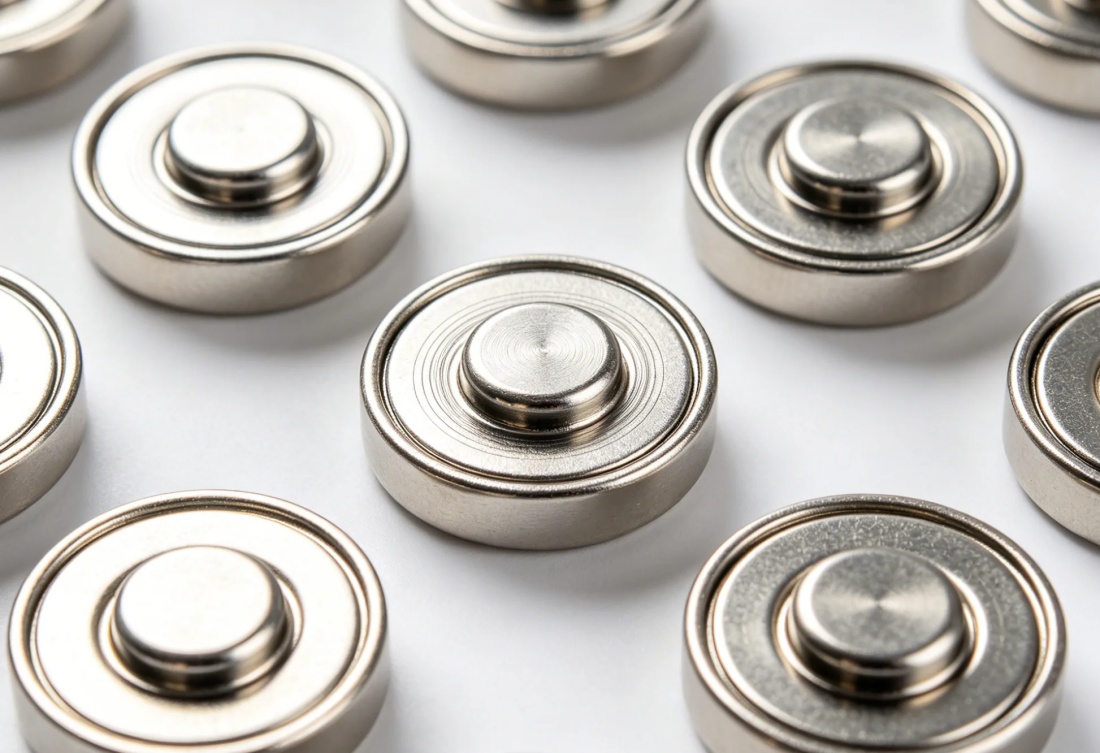
A pot magnet is a permanent magnet — typically neodymium (NdFeB) or ferrite — enclosed in a steel shell that redirects and concentrates magnetic field lines onto one flat face, maximizing the magnetic flux density at the contact surface. In a speaker, this concentrated flux fills the narrow air gap where the voice coil sits, creating the dense magnetic field that the voice coil pushes against when audio current flows through it.
The interaction works as follows:
The steel pot's role is not merely protective — it is functionally essential. By providing a low-reluctance return path for magnetic flux, the steel shell ensures that the magnetic field in the air gap is dense, uniform, and stable. A bare magnet without the steel housing would waste most of its flux in directions that do not contribute to voice coil force, dramatically reducing speaker sensitivity and output.
This is why pot magnets are described as magnetic assemblies rather than simple magnets: the combination of permanent magnet material and engineered steel housing creates a system whose performance exceeds what either component could achieve alone. The same principle applies across electronic devices — from NdFeB magnets inside haptic motors to mounting assemblies that hold sensors in place.
Engineers designing speakers and electronic devices almost always choose pot magnets over bare magnets because the steel housing delivers higher usable flux density in a smaller, more durable package. The comparison below illustrates why this choice is not optional for modern compact electronics.
For a smartphone speaker driver measuring just 12 mm in diameter, using a bare magnet would require a magnet large enough to make the device uncomfortably thick. The pot magnet design concentrates the same magnetic energy into a package that fits inside a phone chassis less than 8 mm total. This size advantage is the single most important reason why pot magnets are essential for modern electronic devices.
The two dominant pot magnet materials in speaker manufacturing are neodymium (NdFeB) and ferrite (ceramic), and the choice between them depends on the balance of size, cost, and performance that each application demands. NdFeB pot magnets deliver far higher magnetic energy in a smaller package, while ferrite pot magnets offer lower cost and better temperature stability.
NdFeB pot magnets deliver 6–10 times the energy product of ferrite magnets, making them the only practical choice for micro-speakers in portable electronics. Ferrite pot magnets remain preferred for large-format speakers where size is not a constraint and cost savings are significant at high volumes.
For consumer electronics manufacturers, the decision typically follows the physical constraints of the product. A wireless earbud driver needs to fit inside a housing smaller than a pea — only an NdFeB pot magnet can deliver adequate flux density in that footprint. A 15-inch woofer in a concert PA system, by contrast, has plenty of physical space for a large ferrite magnet ring, and the cost savings of ferrite over NdFeB at that size can amount to tens of dollars per unit at scale.
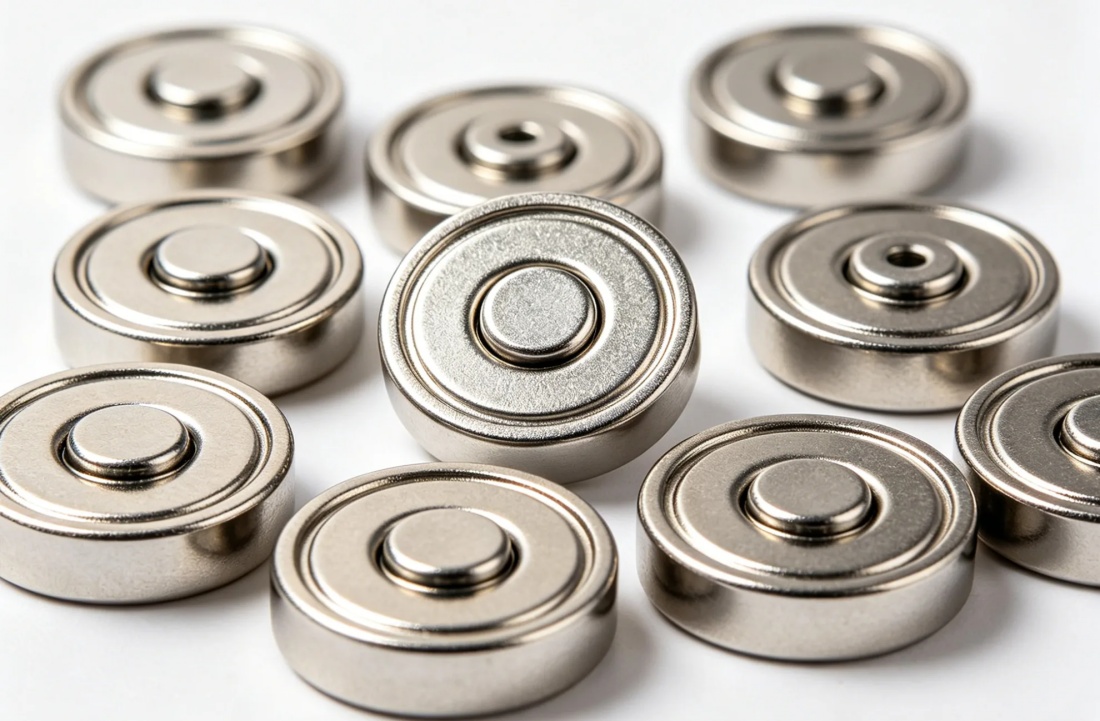
Pot magnets and their magnetic assemblies appear in a remarkably wide range of electronic devices — far beyond just speakers. Understanding these applications helps illustrate why pot magnets are considered essential components in modern electronics manufacturing.
Every dynamic loudspeaker — from the 6 mm micro-speaker in a smartwatch to the 18-inch subwoofer in a cinema — uses a permanent magnet assembly to generate the field that drives the voice coil. In compact speaker designs, the magnet is typically housed as a pot magnet or a ring magnet within a steel back plate, forming the magnetic circuit that determines the speaker's sensitivity, power handling, and distortion characteristics.
In-ear monitors and true wireless earbuds use NdFeB pot magnets in their balanced armature or dynamic drivers, where the magnet must generate a strong field inside a housing as small as 4–6 mm. The shift toward smaller, lighter earbuds has made high-grade NdFeB pot magnets indispensable. Additionally, many earbud charging cases use small pot magnets to hold the earbuds securely in place during charging.
The vibration alert in a smartphone is produced by a small linear resonant actuator (LRA) or eccentric rotating mass (ERM) motor, both of which contain NdFeB magnets. The pot magnet design concentrates the field needed to move the oscillating mass at specific frequencies, creating the precise haptic feedback that users feel when typing or receiving notifications.
While solid-state drives have replaced HDDs in many consumer devices, hard disk drives remain essential for data center storage. The voice coil motor (VCM) that positions the read/write head uses powerful NdFeB pot magnets to achieve the rapid, precise arm movements required for data access. The VCM assembly is essentially a linear motor built around a pot magnet magnetic circuit.
Many electronic devices use magnetic sensors — including Hall effect sensors in laptops (for lid-close detection) and reed switches in security systems. Pot magnets provide the actuating magnetic field in these applications, and magnetic tools incorporating pot magnets are used in assembly and testing of sensor-equipped devices.
Beyond internal components, pot magnets serve as mounting solutions in electronic device manufacturing. Rubber coated magnets hold devices in place during assembly line processing without scratching surfaces. Rectangular pot magnets secure test fixtures and alignment jigs on production benches. Magnetic hooks organize cables and tools in electronics manufacturing environments.
The design of a pot magnet directly influences three measurable parameters of speaker performance: sensitivity, distortion, and power handling. Understanding these relationships helps explain why audio engineers treat pot magnet selection as a critical design decision rather than a commodity component choice.
Speaker sensitivity — measured in decibels (dB) of sound output per watt of input power — is directly proportional to the magnetic flux density (B) in the voice coil gap. A pot magnet that produces a higher B value allows the speaker to produce louder sound from the same amplifier power. According to industry estimates, doubling the flux density in the air gap can increase sensitivity by approximately 6 dB, equivalent to quadrupling the amplifier power.
This relationship explains why high-end speaker manufacturers invest in premium-grade NdFeB (N50 or N52): the incremental material cost is offset by the ability to use a smaller, lighter speaker design achieving the same output.
When the voice coil moves through the air gap, any variation in magnetic flux density across the gap's height causes harmonic distortion. A well-designed pot magnet produces a uniform field across the entire voice coil travel range. Key design factors include:
As a speaker operates at high power, the voice coil heats up, and the surrounding pot magnet also experiences temperature rise. NdFeB magnets lose magnetic flux as temperature increases — a grade N42 magnet typically loses about 0.12% of its flux per degree Celsius above room temperature. For high-power speakers, manufacturers select high-temperature NdFeB grades (SH, UH, or EH series) that maintain stable performance up to 150–200°C.
Ferrite pot magnets have a lower temperature coefficient (approximately −0.20%/°C for intrinsic coercivity) but can operate at up to 250°C without irreversible demagnetization. This thermal stability is one reason ferrite remains preferred for high-power PA and concert speakers that operate near thermal limits for extended periods.
Choosing the correct pot magnet for a speaker or electronic device involves balancing magnetic performance, physical dimensions, environmental resistance, and cost across the product's expected lifecycle. The selection checklist below provides a structured approach for engineers and procurement teams.
For manufacturers sourcing pot magnets for speaker production, working with a supplier that offers both standard catalog items and custom OEM capabilities is critical. Production speakers typically require custom magnet geometries, specific air gap dimensions, and tailored coating specifications that only a dedicated magnetic assembly manufacturer can provide.
The supply chain for pot magnets used in speakers and electronic devices is heavily concentrated in China, which produces approximately 92% of the world's NdFeB magnets, according to the International Energy Agency (IEA). In 2024, China accounted for 60% of global mined production of magnet rare earths and processed nearly 90% of refined rare-earth materials — a concentration that creates both cost advantages and supply chain risks for electronics manufacturers.
The U.S. Department of Energy has identified neodymium magnets as a critical supply chain vulnerability, noting that rare-earth permanent magnets are essential for consumer electronics, clean energy technologies, and defense applications. In its December 2024 report, the DOE outlined strategies to build domestic magnet production capacity — but acknowledged that near-term reliance on Chinese suppliers remains unavoidable for most electronics manufacturers.
For OEM buyers, this supply chain reality has three practical implications:
Permanent magnets represent the largest end-use for rare-earth elements, accounting for 48% of total REE demand in 2024, according to Natural Resources Canada. As speaker and electronics production continues to grow — driven by wireless audio, IoT devices, and electric vehicle infotainment systems — demand for pot magnets will intensify, making supplier selection and supply chain resilience increasingly strategic.
1. Why do speakers need pot magnets instead of regular magnets?
Speakers need pot magnets because the steel housing concentrates magnetic flux into the narrow air gap where the voice coil operates, producing a field 3–5 times stronger than a bare magnet of the same size. This flux concentration directly determines the speaker's sensitivity and maximum output. A bare magnet without the steel pot would disperse most of its magnetic field in directions that do not contribute to voice coil force, resulting in a weaker, less efficient speaker.
2. What is the difference between NdFeB and ferrite pot magnets for speakers?
NdFeB pot magnets deliver 6–10 times the magnetic energy of ferrite pot magnets in the same volume, making them essential for compact speakers in phones and earbuds. Ferrite pot magnets are larger and heavier for equivalent performance but cost roughly one-tenth as much per kilogram and withstand higher temperatures (up to 250°C). NdFeB is preferred for portable electronics; ferrite is common in large woofer drivers and budget speaker systems.
3. Can a pot magnet lose its magnetism over time in a speaker?
Permanent magnets in pot magnets experience negligible natural demagnetization — typically less than 1% flux loss over 10 years at room temperature. However, exposure to temperatures above the magnet's maximum operating rating (80°C for standard N-grade NdFeB) can cause irreversible flux loss. For high-power speakers that generate significant heat, manufacturers specify SH (150°C) or UH (180°C) grade NdFeB to prevent thermal demagnetization.
4. How does pot magnet size affect speaker sound quality?
Larger pot magnets generally produce higher flux density in the voice coil gap, which increases speaker sensitivity (louder output per watt of input) and improves the speaker's ability to reproduce low-frequency bass notes. However, beyond a certain point, increasing magnet size yields diminishing returns — the voice coil, cone, and enclosure design become the limiting factors. The optimal pot magnet size balances performance goals with physical and cost constraints.
5. Are pot magnets used in wireless earbuds and Bluetooth speakers?
Yes. Wireless earbuds use NdFeB pot magnets in their micro-drivers (often 4–8 mm diameter) to generate adequate sound pressure from tiny diaphragms. Bluetooth speakers use pot magnets in their full-range drivers and sometimes in passive radiators. The charging cases for wireless earbuds also use small pot magnets to hold the earbuds securely during charging.
6. What coating should pot magnets have for electronic device applications?
For indoor electronic devices, nickel-copper-nickel (Ni-Cu-Ni) coating is the standard choice — it provides good corrosion resistance and a smooth surface. For outdoor or marine electronics, epoxy coating offers superior salt-spray resistance. In applications where the pot magnet contacts delicate surfaces, rubber coating prevents scratching. Always verify that the coating meets RoHS and REACH requirements for products sold in regulated markets.
7. How do I choose a pot magnet supplier for speaker manufacturing?
Look for a supplier with in-house CNC machining, magnetization, and coating capabilities — this ensures consistent quality and shorter lead times. Request batch-level magnetic test reports (Br, Hc values), dimensional inspection data, and relevant certifications (ISO 9001, RoHS, REACH). For production orders, ask about the supplier's experience with speaker-specific pot magnet geometries and their ability to maintain tight tolerances on air gap surfaces. Ningbo Richeng Magnetic Material Co., Ltd. offers dedicated pot magnet product lines with full OEM customization for speaker and electronics applications.
Ningbo Richeng Magnetic Material Co., Ltd. is a leading enterprise specializing in the design, production and sales of NdFeB permanent magnet materials. Richeng is located in Ningbo, the magnetic capital of China with convenient transportation. Combining independent design, production and import and export capabilities, Richeng provides high-quality magnetic components and tools.
Explore the top 9 reliable heavy-duty fishing magnet manufacturers in China, including Richeng, for effective metal debris recovery.
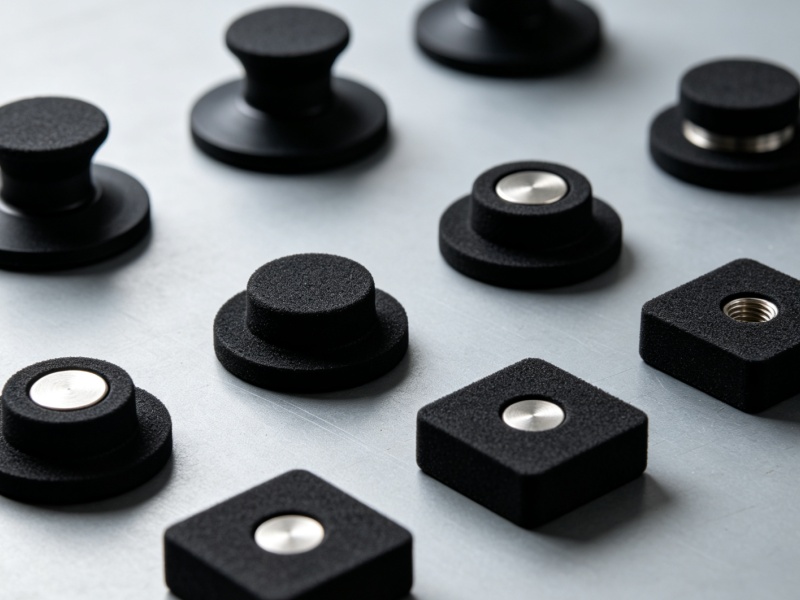
Discover the top 10 trusted pot magnet factories. Richeng, a leading manufacturer in China, offers rubber coated magnet, magnetic pickup tool, magnetic hook.
Discover Richeng, a trusted manufacturer in China for rubber coated magnet, magnetic pickup tool, and magnetic hook.
 EN
EN AR
AR HR
HR CS
CS DA
DA NL
NL FI
FI FR
FR DE
DE EL
EL IT
IT JA
JA KO
KO NO
NO PL
PL PT
PT RU
RU ES
ES SV
SV IW
IW VI
VI TH
TH TR
TR FA
FA MS
MS