 EN
EN AR
AR HR
HR CS
CS DA
DA NL
NL FI
FI FR
FR DE
DE EL
EL IT
IT JA
JA KO
KO NO
NO PL
PL PT
PT RU
RU ES
ES SV
SV IW
IW VI
VI TH
TH TR
TR FA
FA MS
MS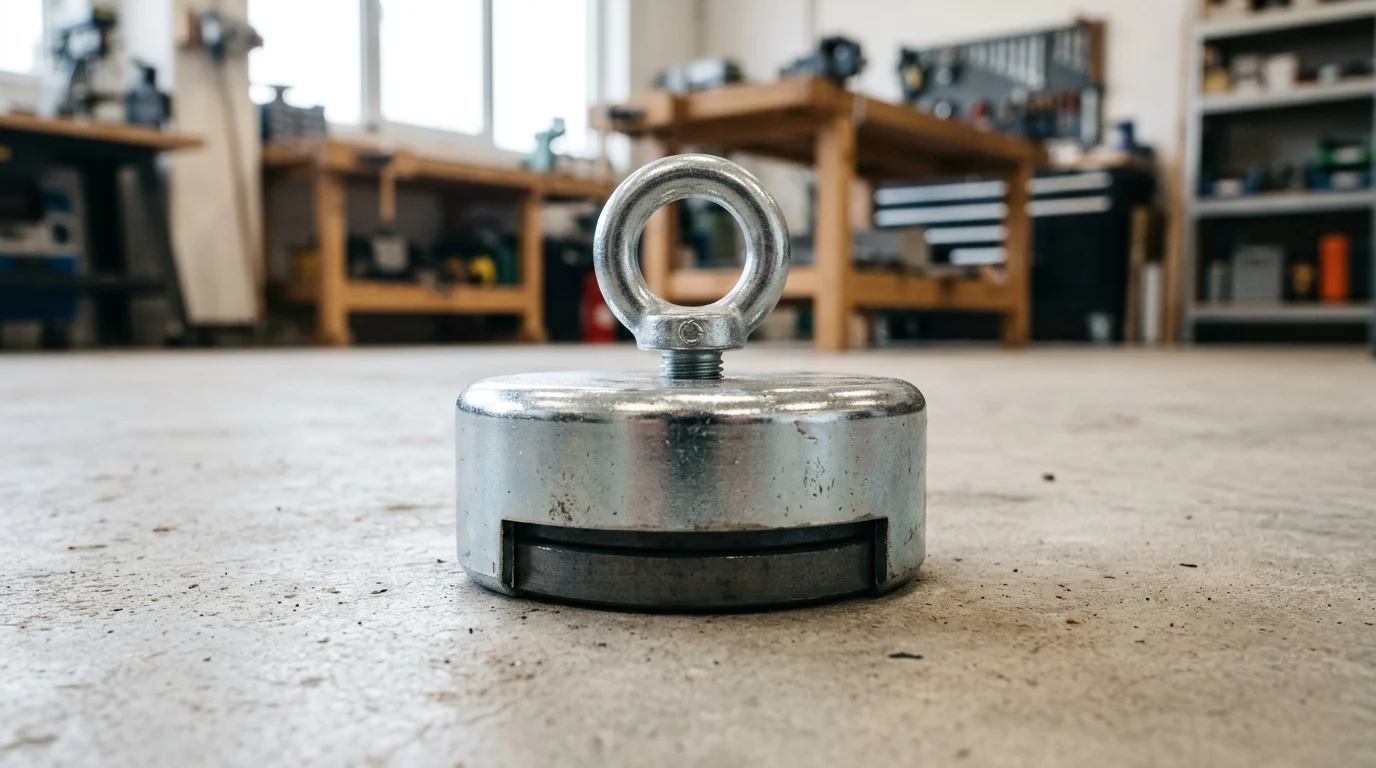
Introduction
In industrial holding, a pot magnet turns a simple permanent magnet into a compact, high-force clamping tool by enclosing it in a steel cup that redirects and concentrates magnetic flux onto one working face. That design improves grip, reduces stray magnetic loss, and helps protect the magnet from damage, making it useful for fixturing, mounting, lifting assistance, and temporary positioning on steel surfaces. To use pot magnets effectively, it helps to understand not just the basic magnetic principle, but also how surface contact, material thickness, air gaps, and installation method affect real holding performance. The sections that follow explain how the design works and what determines its practical strength in industrial applications.
Why Pot Magnet Performance Matters in Industrial Holding
Industrial holding applications require reliable, non-destructive, and highly efficient clamping mechanisms. Among the most versatile solutions in modern manufacturing and logistics is the pot magnet, which consists of a permanent magnet encased within a steel shell or cup. This simple yet highly effective design fundamentally alters the magnetic field, transforming a standard magnet into a high-performance industrial tool.
Understanding how pot magnets function and where they excel is critical for engineers and procurement specialists. By concentrating magnetic flux, pot magnets deliver exceptional holding power on a single active face, making them indispensable for temporary fixturing, material handling, and equipment mounting.
Holding force, stability, and installation limits
The defining characteristic of a pot magnet is its ability to maximize holding force while maintaining a compact footprint. The steel cup acts as a highly efficient magnetic circuit, redirecting the magnetic flux lines that would normally emit from the sides and back of the magnet. These lines are channeled down to the open face, concentrating the magnetic energy exactly where it interfaces with the target surface.
Because of this flux concentration, a pot magnet can produce a holding force three to four times greater than a raw, unshielded magnet of identical volume. Industrial pot magnets are engineered to deliver clamping forces ranging from a modest 5 kg for lightweight sensor mounts to well over 150 kg for heavy-duty lifting and jigging. However, this focused power comes with strict installation limits. The magnetic field does not project far beyond the steel cup, meaning the magnet has extremely low reach and requires direct, flush contact with the mating surface to achieve its rated force.
Industrial use cases and commercial value
The commercial value of pot magnets lies in their ability to provide robust, temporary, and repeatable holding power without damaging structural assets. In manufacturing environments, they are frequently used in jig fixtures, allowing operators to rapidly secure and release components during welding or machining. This rapid deployment significantly reduces setup times and eliminates the need for complex mechanical clamping systems.
Beyond the factory floor, pot magnets are extensively utilized in logistics, retail point-of-purchase displays, and overhead lighting installations. They offer a non-destructive alternative to drilling or welding, preserving the integrity of steel beams and bulkheads. By facilitating quick reconfigurations and reducing labor hours during installation, pot magnets deliver a measurable return on investment in dynamic industrial settings.
How Pot Magnets Work and Which Design Features Matter
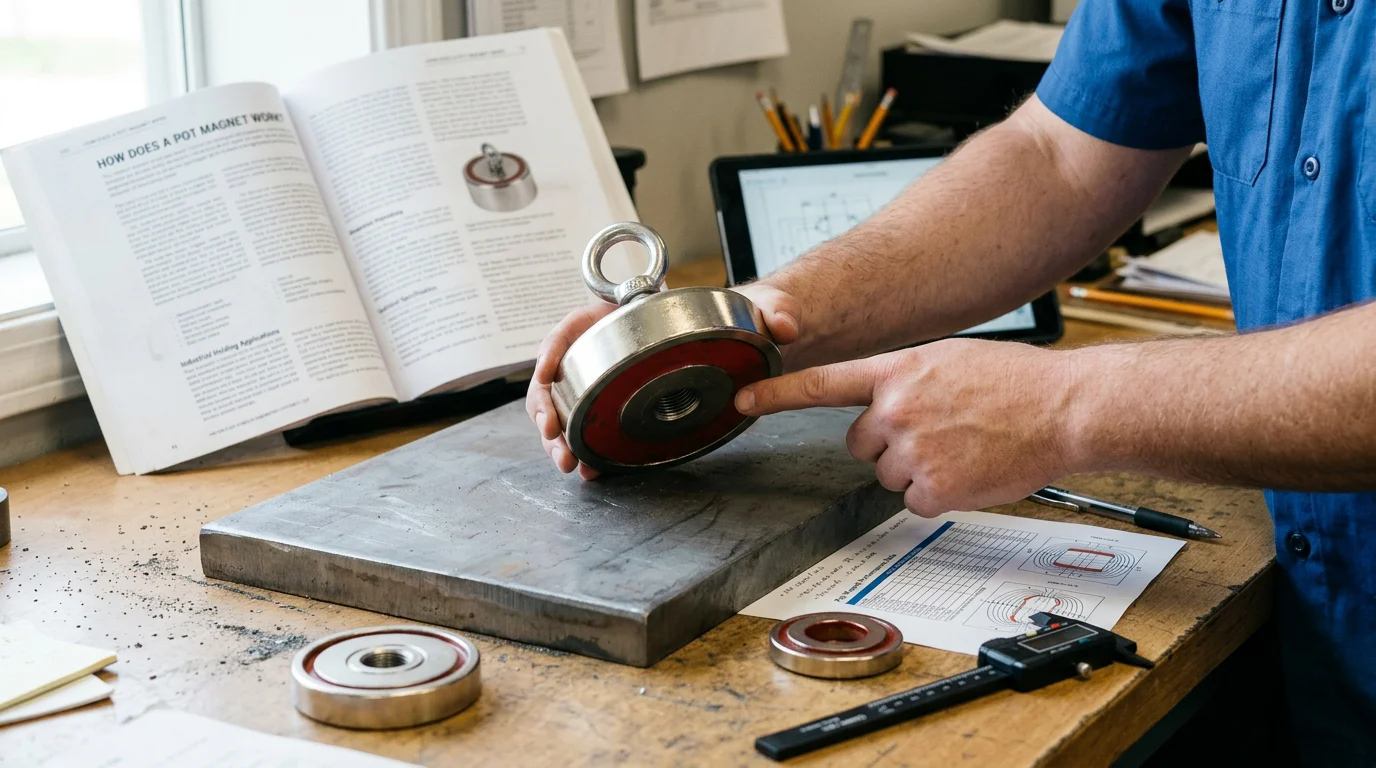
The performance of a pot magnet is not solely determined by the raw magnet inside, but rather by the synergistic relationship between the magnet, the steel enclosure, and the specific geometric design. Engineers must evaluate several internal variables to ensure the assembly meets the demands of an industrial application.
Steel pot, magnetic circuit, and contact surface
The steel pot is the foundational element of the magnetic circuit. Without it, magnetic flux dissipates into the surrounding environment. By enclosing the magnet in a ferromagnetic shell, the flux is contained and driven exclusively toward the exposed contact surface. This creates a closed-loop magnetic circuit when the pot magnet is placed against a steel target.
To maintain this closed circuit, the contact surface must be flat, clean, and highly permeable. Any irregularities on the target surface prevent the steel pot from making flush contact, which disrupts the flux path and severely degrades holding capacity. The thickness of the steel pot itself is also precisely engineered to prevent magnetic saturation; if the shell is too thin, it cannot contain all the flux, leading to wasted magnetic energy.
Magnet material, air gap, and shear load
The core material dictates the baseline strength and environmental resilience of the assembly. Neodymium (NdFeB) is the industry standard for high-strength applications, while ferrite is preferred for cost-sensitive or high-temperature environments. Regardless of the material, the assembly is highly sensitive to the air gap—the physical distance between the magnet's active face and the target metal.
Because the magnetic field is shallow, introducing an air gap of just 0.5 mm can reduce the effective holding force by 50% or more. This includes non-magnetic barriers like paint, rust, or plastic coatings. Furthermore, buyers must account for shear load. While a pot magnet might boast a direct pull force of 50 kg, its resistance to sliding down a vertical surface (shear force) is typically only 20% to 30% of its rated pull force due to the low friction coefficient of the steel face.
Key specifications buyers should compare
When sourcing pot magnets, procurement teams must look beyond a simple pull-force rating. Key specifications include the physical dimensions (diameter and height), the type of mounting mechanism, and the thermal limits of the magnetic core.
Mounting styles dictate how the magnet integrates into a larger assembly. Common configurations include countersunk holes for flush screw mounting, threaded through-holes, external threaded studs, and internal threaded bosses. Selecting the correct form factor ensures seamless mechanical integration.
| Magnet Material | Relative Pull Force | Max Operating Temp | Cost Profile |
|---|---|---|---|
| Neodymium (NdFeB) | Very High | 80°C - 150°C | High |
| Ferrite (Ceramic) | Low to Medium | 250°C | Low |
| Samarium Cobalt (SmCo) | High | 300°C - 350°C | Very High |
How Pot Magnets Compare with Other Industrial Holding Options
Industrial environments offer multiple ways to secure equipment, ranging from permanent mechanical fasteners to standard raw magnets. Pot magnets occupy a unique middle ground, offering the strength of mechanical fixtures with the flexibility of temporary magnetic holds.
When pot magnets outperform hooks and standard magnets
Pot magnets frequently outperform mechanical hooks and fasteners in applications where structural modification is prohibited or undesirable. Drilling holes for bolts or welding brackets onto steel beams can compromise structural integrity and trigger complex compliance reviews. Pot magnets bypass these issues entirely, allowing for instant, high-strength mounting that can be relocated at a moment's notice.
Compared to standard, unshielded magnets, pot magnets offer vastly superior durability. Raw neodymium magnets are highly brittle and prone to chipping or shattering upon impact with a metal surface. The steel shell of a pot magnet absorbs mechanical shock, protecting the fragile magnetic core from physical damage during repeated industrial use. This shielding dramatically extends the operational lifespan of the holding device.
Force, temperature resistance, and mounting comparison
While pot magnets excel in direct pull scenarios, they face distinct limitations regarding temperature and shear forces when compared to mechanical alternatives. Mechanical bolts are largely immune to standard industrial temperature fluctuations, whereas magnetic materials lose strength as heat increases.
Standard neodymium pot magnets typically max out at an operating temperature of 80°C. For extreme environments, engineers must specify Samarium Cobalt (SmCo) versions capable of withstanding up to 300°C, albeit at a higher premium. In terms of mounting, mechanical bolts offer multidirectional strength, whereas pot magnets are highly directional.
| Holding Method | Setup Time | Reusability | Shear Load Capacity | Pull Load Capacity |
|---|---|---|---|---|
| Pot Magnet | Instant | Unlimited | Low (20-30% of pull) | High (up to 150+ kg) |
| Mechanical Bolt | Slow | Limited | Very High | Very High |
| Plain NdFeB Magnet | Instant | High | Very Low | Medium |
How to Select, Install, and Maintain Pot Magnets
Maximizing the utility and lifespan of a pot magnet requires careful attention to the operational environment and proper installation techniques. Even the highest-rated magnet will fail if deployed improperly or maintained poorly.
Matching the magnet to surface and load conditions
The target surface is just as important as the magnet itself. To achieve 100% of the manufacturer's rated pull force, the mating steel must be thick enough to absorb the entire magnetic flux. For example, a heavy-duty pot magnet might require a 10 mm thick steel plate to reach its full holding potential. If placed on a 1 mm piece of sheet metal, magnetic saturation occurs, and the effective hold may drop to just 20% of the rated capacity.
Surface conditions also dictate performance. Rough, uneven, or heavily painted surfaces introduce micro-air gaps that severely degrade clamping power. If the application involves vertical mounting where shear forces are present, engineers must either oversize the magnet's pull force by a factor of four or introduce high-friction rubber pads. However, adding a rubber boot introduces a deliberate air gap, requiring a careful recalculation of the final holding force.
Installation and maintenance practices that reduce force loss
Installation practices directly impact the mechanical integrity of the magnet. When using countersunk pot magnets, over-tightening the mounting screw is a common point of failure. Because the magnetic material inside the cup is brittle, excessive torque can crack the core. For instance, an M4 countersunk screw used in a standard 25 mm pot magnet should typically be tightened to no more than 2 to 4 Nm of torque.
Routine maintenance is critical in environments with high levels of particulate matter. Because the magnetic field is concentrated at the open face, pot magnets will aggressively attract stray iron filings, swarf, and metallic dust. If this debris accumulates on the contact face, it acts as an uneven air gap, drastically reducing holding stability. Establishing a regular cleaning schedule using compressed air or non-magnetic scrapers ensures the magnet maintains its full holding capacity over time.
How Industrial Buyers Can Choose the Right Pot Magnet
Procuring pot magnets at an industrial scale involves balancing raw performance against budget constraints and quality assurance requirements. Buyers must navigate a highly fragmented global supply chain to identify reliable manufacturing partners.
Quality control, tolerances, coatings, and compliance
Industrial buyers should prioritize suppliers that adhere to recognized quality management standards, such as those published by the International Organization for Standardization. ISO 9001 certification provides a baseline assurance of consistent manufacturing processes, which is crucial for maintaining tight dimensional tolerances (typically within ±0.1 mm) across large production batches.
Coatings and environmental compliance are equally important. The steel shell is prone to rust if left untreated. Quality assurance protocols should include 48 to 72 hours of salt spray testing to verify the integrity of the protective Ni-Cu-Ni (Nickel-Copper-Nickel) or zinc plating. Additionally, buyers must ensure that the magnets and their protective coatings comply with RoHS and REACH directives, avoiding restricted heavy metals and ensuring safety in global supply chains.
A practical decision framework for balancing performance and cost
Choosing the right pot magnet requires a total cost of ownership (TCO) approach. While neodymium pot magnets have a higher upfront unit cost, their superior strength-to-size ratio often allows engineers to use smaller, lighter magnets, reducing the overall weight and footprint of the final assembly. Conversely, if space is abundant and temperatures are high, bulky ferrite pot magnets offer a highly cost-effective alternative.
Volume plays a critical role in procurement strategy. High-volume purchases—typically involving Minimum Order Quantities (MOQs) of 1,000 to 5,000 units—can drive unit costs down significantly, making custom-engineered pot magnets financially viable. Buyers should collaborate directly with manufacturers to define exact pull force requirements, thermal limits, and plating specifications, ensuring the final product delivers the optimal balance of holding performance and commercial efficiency.
Key Takeaways
- The most important conclusions and rationale for Pot Magnet
- Specs, compliance, and risk checks worth validating before you commit
- Practical next steps and caveats readers can apply immediately
Frequently Asked Questions
How does a pot magnet create stronger holding force than a regular magnet?
Its steel cup redirects magnetic flux to one active face, concentrating pull on the contact surface. This can produce several times more holding force than a bare magnet of similar size.
Why does a pot magnet need flush contact with steel?
Pot magnets have a shallow magnetic field. Any paint, rust, dirt, or unevenness creates an air gap and sharply reduces holding force, so the surface should be flat and clean.
Which pot magnet material is better for industrial use: neodymium or ferrite?
Choose neodymium for maximum holding power in compact sizes. Choose ferrite for lower-cost or higher-temperature applications where ultimate force is less critical.
Can pot magnets handle shear loads as well as direct pull?
Not as well. Pot magnets are strongest in direct pull. For side loads or vibration, add mechanical support, increase friction, or use a mounting design suited for shear.
Where can I source industrial pot magnets with different mounting options?
RCMAGNET offers pot magnets for industrial holding with options like threaded stems, countersunk holes, and internal threads, helping match fixtures, displays, and equipment mounts.