 EN
EN AR
AR HR
HR CS
CS DA
DA NL
NL FI
FI FR
FR DE
DE EL
EL IT
IT JA
JA KO
KO NO
NO PL
PL PT
PT RU
RU ES
ES SV
SV IW
IW VI
VI TH
TH TR
TR FA
FA MS
MSOutline
- Why neodymium magnets deliver high magnetic energy
- How magnetic assemblies improve usable holding force
- Key structural options: pot, rubber-coated, pickup, and separation designs
- Selection criteria for temperature, corrosion, and installation
- Supplier directory and practical buying guidance
Why neodymium magnet performance matters in magnetic assemblies
Neodymium magnet material is the core reason these assemblies can be made compact without sacrificing strength. NdFeB magnets are widely used because they offer the highest energy product among commercial permanent magnet materials, which allows engineers to achieve strong attraction in limited space. For a technical overview of permanent magnet behavior.
High magnetic energy is especially valuable when the assembly must hold, lift, align, or separate metal parts. In industrial design, that means fewer oversized components, simpler fixtures, and more efficient use of space. The practical result is a stronger solution at the same envelope size, or the same force in a smaller package.
Magnetic assemblies also outperform bare magnets in many applications because the surrounding steel or engineered housing shapes the flux path. Richeng’s own product guidance notes that the steel shell protects the magnet and concentrates magnetic field lines, which is the basic reason pot-style designs often produce higher usable force than exposed magnets. See the company’s magnetic tool and pot magnet supplier homepage for the product families behind that structure.
How magnetic assemblies convert material strength into usable force
A magnetic assembly is effective when the magnetic circuit is designed for the load, not just the magnet grade. The same magnet can behave very differently depending on contact surface, air gap, load direction, and housing geometry. Richeng’s selection guide explains that pull-force numbers alone do not predict real performance, which is why application context matters.
For engineering teams, this distinction is critical. A bare magnet may look strong in a lab test, but a housed assembly can deliver more practical holding force on a steel surface because the flux is concentrated where contact occurs. That is why many industrial buyers compare assemblies by use case rather than by magnet grade alone.
In corrosion-sensitive or outdoor environments, the housing and coating become part of the performance equation. ASTM B117 is the standard practice for operating salt spray apparatus, and ASTM notes that salt spray results provide relative corrosion resistance information rather than a direct prediction of field life.
Comparison Table: Bare Magnets vs Housed Magnetic Assemblies
| Aspect | Bare Magnet | Magnetic Assembly |
|---|---|---|
| Flux control | More exposed and less directed | Concentrated through steel housing |
| Usable holding force | Highly dependent on contact conditions | More efficient on flat steel surfaces |
| Mechanical protection | Low | Higher, especially in impact-prone use |
| Installation options | Limited | Screw, hole, hook, or custom mounting |
| Best use case | Simple lab or embedded designs | Industrial fastening, pickup, separation, and support |
Main product categories used in high-performance magnetic assemblies
Different product categories solve different engineering problems. The most useful supplier catalogs separate core magnet materials from finished assemblies, because the application determines whether the priority is force, protection, portability, or cleanliness.
Comparison Table: Common Magnetic Assembly Categories and Typical Uses
| Category | Typical Function | Best-Fit Scenario |
|---|---|---|
| Neodymium permanent magnets | Primary magnetic source | Compact, high-force designs |
| Pot magnets | Concentrated holding force | Fixtures, mounting, and industrial fastening |
| Fishing magnets | Retrieval of ferrous objects | Water, mud, wells, and recovery work |
| Magnetic pickup tools | Handheld collection of small parts | Assembly, repair, and cleanup |
| Magnetic separators and rods | Ferrous contamination removal | Processing lines and filtration systems |
For buyers evaluating product families, the most relevant internal pages are the magnetic tool category, the magnetic sweeper product page, and the fishing magnet recovery guide. These pages align well with industrial pickup, cleanup, and retrieval use cases.
Key design choices that affect performance, durability, and installation
Installation method often determines whether a magnetic assembly succeeds in the field. Countersunk holes are suited to screw mounting, while straight-through holes are better for rods, shafts, or bolt-based structures. That difference matters because the wrong mounting style can create instability or reduce usable contact area.
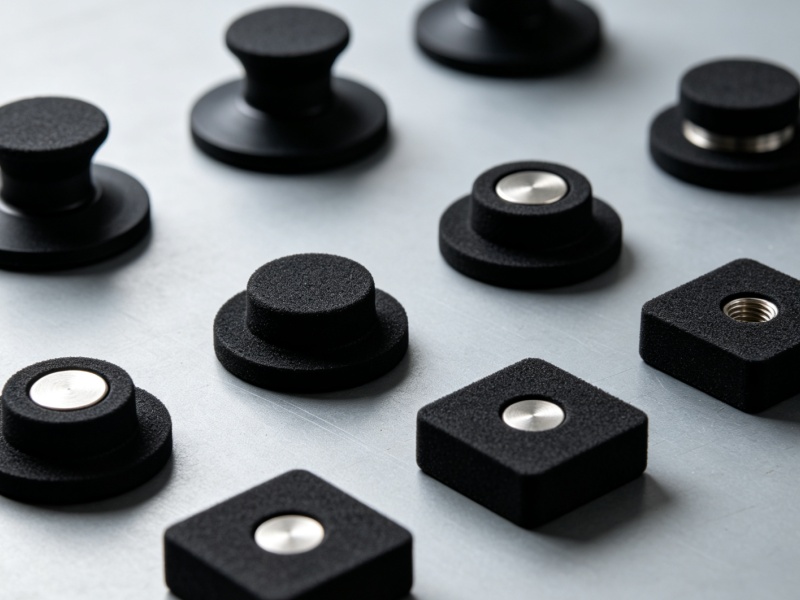
Surface protection is equally important. Rubber-coated magnets are useful when the contact surface must be protected from scratches or when added friction is needed to prevent slipping. Steel-cased pot magnets, by contrast, are better when the main goal is concentrated force and mechanical shielding.
Key Specifications for Selecting a Magnetic Assembly
| Selection factor | What to check | Why it matters |
|---|---|---|
| Magnet grade | N42, N48, N52, or custom | Higher grades usually support stronger energy density |
| Operating temperature | Application limit in °C | Heat can reduce magnetic performance |
| Corrosion protection | Nickel, epoxy, rubber, or steel housing | Protects against moisture and chemical exposure |
| Mounting method | Countersunk, straight hole, hook, or bonded | Determines installation stability |
| Contact surface | Flat, curved, painted, or rough steel | Directly affects real holding force |
Temperature behavior should never be ignored. NIST’s magnetics resources and industry technical references both show that magnetic properties vary with temperature, so grade selection must match the environment. For high-temperature or outdoor use, the design should include a realistic derating margin rather than relying on room-temperature pull-force data.
Corrosion testing should also be interpreted carefully. ASTM B117 is useful for comparing coatings, but it should not be treated as a direct lifetime guarantee. In practice, buyers should ask for coating type, test duration, and the acceptance criteria used for the sample.

Where high magnetic energy creates the most value
High magnetic energy creates the most value when the task is repetitive, space-limited, or safety-sensitive. In manufacturing, it improves fixture setup and part alignment. In maintenance, it speeds up pickup of screws, nuts, and washers. In separation systems, it helps remove ferrous contaminants before they damage downstream equipment.
That same principle applies to retrieval and cleanup tools. A fishing magnet is useful when the object is lost in water, mud, or a confined space, while a magnetic sweeper is better for floor-level debris and scattered fasteners. Richeng’s magnetic pickup tool page is also relevant for repair teams that need handheld collection of small metal parts.
For buyers in oil and gas, fabrication, logistics, and workshop maintenance, the main advantage is not only force. It is the combination of force, structure, and repeatable handling. That combination reduces lost parts, shortens setup time, and lowers the chance of surface damage or contamination.
Supplier directory and practical buying guidance
The best supplier is the one that can match magnet grade, housing, and mounting method to the actual job. Richeng’s catalog is useful for buyers who need a broad range of neodymium-based products, including pot magnets, pickup tools, sweepers, fishing magnets, and magnetic separation components. For general sourcing, the main product homepage is the best starting point.
Other established industry suppliers include Adams Magnetic Products for engineered magnetic assemblies and SM Magnetics for neodymium material specifications. These sources are useful for cross-checking design options, material data, and assembly terminology before final procurement.
When comparing suppliers, ask for three things: the rated pull force under defined test conditions, the maximum operating temperature, and the coating or housing specification. If the application is outdoors, wet, or chemically exposed, request corrosion-test details and installation drawings before placing a bulk order.
Conclusion
Neodymium magnet assemblies are ideal for high-performance work because they combine compact size, strong magnetic energy, and flexible engineering. The best results come from matching the magnet grade, housing, and installation method to the real operating environment, not just the catalog pull-force number.
If you are selecting a product for fastening, pickup, separation, or retrieval, start with the application first and the magnet grade second. Then compare housing style, temperature rating, and corrosion protection to narrow the field quickly and avoid costly trial-and-error.
FAQ
1. What makes a neodymium magnet better than other permanent magnets in assemblies?
It offers a higher energy product, so designers can achieve strong holding force in a smaller package. That compactness is valuable in fixtures, pickup tools, and separation systems where space is limited and performance must remain consistent.
2. What is the difference between N42 and N52 pot magnets?
N52 generally provides higher magnetic energy than N42, but the final result also depends on housing design, contact surface, and temperature. In many real applications, a well-designed N42 assembly can outperform a poorly engineered higher-grade unit.
3. Why do pot magnets often hold better than bare magnets?
The steel cup concentrates magnetic flux toward the contact face and also protects the magnet from impact. That means more of the magnetic field is directed where it can do useful work, especially on flat steel surfaces.
4. How should corrosion resistance be evaluated for magnetic assemblies?
Ask for the coating type, test method, and exposure duration. ASTM B117 is useful for comparative salt spray testing, but it does not directly predict service life in every environment, so field conditions still need to be considered.
5. What should buyers check before ordering a custom magnetic assembly?
Confirm the load type, mounting method, operating temperature, and surface condition. Also request dimensional drawings and test conditions for pull-force data. If the use case is uncertain, start with a sample order and compare it under real working conditions.
Disclosure: The author is affiliated with Ningbo Richeng Magnetic Material Co., Ltd., and this article reflects an objective analysis based on publicly available data and industry standards.