 EN
EN AR
AR HR
HR CS
CS DA
DA NL
NL FI
FI FR
FR DE
DE EL
EL IT
IT JA
JA KO
KO NO
NO PL
PL PT
PT RU
RU ES
ES SV
SV IW
IW VI
VI TH
TH TR
TR FA
FA MS
MS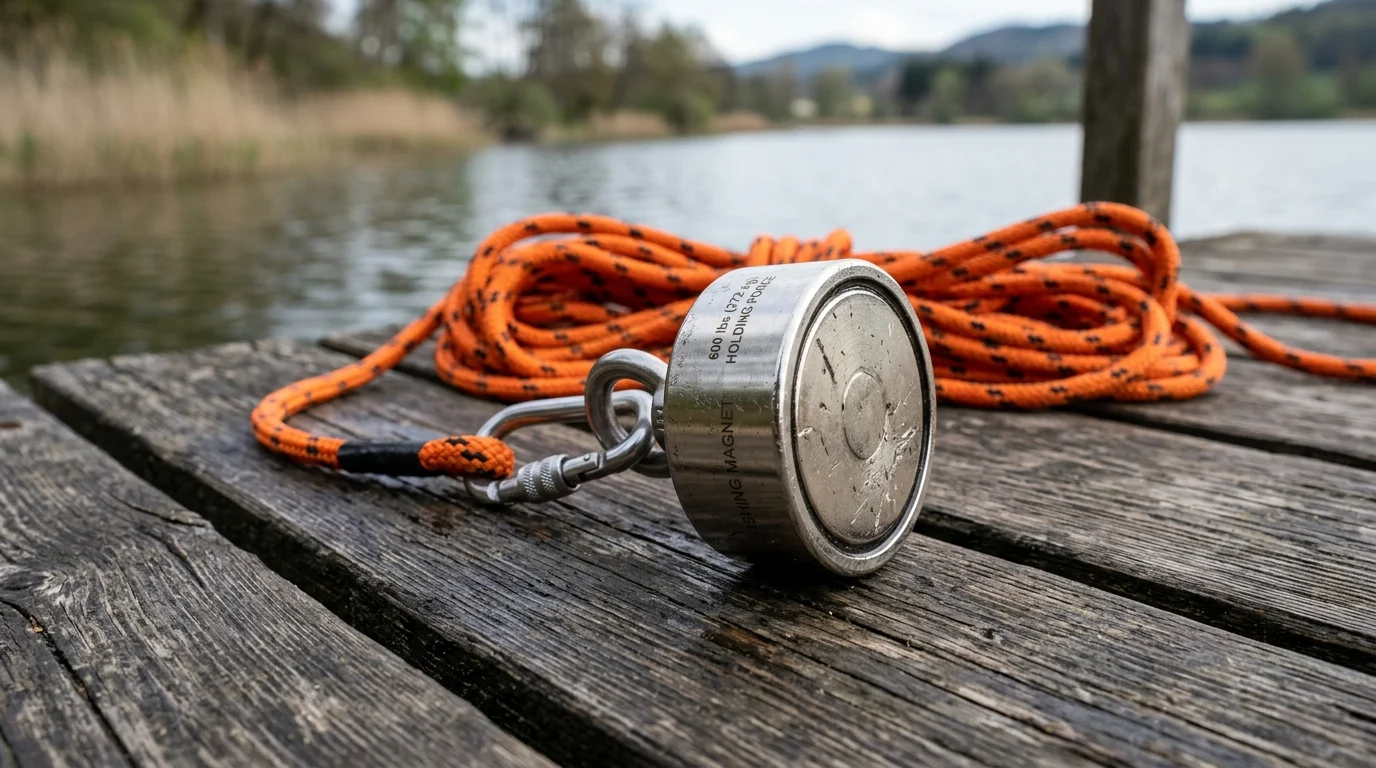
Introduction
Recovering metal from rivers, lakes, docks, and wells often starts with a tool built for more than simple attraction. A fishing magnet is a high-strength rare-earth magnet housed in steel and designed to pull ferromagnetic objects from underwater environments, even through thin sediment or vegetation. Understanding how it works helps explain why these compact devices can retrieve everything from tools and hardware to heavier debris. This article outlines the magnet’s construction, the physics behind magnetic recovery, and the practical factors that affect pulling strength, contact, and retrieval in real-world use.
Fishing Magnet Use in Magnetic Recovery
A fishing magnet is a specialized, high-strength magnetic tool designed to detect, grapple, and recover ferromagnetic objects from submerged environments. Unlike standard industrial lifting magnets, these units are specifically engineered for lateral dragging and vertical hoisting through water, mud, and aquatic vegetation. The core mechanism relies on a neodymium-iron-boron (NdFeB) rare-earth magnet encased in a protective steel shell, which focuses the magnetic field onto specific contact faces to maximize pulling power.
Magnetic recovery leverages the principles of ferromagnetism to extract sunken metals without requiring divers or heavy dredging equipment. By utilizing magnetic flux lines that penetrate water and thin layers of sediment, operators can latch onto submerged debris with extraordinary force. Modern recovery units boast pull forces ranging from 150 kilograms to over 1,800 kilograms (with typical unit weights between 0.5 kg and 3.5 kg), making them highly effective for both localized object retrieval and broad-scale waterway remediation.
Shift from hobby to practical use
Initially popularized as a recreational activity, magnetic recovery has matured into a systematic process utilized for practical and industrial applications. Early adopters primarily engaged in the practice to hunt for lost historical artifacts or discarded bicycles in urban canals. However, the sheer volume of scrap metal extracted—often exceeding 2 to 5 tons per local waterway annually—demonstrated the methodology's viability for serious environmental cleanup.
Today, the transition from hobbyist exploration to pragmatic application is evident in the equipment's evolution. Manufacturers have shifted from producing small, unprotected magnets to developing rugged, heavy-duty recovery systems. These professional units incorporate reinforced eyebolts, anti-snag cones, and proprietary thread-locking compounds (typically medium-to-high strength anaerobic adhesives curing in 24 hours) to withstand the immense mechanical stress of hauling 500-kilogram loads through dense aquatic debris.
Commercial sectors and common use cases
The commercial and institutional adoption of magnetic recovery spans multiple sectors. Law enforcement and forensic dive teams frequently deploy high-capacity magnets to locate discarded weapons, stolen vehicles, and critical evidence in low-visibility aquatic environments (often under 5 meters in depth), drastically reducing the time and risk associated with manual diver searches.
In the maritime and civil engineering sectors, port authorities and commercial salvage crews utilize magnetic sweeps to clear shipping lanes and dockside areas of hazardous metallic debris, such as dropped shipping container components, heavy chains, and scaffolding poles. Environmental organizations also integrate these tools into waterway restoration projects, systematically removing ferrous pollutants that contribute to heavy metal contamination and obstruct navigable channels. For instance, municipal cleanup operations often rely on 1,000-kilogram capacity units (typically costing between $100 and $300 USD for commercial grades) to drag riverbeds, efficiently extracting submerged industrial waste before dredging operations commence.
Fishing Magnet Basics and Key Specifications
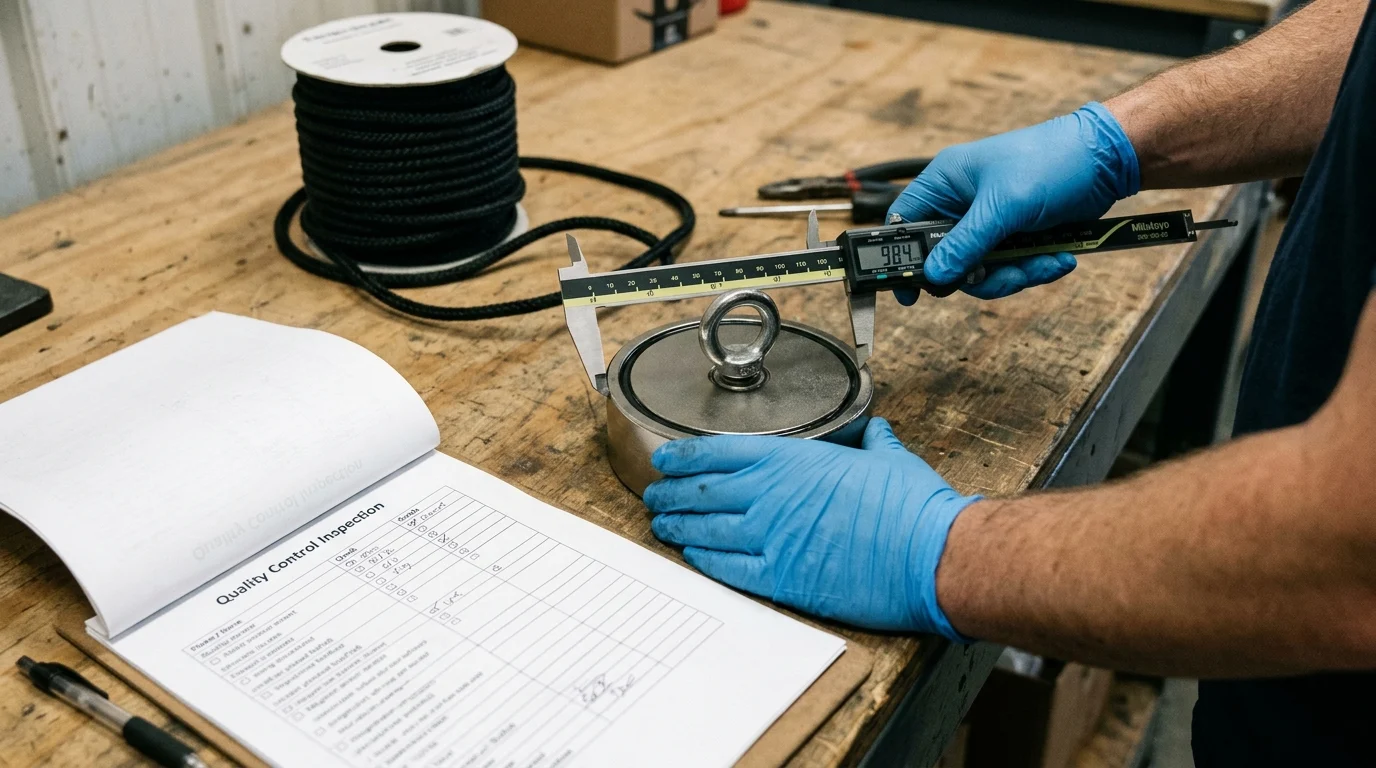
Understanding the technical specifications of a fishing magnet is essential for predicting its performance in the field. The effectiveness of a magnetic recovery tool is dictated by its material composition, magnetic grading, and structural geometry. A comprehensive grasp of these variables allows operators to select the appropriate equipment for specific salvage tasks, ensuring both efficiency and equipment longevity.
Magnet grade, pull force, and housing design
The core of modern recovery magnets is constructed from sintered neodymium (NdFeB). The performance is denoted by an 'N' grade, typically ranging from N42 to N52. An N52 magnet represents the highest commercially available magnetic energy product, offering roughly 15 to 20 percent more pull force than an identically sized N42 counterpart. The pull force rating—often advertised between 200 kg and 1,500 kg—is calculated based on ideal conditions: a perfectly flat, 20-millimeter thick, unpainted steel plate in a laboratory setting.
The housing design is equally critical. The neodymium core is brittle and highly susceptible to shattering upon impact. To mitigate this, the magnet is set inside an A3 carbon steel cup or casing (featuring a typical yield strength of ~235 MPa). This steel housing serves a dual purpose: it protects the fragile rare-earth material from blunt force trauma against submerged rocks, and it redirects the magnetic flux lines from the top and sides of the magnet down to the active face, effectively concentrating and amplifying the pull force.
| Specification | N42 Grade Magnet | N52 Grade Magnet | Primary Advantage |
|---|---|---|---|
| Energy Product (MGOe) | 40 - 42 | 49 - 52 | N52 provides maximum strength per cubic centimeter. |
| Typical Max Pull Force (100mm dia) | ~600 kg | ~800 kg | N52 yields higher recovery capacity for heavy salvage. |
| Durability/Brittleness | Moderately brittle | Highly brittle | N42 is slightly less prone to micro-fracturing under stress. |
| Max Operating Temp | 80°C (176°F) | 80°C (176°F) | Standard NdFeB magnets lose permanent charge above this threshold. |
Recoverable materials and performance limits
Fishing magnets are exclusively effective on ferromagnetic materials—primarily iron, carbon steel, and certain alloys of nickel and cobalt. Non-ferrous metals such as aluminum, brass, copper, and austenitic stainless steels (like 304 or 316 grades) will not react to the magnetic field and cannot be recovered using this method.
Performance limits are heavily influenced by the condition of the target object. The advertised pull force is subject to the inverse-square law regarding distance. Even a 2-millimeter gap created by rust, algae, paint, or mud can reduce the effective magnetic grip by up to 60 percent. Furthermore, the thickness of the target metal plays a vital role; a magnet rated for 1,000 kg requires a solid steel target of at least 20 millimeters thick to achieve that maximum rating. Latching onto thin sheet metal, such as a car door, will yield only a fraction of the advertised holding power.
| Target Material Type | Magnetic Responsiveness | Typical Pull Force Retention (vs. Ideal Lab Steel) |
|---|---|---|
| Thick Carbon Steel (>20mm) | Very High | 90% - 100% |
| Cast Iron | High | 70% - 85% (reduced by surface porosity) |
| Thin Sheet Metal (<3mm) | Moderate | 15% - 30% (magnetic saturation reached quickly) |
| Austenitic Stainless (304/316) | None | 0% |
How to compare single-sided and other designs
The physical configuration of the magnet dictates its optimal use case. Single-sided magnets feature one active magnetic face on the bottom, with the eyebolt mounted on top. These are ideal for vertical dropping from bridges or docks, as the entire magnetic force is concentrated downward, making them highly effective for lifting heavy, compact items.
Double-sided magnets feature an eyebolt mounted on the side, allowing the unit to be dragged laterally across the riverbed. With two active faces, they cover more surface area during sweeping operations, though the pull force is divided between the two sides. A 1,000 kg double-sided magnet typically provides 500 kg of force per face.
360-degree (omnidirectional) magnets lack a steel cup, exposing the bare neodymium core (usually protected by a specialized outer shell). These units project a magnetic field in all directions, significantly increasing the strike radius (often 10 to 15 centimeters outward). While highly efficient at grabbing oddly shaped objects from any angle, they lack the concentrated, amplified pull force of a cup-housed design and require careful handling due to the exposed magnetic material.
Magnetic Recovery Process in Practice
Executing a successful magnetic recovery requires more than simply casting a line into a body of water. Professional and industrial operators follow a methodical workflow designed to maximize target acquisition while minimizing the risk of equipment loss or damage. The physical environment heavily dictates the tactical approach, requiring adjustments based on water dynamics and substrate composition.
Step-by-step recovery workflow
The recovery workflow begins with site assessment, utilizing sonar or historical data to identify high-probability zones for metallic debris. Once a site is selected, the magnet must be securely tethered. Operators typically use high-tensile synthetic ropes, such as 8mm to 10mm double-braided polyester or nylon, boasting breaking strengths between 1,200 kg (approx. 11.7 kN) and 2,500 kg (approx. 24.5 kN). The connection is secured using a specialized knot—most commonly the Palomar knot or a Figure-Eight follow-through—combined with a heavy-duty carabiner and thread-locking fluid on the magnet's eyebolt to prevent unscrewing during rotation.
The casting phase involves deploying the magnet in a grid pattern. For lateral dragging, the magnet is cast outward and retrieved at a slow, consistent pace—roughly 0.5 meters per second—allowing the magnetic field sufficient time to interact with buried objects. Upon feeling a magnetic strike (a sudden resistance or 'clunk' transmitted through the line), the operator maintains steady tension. The hoisting phase requires a smooth, vertical pull to prevent the object from shearing off the magnet's face, utilizing a grappling hook as a secondary lifting aid if the target exceeds 50 kilograms.
How depth, sediment, and surface conditions affect results
Environmental variables drastically alter the efficiency of magnetic recovery. Depth directly impacts control; in waters exceeding 10 meters, water resistance and cross-currents create a bow in the rope, reducing tactile feedback and making it difficult to drag the magnet in a straight line. Heavy currents can also sweep the magnet off its intended path, requiring heavier units (often exceeding 1.5 kg in physical weight) to maintain bottom contact.
Sediment composition presents a significant challenge. Objects buried in dense clay or deep silt are subject to a vacuum-like suction effect. Breaking this suction often requires an initial extraction force 30 to 50 percent greater than the object's actual weight in water. Additionally, rough surface conditions, such as rocky riverbeds or dense aquatic vegetation, can physically wedge the magnet or prematurely scrape the recovered object off the magnetic face before it breaches the surface.
Safety, Quality, and Compliance
The deployment of high-capacity neodymium magnets introduces significant safety hazards, environmental responsibilities, and regulatory compliance requirements. Operating equipment capable of exerting over a ton of pulling force demands rigorous safety protocols and an understanding of the legal frameworks governing waterway usage and salvage rights.
Operational risks and safe handling
The primary operational risk stems from the extreme attractive forces generated by neodymium cores. A magnet rated for 800 kg can snap onto a steel surface from a distance of 10 to 15 centimeters with explosive speed (often under 0.1 seconds). If an operator's fingers or hands are caught between the magnet and a heavy ferromagnetic object (such as a bridge girder or a recovered safe), the resulting pinch hazard can cause severe crush injuries, lacerations, or even bone fractures. Safe handling protocols dictate the mandatory use of heavy-duty, cut-resistant gloves and strict avoidance of placing hands near the active magnetic face.
Secondary risks include rope entanglement. When hauling heavy loads or casting long distances, loose rope can wrap around an operator's extremities. If the magnet snags on a moving vessel or a heavy falling object, it can pull the operator into the water. Consequently, maintaining a clean rope management system and carrying a quick-release cutting tool are standard safety practices.
Coating quality and corrosion resistance
Because neodymium is highly reactive to moisture and oxygen, bare magnets will rapidly oxidize and disintegrate when exposed to water, particularly corrosive saltwater environments. To ensure longevity, high-quality fishing magnets are manufactured with a protective triple-layer coating, typically Nickel-Copper-Nickel (Ni-Cu-Ni). This electroplated coating is incredibly thin—usually between 15 and 25 micrometers in total thickness—yet provides a robust barrier against corrosion.
Industrial buyers often look for compliance with standardized testing protocols, such as ISO 9227, which dictates 24- to 48-hour salt spray testing procedures to verify the corrosion resistance of these metallic coatings. Even with premium coatings, the outer layer is susceptible to chipping from impacts against underwater rocks. Once the coating is breached, water infiltrates the core, leading to swelling, loss of magnetic strength, and eventual failure. Therefore, post-recovery maintenance—specifically rinsing with freshwater and thoroughly drying the unit—is critical for preserving the tool's structural integrity.
Legal, environmental, and site-permission issues
Magnetic recovery intersects with various legal and environmental jurisdictions.
Choosing the Right Fishing Magnet
Key Takeaways
- The most important conclusions and rationale for Fishing Magnet
- Specs, compliance, and risk checks worth validating before you commit
- Practical next steps and caveats readers can apply immediately
Frequently Asked Questions
What does a fishing magnet actually recover?
It recovers ferromagnetic items such as steel tools, chains, scrap metal, and some iron-based debris from water, mud, or docks.
How is a fishing magnet different from a regular lifting magnet?
A fishing magnet is built for dragging and hoisting in water, with a steel housing that protects the NdFeB core and focuses pull on the contact face.
Does water reduce a fishing magnet’s strength?
Water itself does not block magnetism much, but mud, rust, paint, uneven surfaces, and poor contact can greatly reduce real-world holding force.
Which pull force should I choose for magnetic recovery?
For light finds, start around 150–300 kg; for heavier cleanup or commercial use, consider 500 kg to 1,000 kg+ depending on target size and conditions.
What should I check before buying a fishing magnet from RCMagnet?
Check magnet grade, rated pull force, steel housing, eyebolt quality, corrosion protection, and whether the design suits vertical lifting or lateral dragging.