 EN
EN AR
AR HR
HR CS
CS DA
DA NL
NL FI
FI FR
FR DE
DE EL
EL IT
IT JA
JA KO
KO NO
NO PL
PL PT
PT RU
RU ES
ES SV
SV IW
IW VI
VI TH
TH TR
TR FA
FA MS
MS- Pot magnets are strongest in fixture and jig work when the steel cup can close the magnetic circuit against a clean ferromagnetic surface.
- Mounting style matters: countersunk holes favor screw-fixed jigs, while threaded or plain-bore styles fit rods, studs, and modular tooling.
- Surface finish and corrosion resistance are not optional details; they directly affect holding reliability, repeatability, and service life.
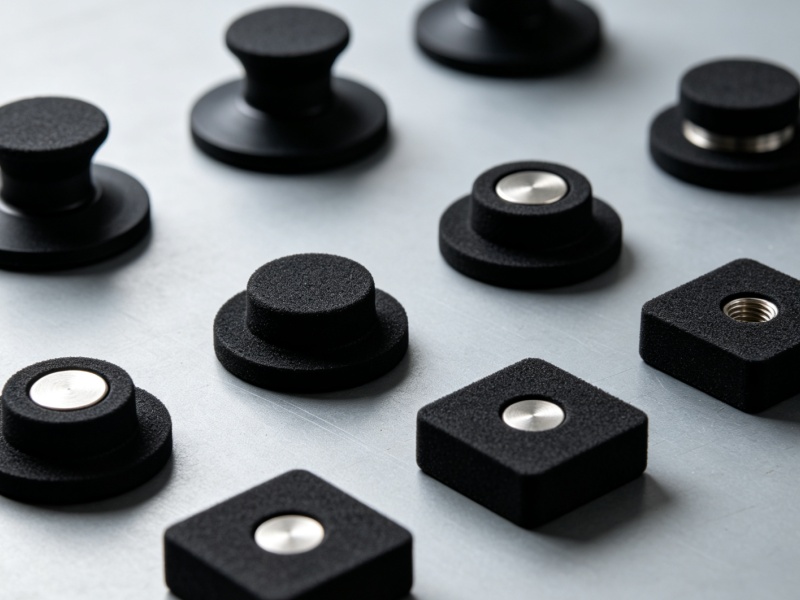
- For non-marring or uneven surfaces, rubber-coated magnetic options can outperform bare cup magnets in real shop-floor use.
- Selection should be based on force, temperature, mounting method, and release behavior, not static pull force alone.
Pot magnet, fixture, and jig design are closely linked because a good setup must hold position, survive vibration, and release cleanly without damaging the workpiece. In dimensional inspection and precision assembly, repeatability is often governed by whether the locating element can return to the same seat under load; ISO 2768-1 defines general tolerances that remind engineers how small deviations matter in everyday production. A well-chosen pot magnet can support that discipline by providing localized attraction, but only if the fixture surface is flat, the load path is understood, and the magnet is mounted correctly. The most practical rule is simple: use the magnet to stabilize the part, and use the fixture to define the geometry.
Why pot magnet fixture and jig applications work so well
The steel cup is the real performance multiplier in a pot magnet.
Unlike a bare neodymium magnet, the cup routes magnetic flux to the working face and reduces side leakage, which increases usable holding efficiency on contact. That is why the same magnet grade can feel dramatically stronger once it is enclosed in steel. In a fixture or jig, this matters because the force is not just about pull; it is about keeping the part seated against lateral vibration, slight shock, and operator handling. The steel body also protects the brittle magnet core from chipping during assembly and use, which is especially important in production jigs that are touched hundreds of times per shift.
For product engineers, the term countersunk pot magnet usually signals a screw-fixed locating point, while a threaded pot magnet is better when the fixture needs modular height adjustment or fast replacement. Those details are not minor. They determine whether the magnet behaves like a permanent fixture component or a serviceable positioning accessory.
| Fixture need | Best pot magnet style | Why it fits | Typical benefit |
|---|---|---|---|
| Repeatable part location | Countersunk | Positive screw seating and flush installation | Stable datum point |
| Adjustable tooling | Threaded / tapped | Easy height and stack-up tuning | Faster setup changes |
| Temporary assembly hold | Plain cup / recessed bore | Simple insertion and removal | Shorter cycle setup |
| Scratch-sensitive surfaces | Rubber-coated magnet | Lower abrasion and improved friction | Less surface damage |
Which fixture and jig applications suit pot magnet series
Pot magnets are most useful in jigs where a part must be held quickly, released often, and repositioned with minimal setup time.
That includes welding jigs, inspection fixtures, assembly locators, removable stops, holding aids for drilling and routing, and temporary positioning on steel workpieces. The common thread is that the part is ferromagnetic and the fixture must trade absolute rigidity for speed and flexibility. For example, a welding jig for light brackets may use multiple small pot magnets to establish angle and edge registration before tack welds, while an inspection fixture may use them to keep a gauge plate from shifting during repeated checks. In maintenance and repair, they are also practical for holding small covers, brackets, or sensor plates while fasteners are started.
The strongest use case is not “maximum pull,” but “adequate hold with easy release.” In a real shop, operators need to reposition parts without prying or leaving marks, and that is where pot magnets outperform improvised clamps in certain workflows. For engineered workholding systems, the welding magnet category is relevant when angular alignment is the priority, while the magnetic hook and magnetic base categories are better when the goal is auxiliary support rather than direct workpiece clamping.
- Welding fixtures for brackets, tubes, frames, and light sheet assemblies
- Inspection jigs for gauge holding, sensor positioning, and temporary part registration
- Assembly aids for covers, clips, labels, and small steel subcomponents
- Changeover-friendly production fixtures where parts move in and out frequently
- Maintenance aids for temporary mounting during repair, alignment, or retrofit
How to choose the right pot magnet for a fixture or jig
The correct selection starts with the workpiece, not the magnet catalog.
You should first confirm whether the target surface is ferromagnetic, clean, flat, and thick enough to support magnetic coupling. Then define the required force direction. A vertical lift test is not the same as resistance to shear, and many fixtures fail because designers only look at advertised pull force. In practice, surface roughness, paint, air gaps, and poor seating can reduce usable holding force sharply. That is why fixture engineers often validate real-world hold on the actual surface rather than relying on nameplate numbers.
Temperature is the next constraint. Standard neodymium grades lose performance as temperature rises, and the wrong grade can create gradual force loss in a hot workshop. In many industrial uses, the more relevant question is not “How strong is it?” but “How stable is it after 1000 cycles, exposure to coolant, and operator contact?” For that reason, corrosion protection and magnet grade should be specified together. If the application is outdoors or wet, a coated assembly or sealed design is usually more sensible than a bare magnet.
| Selection factor | What to check | Why it matters | Common mistake |
|---|---|---|---|
| Surface condition | Flat, clean, ferromagnetic | Controls real holding force | Ignoring paint or scale |
| Load direction | Pull vs shear vs peel | Different forces behave differently | Using only vertical pull data |
| Mounting method | Countersunk, threaded, plain bore | Determines fixture integration | Choosing the wrong hole type |
| Environment | Moisture, coolant, heat, oil | Protects performance and lifespan | Skipping corrosion control |
| Release need | Manual, quick-change, permanent | Defines operator workflow | Overlooking removal ergonomics |
For compliance-minded buyers, magnet-grade terminology and material testing are not trivial. Neodymium-iron-boron magnets are typically specified by grade and maximum operating temperature, and the coating system must be evaluated alongside the base material. If your application involves verification procedures, it helps to refer to ASTM A977 for methods used to measure permanent magnet material properties and to NIST SI Units when documenting engineering quantities consistently across drawings, inspections, and procurement records.
Fixture design details that change pot magnet performance
The same pot magnet can behave very differently depending on how it is mounted.
A countersunk design is best when the screw head must sit flush and the magnet face must stay in contact with the fixture plane. That is common in low-profile jigs and gauge boards. A threaded body works better when tooling is modular, because it allows fine adjustment, spacer addition, or replacement without remachining the holder. A plain-bore design is useful when a pin, rod, or bolt is used as the structural interface. In all three cases, the mounting method should match the service pattern of the jig, not just the installation preference of the buyer.
Mechanical protection also deserves attention. The cup body shields the magnet, but the fixture still needs a stable seat and enough edge margin to prevent chipping or demagnetization from impact. If the fixture is repeatedly dropped, slammed, or used near grinding debris, a sealed or rubber-coated option may extend service life by reducing direct contact damage. For high-friction or non-marking contact, a rubber-coated magnet can be the better fit than a bare pot magnet.
- Define the workpiece material and thickness.
- Determine whether the load is static, dynamic, or intermittent.
- Select the mounting style that matches the fixture geometry.
- Check temperature, corrosion, and cleaning exposure.
- Validate hold force on the actual surface, not only on paper specs.
- Test release behavior for operator safety and cycle efficiency.
What real-world numbers matter in pot magnet fixture work
Quantitative selection is essential because magnet systems fail when assumptions replace measurements.
In precision work, a useful reference point is that general machining tolerances under ISO 2768-1 are defined in millimeters, which makes even a small fixture shift meaningful when the process is trying to hold tight geometry. For magnetic hardware, buyers commonly compare pull force, temperature rating, and corrosion protection, but the data sheet should be read as a system document rather than a single-force claim. A pot magnet advertised with a high pull value on thick polished steel may deliver much less on a painted, curved, or contaminated surface.
Another practical benchmark is the use of rare-earth magnets for compact systems where high flux density is needed in limited space. Neodymium magnets are favored in such designs because they provide strong attraction in small volumes, which is useful when a jig cannot accommodate bulky clamps. According to the North American Magnetics Association, magnet grade selection is often tied to temperature and energy product expectations, which is why engineering teams should avoid treating all neodymium assemblies as equivalent.

| Metric | Why it matters | How to document it |
|---|---|---|
| Pull force | Baseline attraction on ideal steel | State test surface and thickness |
| Shear resistance | Measures sideways slip in fixtures | Test under actual load direction |
| Operating temperature | Protects magnet grade stability | Specify peak and continuous exposure |
| Coating / corrosion rating | Extends service life in wet areas | Describe salts, coolant, or humidity exposure |
| Cycle count | Shows durability in repetitive jigs | Use shop-floor usage records |
Where pot magnet series are not the best choice
Pot magnets are not universal clamps, and the wrong use case creates weak hold or damage.
If the workpiece is aluminum, stainless steel of unsuitable grade, plastic, or composite, a pot magnet cannot deliver the intended magnetic coupling. If the surface is heavily painted, oily, curved, or uneven, the air gap can reduce practical force to the point where a mechanical clamp is better. If the job requires very high shear resistance, a dedicated fixture clamp, vacuum system, or mechanical stop may outperform magnetic holding. And if surface protection is critical, a rubber-coated system may be preferable because it distributes contact stress more gently.
For buyers evaluating broader magnetic accessories, the magnetic tools category is helpful for pickup and organization tasks, while a magnetic base is more suitable for adjustable holding of instruments and indicators than for direct workpiece clamping. The practical distinction is simple: use the product that matches the job physics, not the one with the strongest headline number.
How to improve reliability, maintenance, and safety
Reliability comes from keeping the magnetic contact face clean and the fixture geometry stable.
Routine maintenance should include wiping away chips, rust, coolant residue, and oil films, because contamination creates an air gap and weakens holding. Operators should also inspect coatings for abrasion and check screw retention on countersunk or threaded designs. In environments with many loose ferrous fragments, a magnetic tool can be safer than a bare hand approach because it reduces contact with sharps and hot debris. For shop-floor housekeeping, the right accessory can also reduce downtime by speeding collection of small parts and metal shavings.
There is also a safety angle that buyers sometimes miss. A magnet that is easy to place but hard to release can become a pinch hazard, and a fixture that loses hold unexpectedly can damage the part or create a strike risk. So the right engineering balance is force plus controllability. That is why good fixture design always includes a release method, a seating surface, and a defined maintenance interval. In high-mix work, that discipline is more valuable than maximizing raw pull force alone.
Decision guide for selecting a pot magnet fixture or jig setup
A practical decision flow keeps selection fast and defensible.
- Identify the target material and confirm it is ferromagnetic.
- Measure the available contact area and allowable footprint.
- Choose the mounting style that fits the jig architecture.
- Check whether the part will see heat, oil, water, or vibration.
- Decide whether surface protection or non-marking behavior is required.
- Validate the setup under real process conditions before release to production.
If the answer to any of those steps is unclear, the magnet should be treated as one element in the fixture system rather than the solution itself. That mindset is what separates a quick prototype from a repeatable manufacturing aid.
FAQ about pot magnet fixture and jig applications
What is the best use of a pot magnet in a jig?
The best use is temporary or semi-permanent holding on ferromagnetic parts where repeatability, quick setup, and compact size matter more than clamp-style rigidity.
Are countersunk pot magnets better for fixtures?
Countersunk pot magnets are better when flush installation and screw-fixed positioning are needed, especially in low-profile jigs and locator plates.
Can pot magnets replace welding clamps?
They can replace welding clamps in light positioning tasks, but not when high shear resistance, insulation, or very strong mechanical locking is required.
Why do pot magnets hold better than bare magnets?
The steel cup concentrates magnetic flux toward the contact face, which improves practical holding force on suitable steel surfaces.
Do pot magnets work on painted steel?
They can work, but paint increases the air gap and can reduce usable force, so real-world testing is necessary before selecting the magnet.
How do I avoid scratching the workpiece?
Use a rubber-coated option, keep the contact face clean, and avoid dragging the magnet across the surface during placement or removal.
What should be checked first when choosing a pot magnet?
Check surface material, load direction, mounting method, temperature, and corrosion exposure before comparing advertised pull force.
In short, pot magnet, fixture, and jig applications suit each other best when the job needs compact magnetic holding, fast repositioning, and controlled release. The highest-value setups are usually not the strongest on paper; they are the ones that match the workpiece, mounting style, and environment with enough precision to stay repeatable in daily use. For engineers and buyers, that is the real standard of a good magnetic fixture solution.