 EN
EN AR
AR HR
HR CS
CS DA
DA NL
NL FI
FI FR
FR DE
DE EL
EL IT
IT JA
JA KO
KO NO
NO PL
PL PT
PT RU
RU ES
ES SV
SV IW
IW VI
VI TH
TH TR
TR FA
FA MS
MSIntroduction
Selecting a pot magnet for industrial equipment involves more than matching a quoted pull-force number. Performance depends on how the magnet’s steel cup concentrates magnetic flux, the surface it contacts, the load direction, and the environment it must endure. Temperature, vibration, corrosion, coating choice, and mounting method can all change real holding strength and service life. This article explains the key specification factors to compare, where common selection mistakes occur, and how to balance holding force, durability, and maintenance needs. With that context, you can choose a pot magnet that fits the application reliably instead of relying on catalog values alone.
Why Choosing the Right Pot Magnet Matters
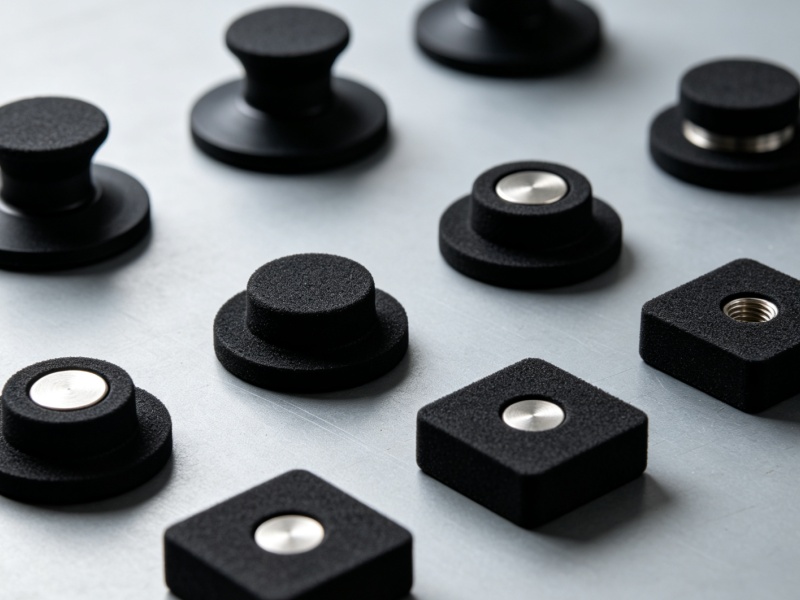
Pot magnets are foundational components in industrial automation, material handling, and sensor mounting applications. They consist of a permanent magnetic core encased in a steel shell or cup. This steel enclosure serves a dual purpose: it protects the inherently brittle magnetic material from mechanical impact and redirects the magnetic field lines to a single active face. By concentrating the magnetic flux, the steel cup significantly amplifies the localized pull force, making pot magnets highly efficient for clamping, lifting, and fixturing tasks where space is strictly limited.
Impact on holding force and uptime
The holding force of a pot magnet directly dictates the reliability and safety of the equipment it supports. A standard Neodymium (NdFeB) pot magnet can generate up to 1,000 kg of pull force in optimal conditions, vastly outperforming a raw magnet of the same volume. Specifying an inadequate magnet can lead to unexpected load detachment, causing catastrophic machinery downtime and posing severe safety hazards on the factory floor. Conversely, over-specifying the magnet can complicate maintenance if manual detachment is required, potentially demanding specialized leverage tools just to separate the components.
Operating conditions that affect specification
Real-world operating conditions rarely mirror pristine laboratory testing environments. The presence of an air gap—caused by paint, dust, rust, or uneven surfaces—dramatically diminishes magnetic performance. For instance, introducing just a 1 mm air gap between the magnet and the contact surface can reduce the effective holding force by up to 50%. Additionally, the thickness of the target metal plays a critical role in performance. Thin sheet metal may reach magnetic saturation before the pot magnet can exert its maximum rated pull force; a high-capacity magnet often requires a target surface of at least 10 mm of solid mild steel to achieve its fully rated clamping strength.
Key Specifications to Compare

Evaluating the core specifications of a pot magnet is essential for ensuring compatibility with the broader mechanical assembly. Engineers must balance raw magnetic strength against environmental resilience and physical integration constraints to select the optimal component.
Magnet material, cup design, size, and mounting
Selecting the right magnetic material and cup design forms the baseline for performance. Neodymium offers the highest strength-to-size ratio, while Samarium Cobalt (SmCo), Alnico, and Ferrite provide specialized advantages for extreme environments. Cup designs generally feature threaded studs, countersunk holes, or internal threads to facilitate seamless integration into machinery. When selecting countersunk options, matching the exact screw head angle is vital to prevent uneven stress distribution that could crack the magnet.
| Magnet Material | Max Operating Temp (°C) | Relative Cost | Corrosion Resistance |
|---|---|---|---|
| Neodymium (NdFeB) | 80 - 150 | High | Low (Requires Plating) |
| Samarium Cobalt (SmCo) | 250 - 350 | Very High | Excellent |
| Alnico | Up to 550 | Medium | Good |
| Ferrite (Ceramic) | Up to 250 | Low | Excellent |
Environmental factors: temperature, corrosion, and vibration
Industrial environments frequently expose components to heat, moisture, and mechanical shock. Standard NdFeB magnets rapidly lose magnetization above 80°C and are highly susceptible to oxidation if the protective barrier is breached. To combat this, manufacturers apply protective coatings, such as a triple-layer Nickel-Copper-Nickel (Ni-Cu-Ni) plating, zinc galvanization, or heavy-duty rubber encapsulation. Furthermore, high-vibration applications require careful consideration. Brittle magnetic materials can easily fracture if the internal epoxy potting fails to isolate the core from the steel shell under continuous mechanical resonance.
Pull force comparison criteria
Comparing pull force requires a precise understanding of the load direction and surface friction. Manufacturers typically rate pot magnets based on vertical pull force, tested against a thick, flat steel plate. However, when a magnet is mounted vertically on a wall or machine chassis, it becomes subject to shear force. Because smooth steel plating has a low friction coefficient, the shear force capacity is generally only 20% to 30% of the stated vertical pull force. An assembly rated for a 100 kg vertical load may begin to slide down a surface at just 25 kg of shear load unless rubber coatings or physical mechanical stops are introduced to increase the friction coefficient.
How to Evaluate Quality and Compliance
Reliable industrial operations depend on strict quality control and verifiable compliance standards. Procurement teams must scrutinize the manufacturing processes of their suppliers to avoid inconsistent batches that could compromise end-product integrity or operator safety.
Manufacturing quality indicators and testing methods
High-quality pot magnet manufacturing relies on rigorous, standardized testing protocols. Suppliers should use Gauss meters to verify surface flux density and automated universal testing machines to confirm the rated pull force of each production batch. For high-volume applications, such as automotive assembly lines or automated warehousing robots, buyers often demand a strict defect rate of less than 0.1%. Physical quality indicators also include the integrity of the protective coating and the precise application of the internal epoxy. Standard Ni-Cu-Ni plating should maintain a consistent thickness of 10 to 20 microns to provide adequate barrier protection against industrial solvents, typically verified through 24-hour to 72-hour salt spray testing.
Compliance, traceability, and documentation
Traceability is a non-negotiable requirement for critical engineering and aerospace applications. Suppliers must provide Material Test Reports (MTRs) and ensure that their products comply with international directives such as RoHS and REACH, which restrict hazardous substances in the manufacturing process. Adherence to established quality management frameworks ensures that the factory maintains documented procedures for heat lot traceability. This meticulous documentation guarantees that any premature demagnetization or structural failure in the field can be traced back to the specific raw material batch, allowing engineering teams to perform rapid and accurate root-cause analysis.
Best Process for Choosing a Pot Magnet
A methodical selection process prevents costly design revisions and ensures that the chosen pot magnet aligns with both mechanical load requirements and supply chain realities.
Match load case, safety factor, and mounting
The initial step requires engineers to calculate the exact load case, factoring in the orientation of the load, dynamic forces such as rapid acceleration or deceleration, and potential surface irregularities. Once the baseline load is determined, a strict safety factor must be applied. For general static holding applications, a 2:1 safety factor is standard practice. However, overhead lifting applications or automated robotic grippers typically demand a safety factor of at least 3:1 or 4:1 to account for unexpected dynamic shocks. This means a dynamic payload of 50 kg requires a pot magnet rated for 150 to 200 kg of holding force. The mounting method—whether using an M6 threaded stud, a through-hole, or a countersunk screw—must also be specified to distribute this mechanical load safely across the assembly without exceeding torque limits.
Compare standard vs custom options
Buyers must carefully weigh the benefits of standard, off-the-shelf components against custom-engineered magnetic solutions. Standard pot magnets offer immediate availability and typically require no Minimum Order Quantities (MOQs), making them ideal for rapid prototyping, maintenance repairs, and low-volume production runs. Conversely, custom options allow engineers to specify unique thread pitches, specialized high-temperature epoxies, or non-standard dimensional profiles to fit proprietary machinery. However, custom manufacturing typically requires an MOQ ranging from 1,000 to 5,000 units and introduces a significant lead time of 4 to 8 weeks for tooling setup, material sourcing, and final production.
Buying Criteria for Long-Term Value
The final procurement decision extends well beyond the initial unit price. Evaluating the long-term value of a pot magnet involves analyzing the total cost of ownership, logistical reliability, and the operational lifespan of the component within the target environment.
Total cost, lead time, and replacement risk
While standard pot magnets may carry a unit price anywhere from $1 to $15 depending on size, material grade, and housing complexity, the hidden costs of subpar magnets can be exponentially higher. Issues like premature rusting, epoxy degradation, or unexpected demagnetization necessitate frequent replacements, driving up maintenance labor and causing expensive equipment downtime. Furthermore, procurement teams must assess replacement risk by evaluating the stability of the supplier's supply chain. Partnering with suppliers who maintain robust inventory reserves ensures that consistent lead times can be met even during global raw material shortages, preventing costly bottlenecks on the assembly line.
Decision framework for final selection
To finalize the selection, engineering and purchasing departments should use a structured decision matrix. This collaborative approach balances technical necessities against budgetary constraints, ensuring the chosen component delivers optimal lifecycle value.
| Application Priority | Recommended Pot Magnet Type | Key Selection Criteria |
|---|---|---|
| Maximum Holding Force | Neodymium (NdFeB) | High vertical pull, compact footprint |
| Extreme Temperature | Samarium Cobalt (SmCo) | Operating temp > 150°C, high budget |
| Outdoor/Corrosive | Rubber-Coated or Ferrite | Moisture resistance, shear friction |
| High-Volume Budget | Ferrite (Ceramic) | Low unit cost, large surface area acceptable |
By systematically analyzing these criteria, industrial buyers can confidently secure a magnetic fastening solution that maximizes equipment uptime, ensures strict operator safety, and optimizes total project expenditures over the lifespan of the machinery.
Key Takeaways
- The most important conclusions and rationale for Pot Magnet
- Specs, compliance, and risk checks worth validating before you commit
- Practical next steps and caveats readers can apply immediately
Frequently Asked Questions
What pot magnet material is best for compact industrial equipment?
Neodymium pot magnets offer the highest holding force in the smallest size. For equipment above 80°C or in corrosive areas, choose SmCo, ferrite, or a protected option from rcmagnet.com.
How much does surface condition affect pot magnet holding force?
A lot. Paint, rust, dust, or a 1 mm air gap can cut pull force by about 50%. Use flat, clean mild steel and minimize coating thickness at the contact point.
Can I rely on the rated pull force for vertical mounting?
Not fully. Rated pull force is usually measured in direct vertical pull. On walls or machine frames, shear capacity may be only 20%–30%, so add rubber coating or mechanical stops.
Which mounting style should I choose for a pot magnet?
Match the assembly method: countersunk for flush screw mounting, threaded stud for quick bracket fastening, and internal thread for cleaner integration. Ensure the screw head angle fits countersunk models exactly.
How do I choose a pot magnet for hot or wet industrial environments?
Check operating temperature and corrosion risk first. Standard NdFeB suits many dry applications, but hot, wet, or chemical environments need stronger protection like Ni-Cu-Ni plating, rubber coating, or SmCo material.