 EN
EN AR
AR HR
HR CS
CS DA
DA NL
NL FI
FI FR
FR DE
DE EL
EL IT
IT JA
JA KO
KO NO
NO PL
PL PT
PT RU
RU ES
ES SV
SV IW
IW VI
VI TH
TH TR
TR FA
FA MS
MSOutline
- What magnetic brackets do in workholding and fixturing
- Why cup-style magnetic assemblies hold better than bare magnets
- How mounting style affects positioning and support
- How to choose the right bracket for different environments
- Where they are used in welding, assembly, and maintenance
- Common failure modes and maintenance checks
How magnetic brackets fix, position, and support metal parts
Magnetic brackets work by converting magnetic attraction into controlled holding force. They are used to locate a part, resist movement, and support the load while the operator completes welding, drilling, inspection, or assembly.
The core advantage is magnetic clamping with fast setup. Unlike mechanical clamps, these components can be placed, adjusted, and removed quickly, which makes them useful in high-mix production and short-run fixturing.
For industrial buyers, the important question is not only how strong the magnet is, but how the assembly behaves in real contact conditions. The U.S. Department of Energy notes that NdFeB magnets are the strongest commercially available permanent magnets, which is why they are widely used in compact high-force assemblies.
Why cup-style magnetic assemblies hold better than bare magnets
Cup-style magnetic assemblies usually deliver higher practical holding force than bare magnets of similar material. The steel shell concentrates magnetic flux, protects the magnet, and improves contact efficiency at the working face.
This magnetic circuit effect matters because real-world holding is shaped by geometry, air gaps, surface flatness, and load direction. A quoted pull force alone does not describe how the part will behave on a painted, curved, or slightly uneven surface.
Richeng’s own technical guidance states that selection should consider the steel cup, surface contact, load direction, and environment rather than pull force alone. That aligns with standard magnet engineering practice and helps explain why pot-style designs are common in magnetic fixture systems.
Comparison Table: Bare Magnet vs Cup-Style Magnetic Bracket
| Feature | Bare Magnet | Cup-Style Magnetic Bracket |
|---|---|---|
| Flux control | More exposed | Concentrated through steel shell |
| Practical holding | Lower on imperfect surfaces | Higher in real contact conditions |
| Mechanical protection | Limited | Better impact and wear resistance |
| Mounting options | Fewer | More flexible with holes and screws |
How mounting style changes positioning and support
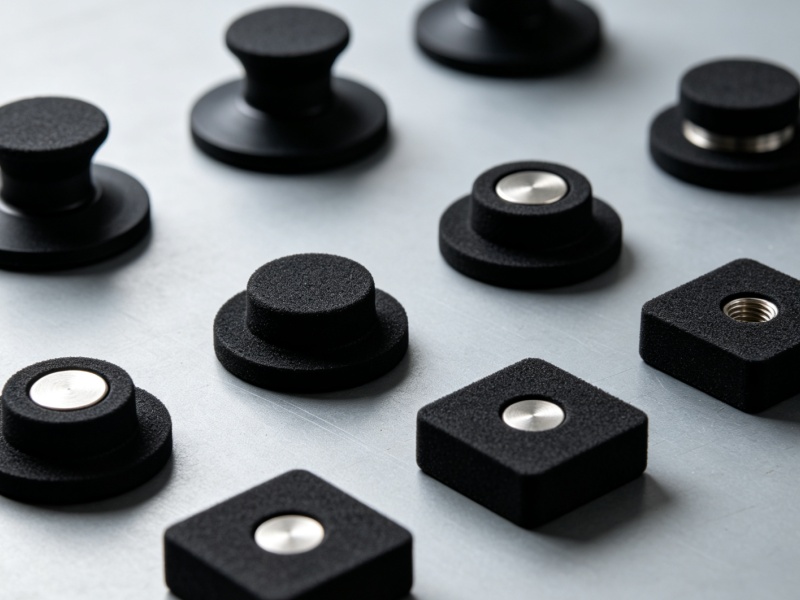
Mounting style determines whether a magnetic bracket is mainly for fixing, locating, or supporting. Countersunk holes suit screw fastening, while straight-through holes suit bolts, shafts, or rods in adjustable assemblies.This difference is important in magnetic workholding because the bracket may need to resist shear force, not just vertical pull. A well-chosen mounting pattern improves stability and reduces slippage during vibration, handling, and repeated setup.
Comparison Table: Common Mounting Styles for Magnetic Brackets
| Mounting style | Best use | Main advantage | Typical limitation |
|---|---|---|---|
| Countersunk hole | Screw-fixed fixtures and jigs | Flush installation | Less flexible after fastening |
| Straight-through hole | Bolt, shaft, or rod support | Easy structural integration | Needs compatible hardware |
| Rubber-coated face | Surface-sensitive applications | Anti-scratch and anti-slip | Usually lower peak holding force |
For buyers comparing product families, the most relevant internal categories are magnetic tools and accessories, magnetic pickup tools, and magnetic sweepers. These categories reflect the same practical logic: hold, position, recover, or organize metal items efficiently.
Where magnetic brackets are used in workholding and fixturing
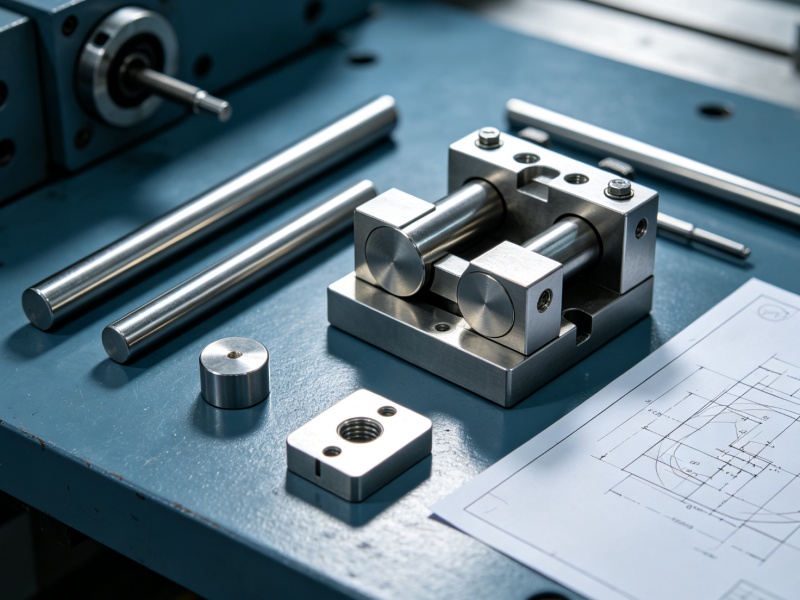
Magnetic brackets are most valuable where speed, repeatability, and access matter. They support workpieces during welding, temporary assembly, inspection, and maintenance without requiring complex mechanical tooling.
In welding fixtures, they help hold angle and alignment before tack welding. In assembly stations, they reduce the time spent searching for parts, repositioning components, or resetting a jig between cycles.
- Welding fixturing for angle holding and quick alignment
- Assembly support for temporary part location
- Maintenance tasks that require hands-free positioning
- Inspection setups where repeatable placement is needed
- Light-duty support in displays, enclosures, and service equipment
For safety and compliance, consumer magnet products are also subject to U.S. safety rules when they fall under the relevant scope. The eCFR magnet safety standard addresses ingestion hazards for subject magnet products, which is a reminder that product form and application matter.

How to choose the right magnetic bracket for positioning and support
The right magnetic bracket is the one that matches the load, surface, temperature, and installation method. Selection should start with the application, not the catalog force number.
For high-force compact designs, NdFeB-based assemblies are often preferred because they provide strong attraction in a small footprint. For surface protection, rubber-coated versions are better when scratching or sliding is a concern.
Key Specifications for Magnetic Bracket Selection
| Selection factor | What to check | Why it matters |
|---|---|---|
| Holding force | Real contact condition, not only lab pull force | Affects stability under load |
| Mounting method | Screw, bolt, rod, or direct contact | Determines installation compatibility |
| Surface condition | Flat, painted, curved, or oily | Changes actual grip performance |
| Environment | Humidity, chemicals, outdoor exposure | Influences coating and corrosion resistance |
| Temperature | Operating and peak temperature | Magnetic performance can decline at heat |
Magnet testing and measurement should also be interpreted carefully. ASTM notes that measured properties depend on the magnetic circuit, geometry, and test conditions, so part performance must be judged in context.
How to prevent failure in magnetic clamping and support applications
Most failures come from poor surface contact, corrosion, heat, or the wrong load direction. A bracket that performs well in static pull may still slip if the part is oily, uneven, or exposed to vibration.
Regular inspection should focus on coating damage, loose fasteners, and contamination on the contact face. In wet or chemically aggressive environments, corrosion-resistant finishes are important because they preserve both holding consistency and service life.
A practical maintenance routine is simple: clean the contact face, check the mounting hardware, verify alignment, and replace damaged units before performance drops. This is especially important in repeated fixturing and magnetic workholding stations.
Supplier Directory
For buyers comparing product families, the most relevant starting points at the target site are magnetic tools, magnetic pickup tools, magnetic sweepers, and the main magnetic product homepage. These pages help match the bracket concept with related workholding, cleanup, and handling solutions.
FAQ
1. What is the main function of a magnetic bracket?
Its main function is to hold metal parts in a fixed or semi-fixed position. It can support alignment, temporary clamping, and hands-free setup in welding, assembly, maintenance, and inspection. The bracket reduces setup time while keeping the part stable enough for the next process step.
2. Why do cup-style magnetic assemblies often outperform bare magnets?
Cup-style assemblies use a steel shell to guide magnetic flux toward the contact face. That concentrated magnetic circuit usually improves practical holding force and protects the magnet from impact. In real applications, this often matters more than the raw magnet material alone.
3. When should rubber-coated magnetic brackets be used?
Rubber-coated versions are best when the contact surface must stay clean, smooth, or scratch-free. They also improve friction on some surfaces, which can reduce sliding. The tradeoff is that the coating may reduce peak holding force compared with an exposed metal face.
4. How should buyers choose between countersunk and straight-hole mounting?
Countersunk holes are better for flush screw mounting in compact fixtures. Straight-through holes are better when the design needs bolts, rods, or shafts. The choice depends on the structure around the bracket, the load path, and how often the setup must be adjusted.
5. What causes magnetic brackets to lose performance over time?
Common causes include corrosion, heat exposure, surface contamination, and mechanical damage to the shell or coating. Loose hardware can also reduce stability. Regular cleaning and inspection help preserve holding force, especially in wet, dusty, or high-vibration environments.