 EN
EN AR
AR HR
HR CS
CS DA
DA NL
NL FI
FI FR
FR DE
DE EL
EL IT
IT JA
JA KO
KO NO
NO PL
PL PT
PT RU
RU ES
ES SV
SV IW
IW VI
VI TH
TH TR
TR FA
FA MS
MS- The steel cup is not a shell only; it is a magnetic circuit concentrator that improves practical holding force.
- External threading adds repeatable mechanical mounting for industrial fixing, especially where bolts, nuts, and adapters are used.
- Surface finish, air gap, and load direction can change performance more than the nominal magnet size.
- Corrosion resistance and temperature class matter as much as pull force in real factory environments.
- Selection should be based on use case, not just static pull rating.
High performance pot magnet with external thread products are used in industrial fixing because magnetic force alone is only part of the answer; secure installation, corrosion resistance, and service life determine whether the part performs reliably on the shop floor. In dimensional inspection and machine alignment contexts, even small geometric deviations matter, which is why precision standards such as ISO 230-1:2022 emphasize machine tool test methods, while magnetic components are commonly judged by practical holding behavior under real contact conditions rather than ideal laboratory contact. If your application involves repeated mounting, removable fixtures, or accessory positioning, a threaded pot magnet often offers a better balance of force and control than a bare neodymium magnet.
Why a High Performance Pot Magnet with External Thread Works Better for Industrial Fixing
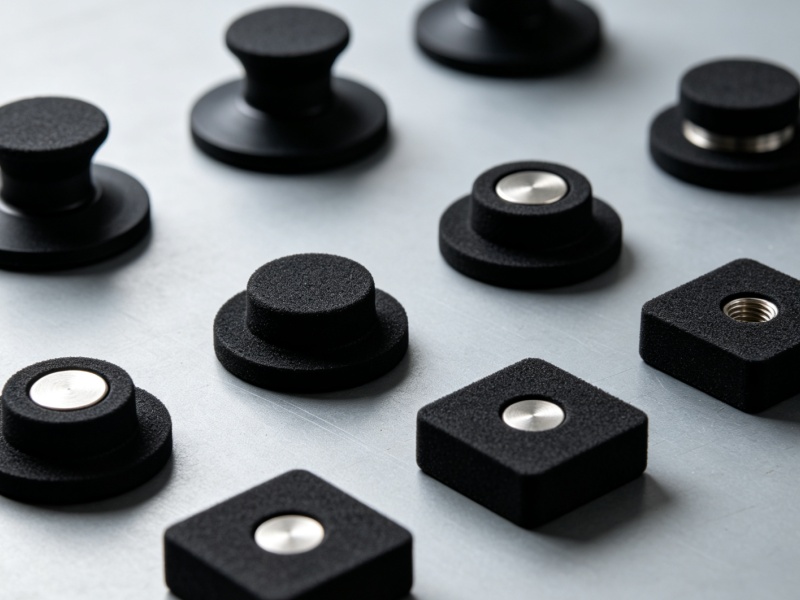
The steel cup is the reason a pot magnet often outperforms a naked magnet of the same material and approximate size. By guiding magnetic flux toward one pole face and shielding the sides, the cup concentrates the field where contact actually happens. That means the usable force is higher at the work surface, which is why pot magnets are widely chosen for industrial fixing, positioning, and temporary retention.
In threaded versions, the external thread becomes the second advantage. It turns a magnetic element into a mechanical interface that can be fastened into brackets, spacers, adapters, and custom assemblies. For engineers and buyers, this reduces setup time and makes the magnet easier to integrate into fixtures that must be removed, replaced, or adjusted repeatedly.
That combination is especially valuable in environments where workers need to clamp, align, hold, or index components quickly. Rather than drilling or welding a permanent mount, the operator can use a threaded interface and maintain flexibility during layout changes or maintenance cycles.
| Feature | Industrial impact | Typical practical value |
|---|---|---|
| Steel cup magnetic circuit | Concentrates flux at the contact face | Higher usable holding force than a bare magnet |
| External thread | Simple mechanical integration | Faster mounting with bolts, nuts, and adapters |
| Protective housing | Reduces chipping and impact damage | Better durability in assembly and handling |
| Coating choice | Improves corrosion resistance | Longer service life in humid or outdoor use |
How Magnetic Circuit Design Changes Holding Force
Holding force is not determined by magnet grade alone. The magnetic circuit, the contact condition, and the air gap all influence the final result, and the steel cup is what makes a pot magnet different from a simple block or disc magnet. Because flux is concentrated at the exposed face, more of the magnetic energy is delivered where it matters.
In real use, any gap between the magnet and the target surface reduces force sharply. Paint, dirt, roughness, curvature, and thin protective films can all weaken the bond. That is why industrial fixing should be specified with the actual mounting condition in mind, not only a laboratory pull value.
Neodymium magnets are popular in these products because they deliver high magnetic energy density in a compact form. For reference, grades such as N52 are widely recognized in the market as high-energy neodymium magnet grades, but the final installed performance still depends on geometry, cup design, and operating conditions. In other words, a smaller engineered pot magnet can sometimes be more useful than a larger unshielded magnet if the job requires concentrated pull on a flat steel surface.
| Selection factor | Why it matters | Field effect |
|---|---|---|
| Contact surface flatness | Controls air gap | Force drops when the gap increases |
| Surface coating | Affects friction and corrosion | Improves reliability in humid sites |
| Load direction | Shear and peel loads behave differently | Side load is usually less favorable than direct pull |
| Magnet grade | Determines energy density | Higher grade supports compact designs |
External Thread Pot Magnet vs Other Fixing Options
An external thread pot magnet is not the only fastening solution, but it is often the most practical when non-permanent installation is required. Compared with adhesive mounting, it is easier to remove. Compared with welding, it is faster and does not require heat input. Compared with a simple hook magnet, the threaded base offers more integration flexibility for custom hardware.
For buyers evaluating the full range of magnetic hardware, it helps to separate products by job function. A pot magnet is primarily about compact, concentrated holding force. A magnetic hooks solution is better for hanging and temporary support. A magnetic bases component is useful where a threaded or mounted platform is needed for indicators, tools, or accessories. If the work requires reusable assembly with mechanical fastening, a threaded pot magnet is usually the better starting point.
The main trade-off is that magnetic fixing depends on surface quality and load direction. If the application includes vibration, lateral impact, or frequent side loading, the design may need a wider contact area, a higher safety factor, or a complementary mechanical stop.
| Fixing method | Installation speed | Removability | Best use case |
|---|---|---|---|
| External thread pot magnet | High | High | Reusable fixtures and alignment aids |
| Adhesive mount | Medium | Low | Permanent light-duty attachment |
| Welded bracket | Low | Low | Permanent structural mounting |
| Plain magnet | High | Medium | Simple contact holding |
Industrial Fixing Applications Where Threaded Pot Magnets Excel
Threaded pot magnets are strongest in applications where workers need a secure yet removable fixing point. Tooling, signage, sensors, jigs, covers, access panels, and workholding aids are common examples. The threaded interface lets designers connect the magnet to a broader assembly without forcing a permanent redesign.
In assembly lines, they can support quick positioning of guides or temporary stops. In maintenance, they help technicians attach accessories without drilling into finished surfaces. In warehouse and workshop settings, they can hold labels, lights, cords, or lightweight equipment where repeated relocation is expected.
In one practical scenario, a maintenance team may use a threaded pot magnet to support a removable inspection aid on a steel machine frame. The magnet gives fast placement, the thread handles mechanical attachment, and the cup design helps the product resist small impacts during daily handling. That combination is why these products are often chosen by procurement teams that value speed, repeatability, and lower rework risk.
Typical industrial use cases
- Jig and fixture positioning on steel machine frames
- Temporary holding for access covers and panels
- Mounting sensors, lights, or indicators on ferromagnetic surfaces
- Reusable signage and identification attachments
- Maintenance and inspection accessories
What Determines Real Performance Beyond Pull Force
Real performance depends on more than the catalog pull number. The buyer should evaluate load direction, temperature, corrosion resistance, and the quality of the mating surface. A product with a strong laboratory pull rating can still underperform if it is mounted on a painted, curved, or contaminated surface.
Temperature is especially important for neodymium magnet assemblies. Standard neodymium grades are commonly associated with maximum operating ranges that vary by grade and formulation, and many commercial products are offered with temperature classes around 80 C, 100 C, 120 C, 150 C, or higher depending on alloy and stabilizing design. If the environment is hotter than the magnet class allows, holding force loss or irreversible demagnetization can occur.
Corrosion protection matters because many industrial fixing points are exposed to condensation, cleaning chemicals, or outdoor weather. Nickel, zinc, epoxy, and rubberized finishes each solve different problems. Nickel is common, epoxy is stronger in corrosive exposure, and rubber coating can improve surface protection and friction when the target surface must not be scratched.
| Risk factor | Failure mode | Practical mitigation |
|---|---|---|
| Painted surface | Higher air gap | Use flatter contact faces or stronger magnet grade |
| Heat exposure | Force loss | Select suitable temperature class |
| Humidity or chemicals | Corrosion | Choose epoxy or other protective coating |
| Vibration | Shear slip | Add mechanical backup or larger contact area |
For surface protection-heavy environments, buyers often compare pot magnets with rubber coated magnets. Rubber-coated versions are not always the strongest in direct pull, but they can reduce scratching and improve friction stability on finished surfaces. That makes them useful when industrial fixing must also protect paint, stainless steel finishes, or coated panels.

Installation and Selection Checklist for Buyers
The best selection process starts with the actual use condition, not the product image. A threaded pot magnet should be specified by target material, required orientation, temperature, corrosion exposure, and the type of mechanical connection. If procurement teams skip those inputs, they often end up overbuying force or underbuying durability.
- Confirm the target surface material and whether it is ferromagnetic steel.
- Measure the available mounting depth and the thread size needed for integration.
- Estimate whether the load is direct pull, side shear, or a mixed load.
- Check whether the environment is dry, humid, oily, or chemically aggressive.
- Define whether the magnet will be permanent, semi-permanent, or frequently moved.
- Verify temperature range and coating requirements before ordering.
For buyers who need related product families, it is often useful to compare the application to magnetic assemblies and custom magnets. Assemblies help when the fixing point must include a nonstandard housing or interface, while custom parts are better when thread type, diameter, coating, or pull requirement must match an existing machine design.
Common Mistakes in Industrial Fixing with Threaded Pot Magnets
The most common mistake is choosing by diameter alone. A larger body does not always solve a load problem if the surface is uneven or the load is mostly sideways. The second mistake is ignoring corrosion and temperature, which can shorten service life long before the magnet appears to fail.
Another frequent issue is assuming all threaded magnets are interchangeable. Thread size, thread depth, cup geometry, and coating affect both installation and performance. If the fix point must survive repeated adjustment, the thread interface should be checked for stripping risk, cross-threading, and compatibility with the mating hardware.
A final mistake is using an industrial fixing magnet where safety-critical retention is required without a mechanical backup. Magnetic holding is excellent for convenience, alignment, and removable support, but it should not be treated as a substitute for engineered restraint in high-risk loads unless the design has been formally validated.
How to Compare Suppliers and Product Data
Supplier comparison should focus on test method transparency, coating information, temperature rating, and dimensional consistency. A reliable product page should state the magnet grade, housing material, thread type, surface finish, and usable application conditions. When data is vague, the buyer is left guessing about real-world performance.
Industry buyers often also care about quality control and consistency across batches. In precision manufacturing, published standards such as ASTM B117 for salt spray exposure and ISO 9227 for corrosion tests are useful references when evaluating protective coatings. For magnetic materials and magnetic property terminology, NIST is a useful public reference point for measurement and traceability concepts.
In procurement terms, the strongest offer is not necessarily the biggest pull number. It is the offer that clearly explains how the magnet behaves on a real steel surface, with the required thread, in the expected temperature and corrosion environment.
FAQ About High Performance Pot Magnet with External Thread
What makes a high performance pot magnet stronger than a bare magnet?
The steel cup concentrates magnetic flux at the contact face, so more force reaches the target surface instead of leaking from the sides.
Why choose an external thread pot magnet for industrial fixing?
External thread mounting makes the magnet easier to integrate into fixtures, brackets, and adapters that need repeatable assembly.
Can a threaded pot magnet be used outdoors?
Yes, if the coating, temperature class, and corrosion protection are selected for the environment.
Does surface paint reduce holding force?
Yes. Paint increases the air gap, and even a small gap can reduce effective holding force significantly.
Are high performance pot magnets suitable for vibration?
They can work well, but vibration and shear loads should be reviewed carefully, and a mechanical backup is often wise.
What is the best coating for corrosive environments?
Epoxy and other enhanced finishes are often preferred when humidity, chemicals, or outdoor exposure are present.
How should buyers compare different threaded pot magnets?
Compare thread size, cup geometry, coating, temperature rating, and the actual mounting surface, not only the nominal pull force.