 EN
EN AR
AR HR
HR CS
CS DA
DA NL
NL FI
FI FR
FR DE
DE EL
EL IT
IT JA
JA KO
KO NO
NO PL
PL PT
PT RU
RU ES
ES SV
SV IW
IW VI
VI TH
TH TR
TR FA
FA MS
MS- Use pull force as a starting point, but validate real-world shear, vibration, and safety margin.
- Straight hole designs are ideal for bolt-through or rod-mounted automation fixtures.
- Steel cups improve magnetic circuit efficiency and protect the neodymium core from impact.
- Corrosion resistance and operating temperature often decide long-term reliability.
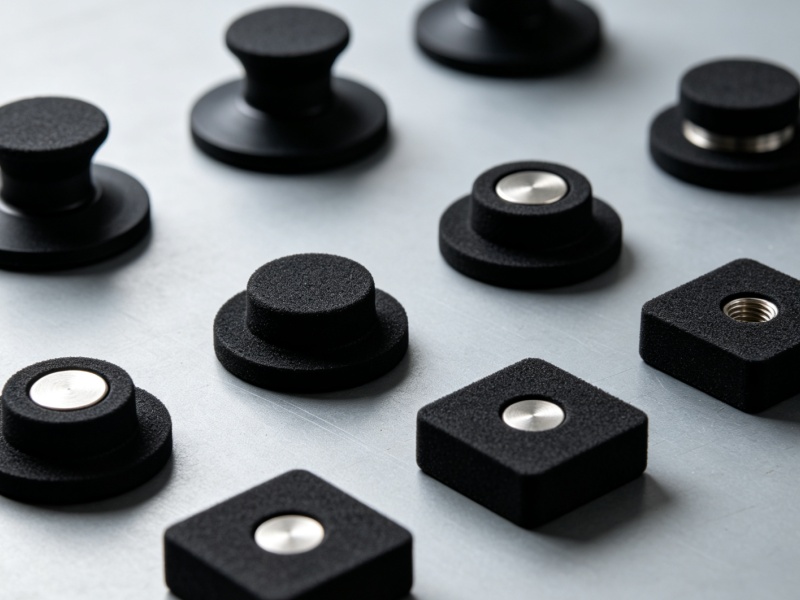
A Neodymium Pot Magnet with a Straight Hole Pot Magnet mounting style is often the most practical choice for Automation Projects because the steel cup concentrates magnetic flux, increases effective contact force, and shields the brittle NdFeB core from mechanical damage. The selection still needs engineering discipline: ISO 1101 defines geometric tolerancing for part interfaces, and ISO 2768-1 gives a common framework for general tolerances when detailed callouts are absent, which matters when a magnet must fit a fixture repeatably. For high-trust design work, remember that N52 neodymium magnets can have a maximum energy product around 52 MGOe, but the usable performance depends on cup geometry, plating, and the mounting surface, not just magnet grade. See ISO 1101 and ISO 2768-1 for tolerance context.
For internal product navigation, compare pot magnets, neodymium magnets, magnetic hooks, and magnetic bases so you can match the mounting method to the task instead of forcing one part to solve every fixture problem.
What a Neodymium Pot Magnet with Straight Hole Really Does in Automation Projects
The steel cup is the reason pot magnets behave differently from bare neodymium magnets. The cup closes part of the magnetic circuit, redirects flux toward the contact face, and creates a more practical holding force on ferromagnetic steel surfaces. This is why a pot magnet can often outperform a naked magnet of similar size in fixture work, especially when the load is mostly normal to the surface.
In automation projects, the straight hole is equally important. It allows through-bolt, stud, or rod mounting, which is useful for jigs, end-of-arm tooling, sensor brackets, indexing stops, and quick-change fixtures. If the design requires flush screw heads, the straight hole may still be acceptable when the hardware is captured in a separate bracket or spacer. If the assembly must sit flat without protruding hardware, a countersunk version may be better than a straight hole.
That design distinction sounds small, but in a cell that cycles thousands of times a day, the wrong mounting style becomes a maintenance problem. Misalignment, loosening, and edge loading reduce effective holding force much faster than most teams expect.
Choose the Right Pot Magnet Size by Load Path, Not by Catalog Pull Force Alone
Catalog pull force is useful, but it is not the same as real automation holding performance. A magnet’s rated pull force is typically measured under ideal conditions: clean, thick, flat low-carbon steel, direct perpendicular contact, and no paint, gap, or lateral force. Automation fixtures rarely work under ideal conditions.
For example, if your surface has 0.5 mm of paint, a spacer, or slight curvature, the usable force can drop sharply. In practical fixture design, you should treat the catalog number as a reference point and add a safety factor for vibration, contamination, and shock loading. For assemblies exposed to repeated impact, many engineers prefer a conservative margin rather than chasing maximum static pull.
| Selection Factor | Why It Matters | Practical Check | Typical Engineering Impact |
|---|---|---|---|
| Load direction | Shear loads reduce usable force | Measure normal vs lateral force | Shear resistance may be far lower than pull force |
| Surface gap | Air gap weakens magnetic circuit | Check paint, coating, burrs, dirt | Even small gaps can lower holding force materially |
| Vibration | Can cause micro-slip and loosening | Test under machine cycle conditions | May require a higher safety factor |
| Temperature | Neodymium strength drops as heat rises | Verify operating and peak temperature | Risk of irreversible loss if overheated |
For precise fixture design, many teams also align the magnet interface with metrology practices from NIST’s Office of Weights and Measures, especially when they need repeatable setup checks and traceable measurement discipline. In a production environment, consistent measurement usually saves more time than adding a larger magnet after the fact.
Straight Hole Pot Magnet vs Countersunk vs Rubber-Coated Magnet
The best mounting style depends on whether you need rigidity, surface protection, or anti-slip behavior. A straight hole pot magnet is the most straightforward choice for bolt-through installation. A countersunk version is better when you need the fastener head to sit flush. A rubber-coated magnet is better when the contact surface must be protected from scratching or when friction matters more than raw pull force.
| Type | Best Use Case | Mounting Style | Strength/Protection Tradeoff |
|---|---|---|---|
| Straight hole pot magnet | Bolts, rods, brackets, automation fixtures | Through-hole fastening | Strong, simple, versatile |
| Countersunk pot magnet | Flush-mounted assemblies | Flat-head screw | Cleaner surface, slightly more design constraint |
| Rubber-coated magnet | Scratch-sensitive surfaces | Often threaded insert or stud | Better grip on finished surfaces, less direct magnetic contact |
For automation projects, the straight hole version usually wins when the design needs serviceability. It lets technicians remove or replace the magnet without dismantling the entire bracket. That matters on lines where downtime is expensive and tooling changes are frequent.
Material Grade, Coating, and Temperature: The Reliability Stack
Neodymium grade is only one part of the reliability stack. The grade determines the magnetic energy potential, but the coating and thermal rating decide whether the magnet survives in the real machine environment. Common coatings such as nickel-copper-nickel help with general corrosion resistance, while epoxy or specialized coatings are preferred in humid or chemically aggressive settings.
Neodymium magnets are powerful but thermally sensitive. Many standard NdFeB grades lose performance as temperature rises, and some can suffer permanent degradation if the operating range is exceeded. The exact limit depends on the grade, but the design rule is simple: confirm the magnet’s maximum operating temperature before you lock in the machine architecture. If the magnet sits near motors, brakes, ovens, weld zones, or sunlight-exposed enclosures, temperature verification is mandatory.
Corrosion deserves equal attention. Steel cups protect the magnetic core mechanically, but edge exposure, plating defects, or repeated abrasion can still lead to rust in wet or outdoor applications. If the environment includes coolant mist, washing cycles, or salt exposure, do not assume a standard plated magnet will last without testing.
For material selection, engineering teams often refer to ASTM guidance for surface and corrosion-related testing methods. See ASTM D2247 for humidity resistance testing and ASTM B117 for salt spray exposure methodology. These standards do not tell you which magnet to buy, but they do help you validate whether the coating system matches the environment.
How to Evaluate Holding Force in a Real Automation Setup
Real holding force should be validated on the actual part, not assumed from the brochure. In automation projects, surface finish, contact area, and alignment determine how much force you really get. A magnet that performs well on thick polished steel may underperform on painted, curved, or partially contaminated surfaces.
- Test the magnet on the exact target material and coating stack.
- Measure pull force and shear behavior separately.
- Repeat the test with oil, dust, and expected temperature if relevant.
- Check performance after repeated mounting cycles.
- Verify that the chosen bolt or stud does not become the weak link.
This workflow is especially useful in end-of-line tooling, pick-and-place supports, and temporary positioning jigs. If the magnet only needs to hold a sensor or a light fixture, the selection criteria are very different from those used for a loading fixture or a robot end effector.
In many cases, failure starts at the interface, not inside the magnet. A loose bolt, a bent bracket, or a dirty steel target plate can reduce reliability more than a modest change in magnet grade.
Automation Use Cases Where Straight Hole Pot Magnets Make Sense
Straight hole pot magnets are best when the machine needs a compact, serviceable, and mechanically anchored magnetic point. They are common in small fixtures, guarding accessories, sensor mounts, quick-release tool holders, and positioning aids. They also work well where engineers want a magnetic contact point but need the mounting hardware to pass through a bracket or spacer.

Typical use cases include:
- Jigs and fixtures for temporary part holding
- Sensor alignment brackets on steel machine frames
- End-of-arm accessories that need quick adjustment
- Inspection stations that require repositionable contact points
- Maintenance aids for temporary cable or tool retention
In these scenarios, the straight hole structure is not just a mounting convenience. It is a maintenance strategy. Technicians can swap hardware without replacing the full fixture, which lowers downtime and simplifies spare-part management.
Common Failure Modes and How to Avoid Them
Most pot magnet failures in automation are caused by application mistakes, not magnet chemistry. The top failure modes are excessive temperature, poor surface contact, side loading, corrosion, and accidental impact during assembly or servicing.
| Failure Mode | Typical Cause | Prevention Method | Expected Benefit |
|---|---|---|---|
| Force loss | Air gap, paint, dirt | Clean contact surface | More stable holding performance |
| Mechanical damage | Impact or overtightening | Use proper torque and protective housing | Longer service life |
| Corrosion | Humidity, coolant, salt | Select better plating or sealed design | Improved durability |
| Thermal demagnetization | Operating above rating | Check ambient and local heat sources | Reduced risk of irreversible loss |
If the magnet will be used on a moving carriage or in a vibrating frame, add anti-loosening features such as threadlocker, locking washers, or a captive nut design. A strong magnet cannot compensate for a poorly designed fastener system.
Specification Checklist for B2B Buyers
A disciplined checklist prevents overbuying and underdesigning at the same time. Before you place an order, confirm the magnet dimensions, hole diameter, cup outer diameter, total height, coating type, working temperature, and mounting hardware. If possible, request a sample lot and test it on your actual surface.
- Confirm the exact hole diameter and usable thread path.
- Verify the cup material and plating stack.
- Check the operating temperature and peak exposure temperature.
- Measure the target steel thickness and surface finish.
- Define the load direction and vibration profile.
- Validate corrosion exposure and cleaning chemicals.
For procurement teams, this checklist does two things at once: it improves technical fit and reduces supplier back-and-forth. In B2B sourcing, fewer unknowns usually mean faster quoting and fewer assembly surprises.
You can also compare related support products such as magnetic tools and magnetic accessories when the project involves picking, holding, or organizing metal parts across multiple workstations.
Quick Comparison Table for Decision Making
The simplest way to choose is to map your application to the right risk profile. If the job is a clean, static hold on thick steel, prioritize pull force and geometry. If the job is on a moving machine, prioritize repeatability, temperature tolerance, and fastening reliability.
| Application Profile | Recommended Magnet Type | Primary Priority | Secondary Priority |
|---|---|---|---|
| Static fixture on clean steel | Straight hole pot magnet | Holding force | Hole geometry |
| Vibration-prone automation cell | Higher-margin straight hole pot magnet | Retention under shock | Fastener lockup |
| Painted or delicate surface | Rubber-coated magnet | Surface protection | Friction stability |
| Flush-mounted bracket | Countersunk pot magnet | Space efficiency | Installation flushness |
FAQ: Choosing a Neodymium Pot Magnet with Straight Hole
1. What is the biggest advantage of a straight hole pot magnet?
The biggest advantage is mounting flexibility. A straight hole lets you use a bolt, rod, or stud to integrate the magnet into a fixture, bracket, or automation accessory without redesigning the whole assembly.
2. Is a pot magnet stronger than a bare neodymium magnet?
Often yes in practical use on steel surfaces. The steel cup concentrates flux toward the contact face, so the magnet usually delivers more usable holding force than a bare magnet of similar size and grade.
3. When should I choose a countersunk version instead?
Choose countersunk when the fastener head must sit flush. That is useful for compact fixtures, clearance-sensitive assemblies, or surfaces where protruding hardware would interfere with motion.
4. How important is temperature for neodymium magnets?
Temperature is critical because heat can reduce performance and sometimes cause permanent loss. Always confirm the operating range before finalizing the design, especially near motors, weld zones, or heated enclosures.
5. Why does coating matter if the magnet sits inside a steel cup?
Coating still matters because edges, scratches, and exposed areas can corrode. Humidity, coolant, and cleaning chemicals can attack any weak point in the surface protection system.
6. How do I test whether the magnet is right for my machine?
Test it on the actual surface under real operating conditions. Measure pull, shear, vibration, and temperature effects, then repeat after contamination and several mount cycles.
7. What is the most common mistake buyers make?
The most common mistake is choosing by catalog pull force only. Real automation performance depends on load direction, gap, coating, temperature, and fastener reliability.
For teams building repeatable industrial fixtures, a Neodymium Pot Magnet with a Straight Hole Pot Magnet design is usually the right choice when the goal is a compact, serviceable, and mechanically anchored magnetic interface. The safest decision comes from matching the magnet to the workpiece, environment, and maintenance model instead of treating all magnets as interchangeable. That approach reduces rework, improves uptime, and makes future changes easier to manage.