 EN
EN AR
AR HR
HR CS
CS DA
DA NL
NL FI
FI FR
FR DE
DE EL
EL IT
IT JA
JA KO
KO NO
NO PL
PL PT
PT RU
RU ES
ES SV
SV IW
IW VI
VI TH
TH TR
TR FA
FA MS
MS- Installation geometry determines whether a magnetic bracket holds securely or loosens over time.
- Bulk purchase buyers should validate mounting method, coating, and operating environment before placing a large order.
- Magnetic performance is only one part of selection; surface condition, vibration, and corrosion resistance also affect service life.
- Clear specification sheets reduce installation errors, returns, and field failures.
- For B2B sourcing, products with repeatable dimensions and documented tolerances are easier to scale.
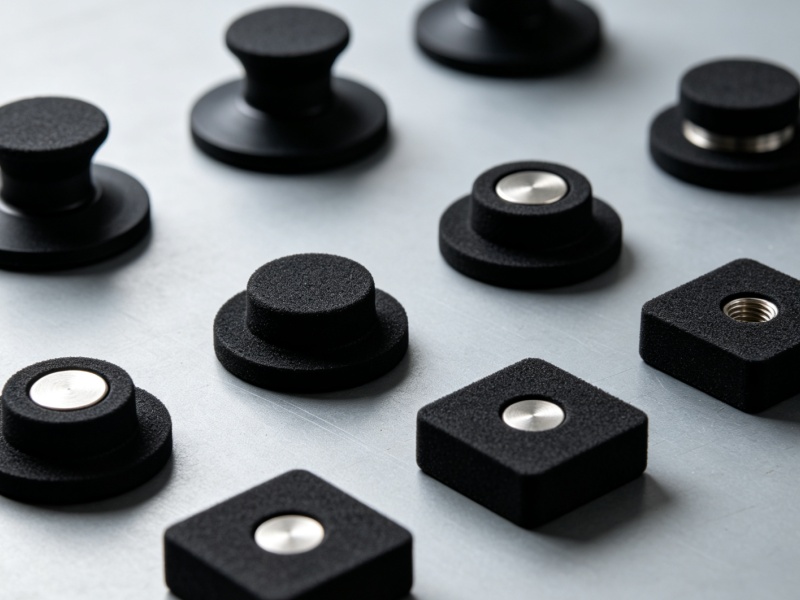
For a magnetic bracket bulk purchase, installation details are the difference between reliable field use and avoidable failure, especially when the product must work in damp, vibrating, or high-cycle environments. In engineering terms, a magnetic assembly is not just a magnet; it is a magnetic circuit, a mechanical interface, and a protective shell working together. The steel cup in a pot magnet concentrates flux and typically increases effective holding force compared with a bare magnet of the same material, while also protecting the magnet from impact damage. That is why industrial buyers often start with mounting method, coating, and mating surface finish, then compare pull force, instead of doing the reverse. For dimensional reference in positioning and fit checks, ISO 2768-1:1989 defines general tolerances such as +/-0.5 mm for certain linear dimensions in its coarse class, which is useful when planning assembly clearances; see ISO 2768-1:1989. For product families that need rigid screw mounting, buyers can review pot magnets, while adjustable fixture use cases may fit magnetic hooks or magnetic bases.
Why magnetic bracket installation details decide bulk purchase success
The installation method is the first thing that should be matched to the use case, because it determines load path, serviceability, and failure mode.
In bulk buying, many returns come from a simple mismatch: the buyer selects a strong magnet but ignores how it will be mounted. A screw-fixed magnetic bracket transfers load differently from a through-bolt assembly, and both behave differently from an adhesive-backed solution. If the bracket is used on painted steel, powder-coated frames, or slightly curved surfaces, the effective contact area changes and the rated force can drop well below the ideal lab condition. That is why professional sourcing teams ask for a full installation drawing, not only a pull-force number. In magnetic products, the magnetic circuit is optimized when the steel shell closes the flux path, but the mechanical system still needs correct screw length, thread engagement, and washer selection to prevent loosening.
For buyers working with many identical installations, consistency matters as much as strength. A product with clear hole geometry and stable dimensions reduces assembly variation, which lowers labor time and error rates across the batch. This is especially important for magnetic brackets used in signage, tooling, jigs, cabinets, fixtures, or portable equipment where repeated mounting and removal are common.
| Installation factor | What to verify | Typical risk if ignored | Bulk buying impact |
|---|---|---|---|
| Hole type | Countersunk, through-hole, threaded insert | Poor fastener fit | Higher rework rate |
| Mounting surface | Flatness, coating, curvature | Reduced contact area | Lower real holding force |
| Fastener choice | Screw size, thread depth, washer type | Loosening under vibration | Field complaints |
| Environment | Humidity, salt spray, chemicals | Corrosion or coating failure | Shorter service life |
Magnetic bracket bulk purchase: choose the right installation structure
Different installation structures serve different field conditions, so the buyer should match the bracket design to the real mounting task.
Counterbored or countersunk holes are best when a screw head must sit flush, which helps in tight spaces and reduces snagging. Through-holes work better when the load is transferred by a bolt and nut or when the assembly must be disassembled frequently. Threaded inserts can speed up repeated maintenance, but they require more careful quality control because the insert must withstand repeated torque without stripping. For magnetic assemblies that need a compact footprint, pot-style designs with a steel cup are often preferred because the steel shell both protects the magnet and helps channel flux to the contact face. This is one reason a well-designed pot magnet can outperform an exposed magnet of similar size in real use.
In many industrial and workshop environments, the surface is not perfectly clean or perfectly flat. Paint thickness, rust, dust, or small burrs can reduce the actual metal-to-metal contact that magnetic systems rely on. If the bracket is meant to hold a tool, fixture, or sign in a moving environment, installation geometry must also consider accidental side loads. A magnet that performs well in a straight pull test may underperform when the load is pried sideways or impacted repeatedly. That is why field testing should include not just vertical pull, but shear resistance, vibration exposure, and removal cycle checks.
| Mounting style | Best for | Installation advantage | Typical limitation |
|---|---|---|---|
| Countersunk screw | Flush mounting | Clean profile | Needs accurate hole depth |
| Through-bolt | Heavy or adjustable fixtures | High clamping security | Requires rear access |
| Threaded insert | Frequent maintenance | Fast repeat assembly | Insert wear risk |
| Adhesive assist | Light-duty positioning | Simple installation | Surface prep critical |
Surface protection, corrosion resistance, and temperature in installation planning
Surface protection is not optional when a magnetic bracket will face moisture, chemicals, or outdoor exposure.
Many magnetic products use nickel-copper-nickel plating on neodymium magnets, while some installations benefit from epoxy or rubber coatings. The coating choice affects not only appearance but also corrosion resistance, friction, and contact protection. If the bracket sits near salt air, cleaning agents, or condensation, the buyer should ask for coating details and salt-spray expectations instead of assuming standard plating is enough. Rubber-coated magnetic solutions are especially useful when surface protection and slip resistance matter more than bare-metal contact, which is why a product line such as rubber coated magnets can fit certain mounting tasks better than exposed steel-cup designs.
Temperature is another installation detail that often gets overlooked in bulk orders. Neodymium magnets are high-performance permanent magnets, but their magnetic properties decline at elevated temperatures depending on grade. For example, standard neodymium grades commonly used in industrial products may have maximum operating temperatures around 80 C, while higher-temperature grades are engineered for more demanding conditions. Buyers should verify the grade and the expected service temperature in the actual application, not just the warehouse condition. If the bracket will be installed near motors, heaters, or sunlight-exposed surfaces, thermal margin should be part of the purchase specification.
For surface integrity in design verification, ASTM B117 provides a standard salt-spray test method that is widely used to evaluate corrosion resistance in coated parts; see ASTM B117. While salt spray does not perfectly predict every real environment, it gives procurement teams a common reference point when comparing coatings across suppliers.
What bulk buyers should verify before placing a magnetic bracket order
A good bulk order starts with a checklist that turns installation needs into measurable purchase requirements.
- Confirm the mounting method: countersunk, through-hole, threaded insert, or hybrid.
- Measure the installation space: diameter, thickness, clearance, and tool access.
- Define the environment: dry indoor, humid indoor, outdoor, chemical exposure, or high vibration.
- Specify coating and corrosion protection: plating, epoxy, rubber, or stainless hardware pairing.
- Request sample installation tests before committing to the full bulk purchase.
This checklist saves time because it prevents the most common sourcing mistake: comparing magnets by catalog pull force alone. Real performance depends on the system around the magnet. For example, a magnetic bracket installed on a painted bracket face may lose meaningful holding power versus the same part on clean low-carbon steel. Likewise, a screw that is too short may hold on day one but loosen after repeated vibration. In a bulk order, those small errors multiply quickly across hundreds or thousands of units.
For buyers that need portable attachment points rather than fixed structural mounts, magnetic bases can be easier to integrate into tool stands, fixtures, and modular equipment. For hanging and light accessory use, magnetic hooks often provide a simpler installation pathway than custom bracket machining.
Quantitative checks that reduce installation failures
Good installation planning is easier when the buyer converts vague concerns into measurable checks.
In fit-up and assembly, even modest dimensional variation can matter. ISO 2768-1:1989 is helpful for understanding general tolerance expectations in mechanical parts, and that kind of tolerance discipline reduces cumulative fit problems in large batches. For magnetic assembly buyers, a practical procurement rule is to ask suppliers for hole diameter, hole position, coating thickness, and usable thread depth in millimeters, then compare those values against the installation drawing. This is especially important when the product is part of a repeated assembly line, because a 0.5 mm mismatch may not sound large, but across multiple mating parts it can create fastener misalignment or uneven clamping.
Here is a practical comparison for bulk sourcing:

| Specification item | Good procurement question | Why it matters | Example measurable target |
|---|---|---|---|
| Hole diameter | Is it matched to the screw standard? | Avoids assembly rework | Within drawing tolerance |
| Coating thickness | Does it change fit or friction? | Protects against corrosion | Supplier to declare in microns |
| Operating temperature | What is the max service temperature? | Prevents magnet loss | Grade-specific limit |
| Surface condition | Is the contact face clean steel, painted steel, or curved? | Affects real pull force | Test on actual substrate |
Where the application demands repeatable performance, a sample test should include at least three checks: static pull, side-load resistance, and removal/reinstall cycle behavior. That test format does not need to be complex, but it must reflect the real installation. If the magnet will be used on a steel cabinet, a machine guard, or a jig frame, the test substrate should be the same coating and thickness as the production environment. Otherwise, the bulk order may look correct on paper but fail in service.
Installation details for indoor, outdoor, and vibration-prone use cases
The harsher the environment, the more the installation details matter.
Indoor dry environments are usually the simplest case, but even there the buyer should consider repeated handling, cleaning agents, and accidental impacts. In outdoor applications, UV exposure, rain, condensation, and temperature swings make coating quality and hardware selection far more important. In vibration-prone equipment, thread locking, washer design, and clamp force become central. If a magnetic bracket is installed on a moving cart, mobile rack, or workshop machine, side forces can be more dangerous than the straight pull force shown in a catalog. The part may still be magnetically attached but mechanically unstable.
This is where a broader product strategy helps. Buyers who need a protective interface may compare a rubber-coated option against a metal-cup option, while buyers who need tool organization may use magnetic tool holders for safer access and less clutter. For team buyers who source by application rather than by part number, that product-level clarity simplifies installation planning because each category already reflects a specific use case.
From an engineering standpoint, the goal is not maximum force in isolation. The goal is stable retention under the actual installation conditions. That means the best bulk purchase is the one whose mounting, coating, and geometry all support the same service life target.
How to reduce returns and improve consistency in bulk orders
Returns usually fall when the specification sheet matches the real installation job.
To reduce returns, buyers should require three things from a supplier: a dimensioned drawing, a declared coating system, and a sample installation recommendation. If the supplier can also identify the intended mounting hardware, that further reduces variation across the batch. Clear documentation matters because magnetic products are often used by multiple teams: procurement, engineering, maintenance, and operations. When each team interprets the product differently, installation mistakes increase. A concise spec sheet prevents that disconnect and makes onboarding easier for new operators.
Where the bracket is used in a high-volume workflow, the best suppliers are those that can support repeatable dimensions and consistent packaging, because damaged coating or bent hardware can ruin a good design before it reaches the line. For buyers comparing categories, a broader magnet system approach may also include fishing magnets for retrieval tasks or pot magnets for fixed mounting tasks, depending on the operating scenario.
FAQ about magnetic bracket bulk purchase and installation
What is the most important detail when buying magnetic brackets in bulk?
The most important detail is the mounting method, because it determines how the bracket transfers load, resists vibration, and fits the installation space.
Should I choose pull force or installation design first?
Choose installation design first, then compare pull force, because a strong magnet can still fail if the hole type, hardware, or surface condition is wrong.
Are countersunk holes better than through-holes?
Countersunk holes are better for flush mounting, while through-holes are better for heavier or more adjustable assemblies.
How does coating affect magnetic bracket performance?
Coating affects corrosion resistance, friction, and sometimes fit, so it should be matched to humidity, outdoor exposure, or chemical contact.
What should I test before a bulk order?
Test static pull, side-load resistance, and removal cycles on the actual mounting surface to confirm real-world performance.
Why do pot-style designs matter for installation?
The steel cup protects the magnet and concentrates flux, which can improve effective holding in a compact footprint.
What documents should I request from the supplier?
Request a dimensioned drawing, coating details, operating temperature limits, and installation hardware guidance.
For buyers who need a standards reference on general mechanical tolerances, ISO 2768-1:1989 is a useful starting point. For corrosion testing comparisons, ASTM B117 remains a widely recognized benchmark. If the application involves workplace cleanliness or metal debris control rather than attachment, magnetic handling tools such as magnetic sweepers can support a different but related installation need by improving floor safety and pickup efficiency.