 EN
EN AR
AR HR
HR CS
CS DA
DA NL
NL FI
FI FR
FR DE
DE EL
EL IT
IT JA
JA KO
KO NO
NO PL
PL PT
PT RU
RU ES
ES SV
SV IW
IW VI
VI TH
TH TR
TR FA
FA MS
MSFor buyers, the selection process should focus on how the part will be mounted, what load it must hold, and what environment it will face. This article explains the main decision points, compares common options, and shows where these components fit in automation systems.
Article Outline
- What a countersunk pot magnet does in automation equipment mounting
- How steel-cup construction changes holding performance
- Key selection criteria: force, size, temperature, coating, and installation
- Comparison of countersunk, straight-hole, and rubber-coated options
- Practical installation and maintenance checks
- Supplier directory and FAQ
What a Countersunk Pot Magnet Does in Automation Equipment Mounting
A countersunk pot magnet provides a fast, removable, and mechanically simple mounting point for automation equipment. It is commonly used in jigs, sensor brackets, covers, light fixtures, access panels, and temporary positioning devices where screw fixation is preferred over adhesives or permanent welding.
In automation, the main advantage is repeatable positioning. The countersunk hole lets a screw sit flush, which helps reduce interference with moving parts and keeps the assembly compact. That matters in machines where clearance, vibration, and service access are all important.
Compared with a bare magnet, the steel shell helps guide magnetic flux toward the contact face. NIST notes that high-permeability materials collect flux lines and can amplify field strength in the gap, which is the same basic principle used in pot magnet design.
How to Choose the Right Countersunk Pot Magnet
The best choice is the one that matches the real working condition, not the highest catalog pull force. Static pull ratings are useful, but they do not fully describe performance under side load, vibration, paint layers, uneven surfaces, or repeated assembly cycles.
Start with the load profile. If the magnet only supports a light cover or sensor bracket, a smaller unit may be enough. If it holds a fixture on a vibrating machine, choose a larger safety margin and verify the holding direction, because lateral forces are usually more demanding than straight pull.
Then check the mounting method. A countersunk hole is ideal for screw fastening, while a straight-hole design is better for rod, shaft, or bolt installation. This difference is important because the wrong hole style can create misalignment, extra stress, or unnecessary installation time.
Finally, confirm the environment. Moisture, coolant, dust, and chemical exposure can shorten service life if the coating is not suitable. Surface protection is especially important in automation cells that run continuously or require frequent cleaning.
Comparison Table: Main Selection Factors for Automation Mounting
| Factor | What to Check | Why It Matters |
|---|---|---|
| Holding force | Required load, safety margin, and load direction | Prevents slip or detachment during operation |
| Mounting style | Countersunk, straight-hole, or adhesive backup | Determines installation speed and fit |
| Surface condition | Flatness, paint thickness, and contact quality | Affects real holding performance |
| Environment | Humidity, coolant, dust, and corrosion risk | Influences coating and lifespan |
| Temperature | Operating and peak temperature | Protects against magnetic loss and failure |
Industry estimates suggest that many selection mistakes come from ignoring side load and surface condition rather than from undersizing the magnet itself. That is why engineering review should include the full mounting geometry, not only the pull-force number.
Countersunk vs Straight-Hole vs Rubber-Coated Options
The right structure depends on whether the priority is rigid fastening, flexible installation, or surface protection. In automation equipment, these three options solve different problems and should not be treated as interchangeable.
Comparison Table: Structural Options for Magnetic Mounting
| Type | Best Use | Main Advantage | Main Limitation |
|---|---|---|---|
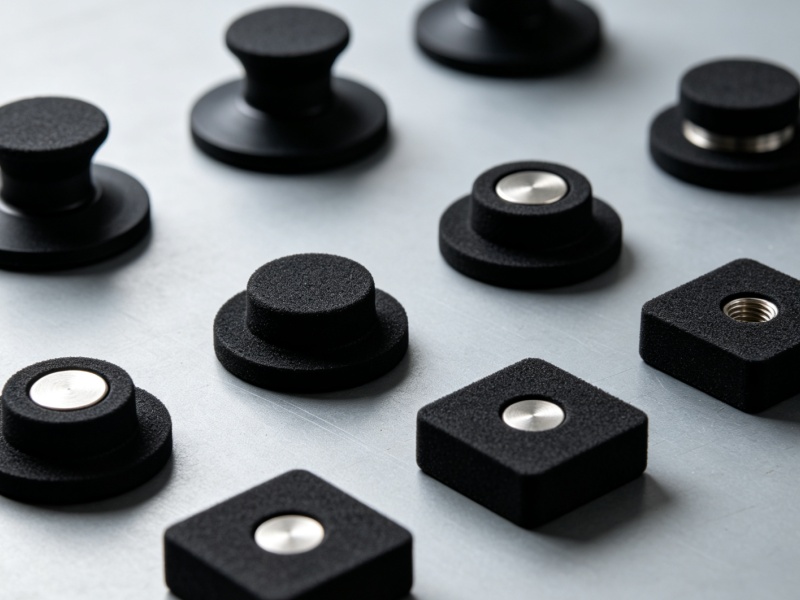
| Countersunk pot magnet | Screw-fixed fixtures and equipment mounting | Flush screw seating and compact installation | Less flexible if the hole position is fixed |
| Straight-hole pot magnet | Rod, bolt, or shaft-based assemblies | Better for through-fastening and support structures | May need more clearance |
| Rubber-coated magnet | Protected surfaces and anti-slip contact | Reduces scratching and improves friction | Usually less direct metal contact than a bare-faced design |
For machine covers, brackets, and removable guards, the countersunk version is often the most practical. For temporary supports or adjustable assemblies, a straight-hole design may be easier to integrate. For painted panels or delicate surfaces, rubber-coated products can reduce wear and improve grip stability.
Material, Coating, and Temperature Considerations
Neodymium is the standard core material when compact size and high holding force are required. It is widely used in automation because it delivers strong magnetic energy in a small footprint, which helps when equipment space is limited.
Coating choice is equally important. Nickel-copper-nickel finishes are common for general indoor use, while more protective coatings are preferred for humid or chemically exposed environments. If the magnet will be near coolant, washdown areas, or outdoor equipment, corrosion resistance should be treated as a core requirement rather than an optional upgrade.
Temperature also affects performance. Permanent magnets can lose strength if exposed to excessive heat, so the selected grade should match the machine’s operating range. In practice, this means checking both continuous temperature and short-term peak temperature before finalizing the design.

Key Specifications for Automation Mounting
| Specification | Typical Buyer Question | Selection Guidance |
|---|---|---|
| Magnet grade | How strong does it need to be? | Choose a grade that balances force and temperature resistance |
| Coating | Will it rust or wear? | Match coating to humidity, chemicals, and cleaning cycles |
| Hole type | How will it be fixed? | Use countersunk holes for flush screw mounting |
| Housing | Will it be hit or handled often? | Steel-cased designs add mechanical protection |
| Surface contact | Is the mounting face flat? | Flat, clean contact improves holding consistency |
Because the steel shell protects the core, pot-style assemblies are often more durable than exposed magnets in assembly environments. That protection matters when parts are repeatedly installed, removed, or exposed to incidental impact during maintenance.
Installation and Maintenance Best Practices
Correct installation is essential because even a strong magnet can fail if the mounting method is poor. The contact surface should be clean, flat, and free of oil, paint buildup, or debris before the screw is tightened.
Use the correct screw length and head profile so the countersunk seat is fully engaged. If the screw bottoms out too early, the magnet may sit unevenly and lose effective contact. If the fastener is overtightened, the housing or fixture can deform and reduce alignment accuracy.
For safety, automation equipment should also follow machine-guarding principles. OSHA requires guarding methods to protect workers from hazards such as flying chips and moving parts, which is relevant when magnets are used near machine enclosures or service panels.
Maintenance is simple but should be scheduled. Inspect for coating damage, corrosion, loose screws, and reduced holding performance after repeated use. If the magnet is used in a high-vibration station, periodic torque checks are a practical way to prevent unexpected loosening.
Where to Buy Countersunk Pot Magnets for Automation Equipment
For buyers who need product breadth, one practical starting point is the main catalog at rcmagnet.com, which covers pot magnets, neodymium magnets, magnetic pickup tools, magnetic rods, and magnetic mounting components. The site’s product structure makes it easier to compare related mounting solutions in one place.
If your project also needs adjacent components, the most relevant internal categories are pot magnet products, magnetic tools, magnetic accessories, and the main product catalog. These pages are useful when comparing mounting styles, related magnetic assemblies, and application-specific options.
When comparing suppliers, look for clear specification sheets, mounting drawings, coating details, and temperature limits. Those details matter more than broad claims because automation buyers need repeatable performance, not just nominal pull-force numbers.
Practical Buying Checklist
- Confirm the load direction and required safety margin.
- Match the hole style to the actual fastening method.
- Check surface flatness, paint thickness, and contact quality.
- Select a coating that fits the humidity and cleaning cycle.
- Verify operating temperature and vibration exposure.
- Inspect whether a steel-cased or rubber-coated design is more appropriate.
Following this checklist reduces trial-and-error during machine design. It also helps procurement teams compare suppliers on technical grounds instead of relying on catalog pull-force alone.
FAQ
1. What is the main advantage of a countersunk pot magnet in automation equipment?
Its main advantage is flush screw mounting with strong, compact holding performance. The countersunk hole keeps the fastener seated neatly, which helps in tight machine layouts. The steel cup also improves durability and concentrates magnetic flux at the contact face.
2. Why does a pot-style magnet often hold better than a bare magnet?
The steel shell guides magnetic flux toward the working face and reduces wasted field leakage. That concentration effect can improve practical holding force on the contact surface. It also protects the magnet from impact, wear, and handling damage during installation.
3. How do I choose the right size for mounting equipment?
Start with the load, then add a safety margin for vibration, side load, and surface imperfections. A larger size is not always necessary, but undersizing creates slip risk. The best choice balances force, space, temperature, and the fastening method.
4. When should I choose a rubber-coated magnet instead?
Choose a rubber-coated design when the contact surface must be protected from scratches or when extra friction is useful. These products are often better for painted panels, display surfaces, and delicate equipment covers. They are less suitable when direct metal contact is the priority.
5. What should I check before using magnets near automation machinery?
Check for interference with moving parts, sensors, and service access. Also confirm that the mounting method meets safety and guarding requirements. If the magnet is used in a high-vibration or corrosive environment, inspect it regularly for loosening, wear, and coating damage.